
Last updated September 20, 2026
Full 25-point door and opener safety check with every visit - springs, cables, rollers, tracks, and your LiftMaster or Chamberlain opener included
You get a price before we start. It does not change when the truck arrives.
Full-view glass
Chamberlain openers
 Before
 After
After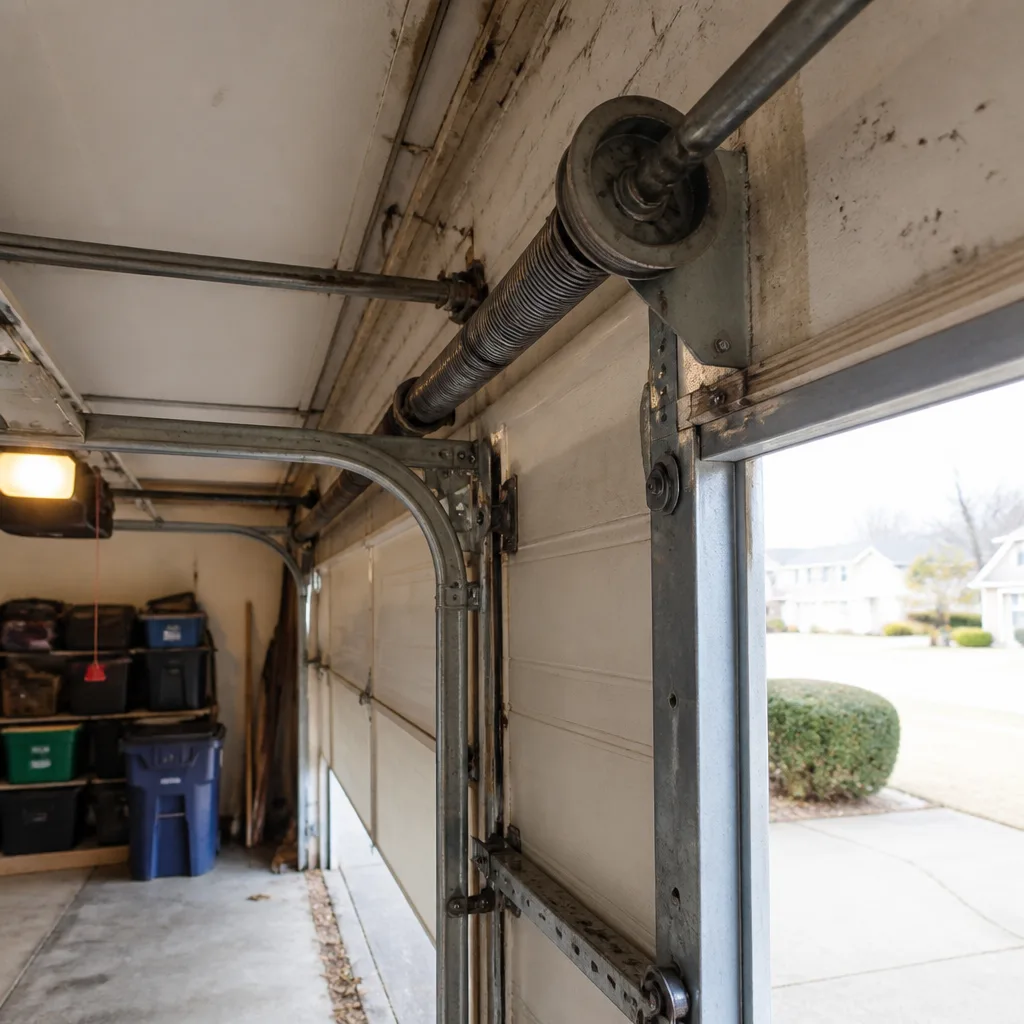 Before
 After
After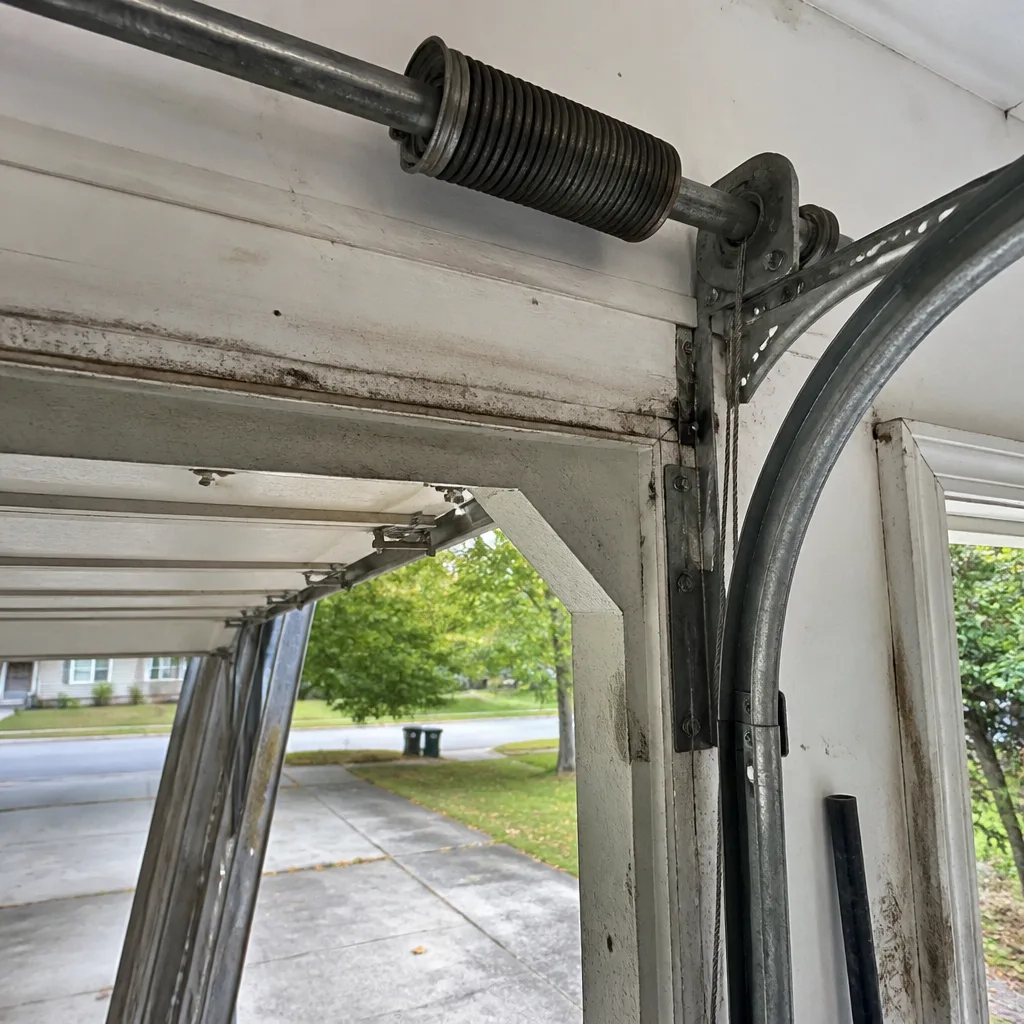 Before
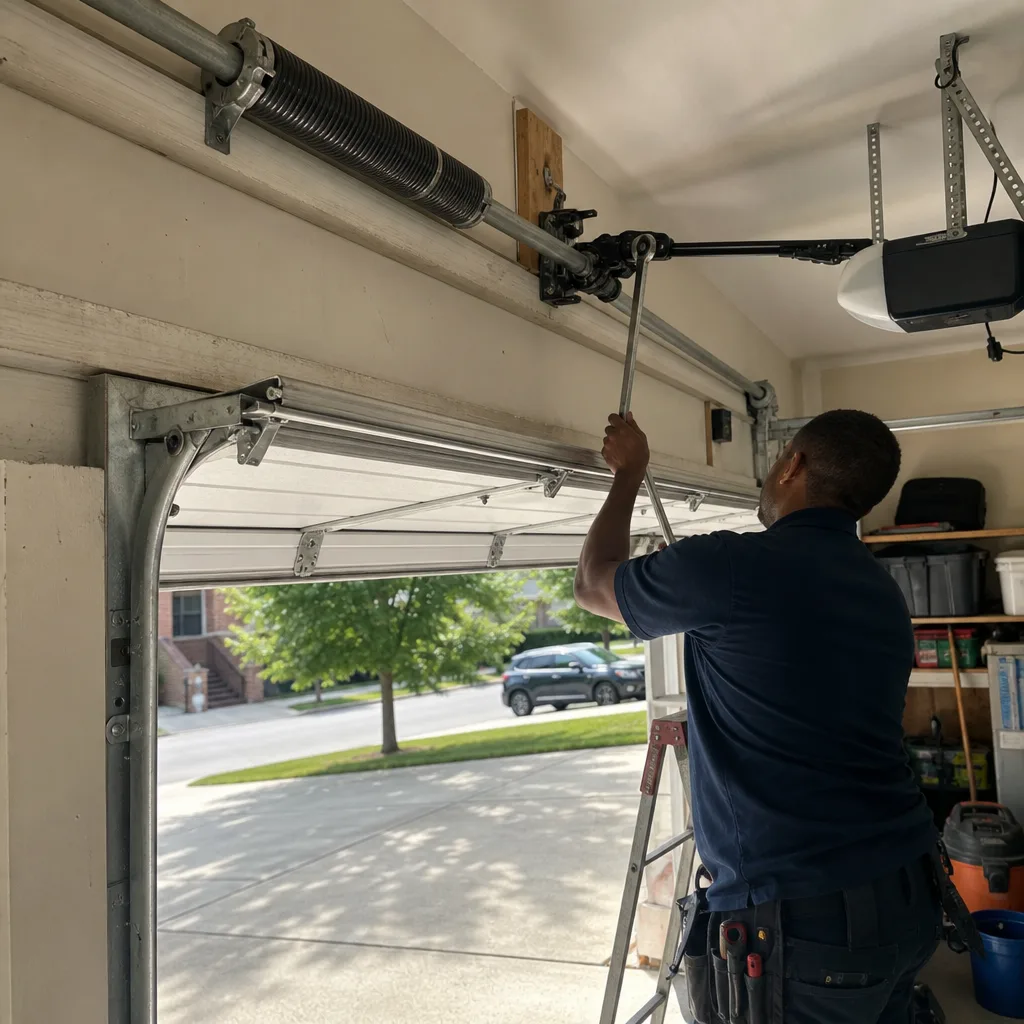 After
AfterDIY vs Professional Garage Door: The Lawrenceville Homeowner’s Decision Guide
A torsion spring on a double garage door holds roughly 150 pounds of torque per side. When one snaps, it releases that energy instantly. In Lawrenceville, where late-July humidity softens wooden jambs and February freezes embrittle steel cable, springs fail year-round. This guide addresses the actual question: not whether you can turn a wrench, but which six specific tasks carry failure modes that make a professional service call cheaper than the risk. You’ll learn which jobs are genuinely safe for a competent homeowner, which ones void warranties, what things actually cost in the Lawrenceville market, and the single balance test that determines whether you should touch the door at all.
Quick Answer
Most homeowners can safely handle weatherstripping, sensor alignment, and remote programming. You should not attempt torsion spring replacement, cable drum work, or track realignment after a vehicle strike: these involve stored energy, lateral cable tension, and structural load paths where the failure mode is injury rather than a bad result. If your door doesn’t hold at waist height during a manual balance test, stop and call a professional before doing anything else.
Table of Contents
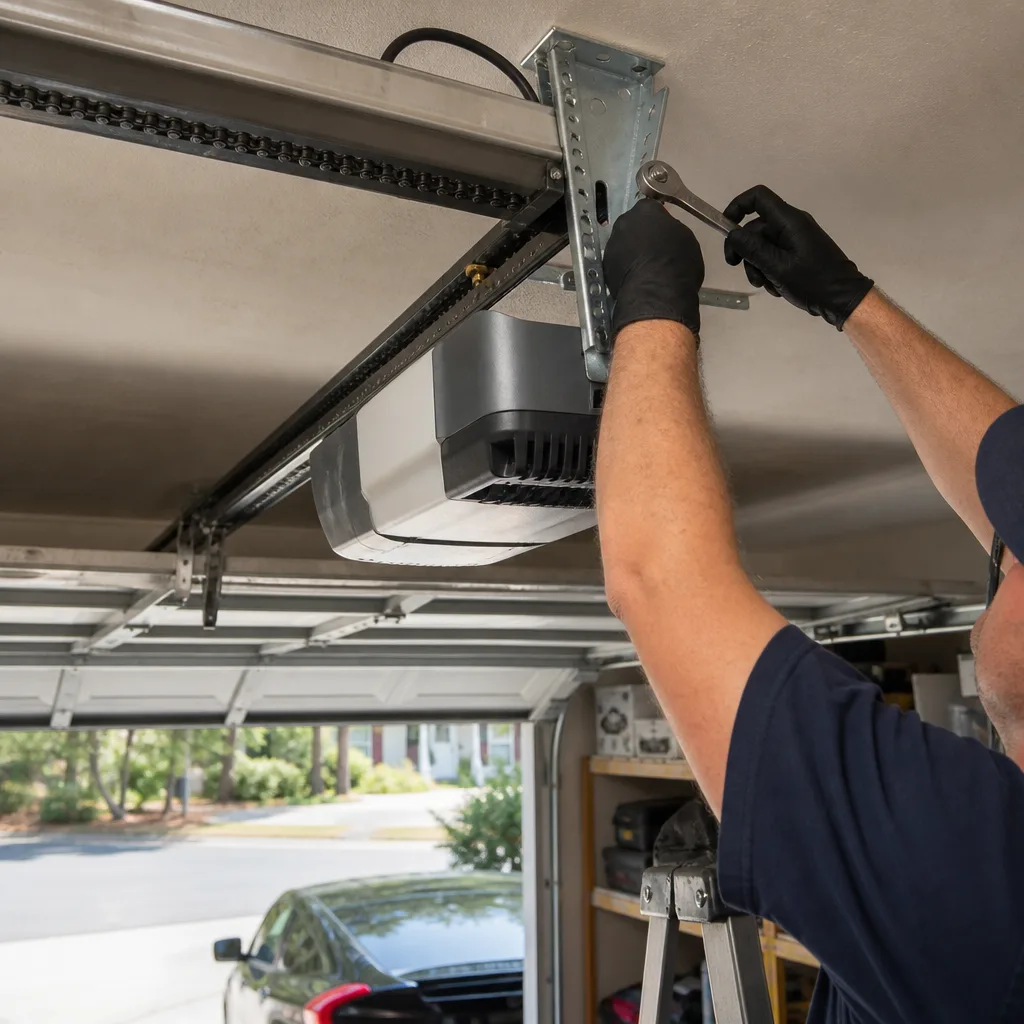
- The Hard No-DIY List: Three Tasks With Injury-Level Failure Modes
- The Legitimate DIY List: Five Tasks You Can Do Correctly
- The One Test That Determines Everything: Manual Disconnect and Balance
- The Warranty Question: What Actually Voids Coverage in Lawrenceville
- Cost Comparison: DIY vs Professional With Real Lawrenceville Numbers
- Tooling and Parts: What Retail Markup Does to Your DIY Budget
- Lawrenceville-Specific Factors: Climate, Code, and Housing Stock
- Common Mistakes to Avoid
- When to Call a Professional
- Frequently Asked Questions
- The Bottom Line
BeforeAfterThe Hard No-DIY List: Three Tasks With Injury-Level Failure Modes
There is a category of garage door work where skill is not the deciding variable. The deciding variable is what happens when the task goes wrong. Three tasks in particular are not a judgment call about your competence; they are a judgment call about the failure mode of the component itself. In our experience in Lawrenceville, every technician has seen a homeowner attempt one of these after watching two videos and deciding the risk was exaggerated. It is not exaggerated.
1. Torsion Spring Winding
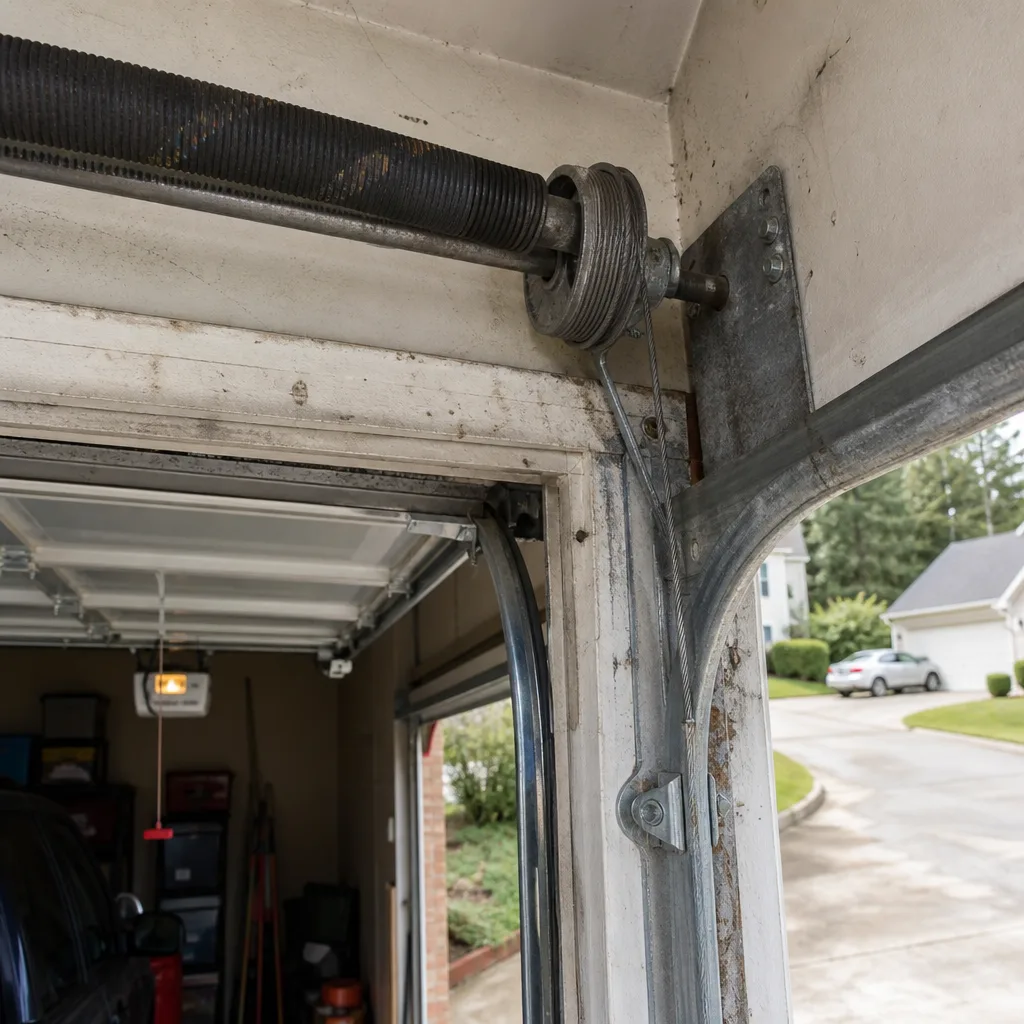
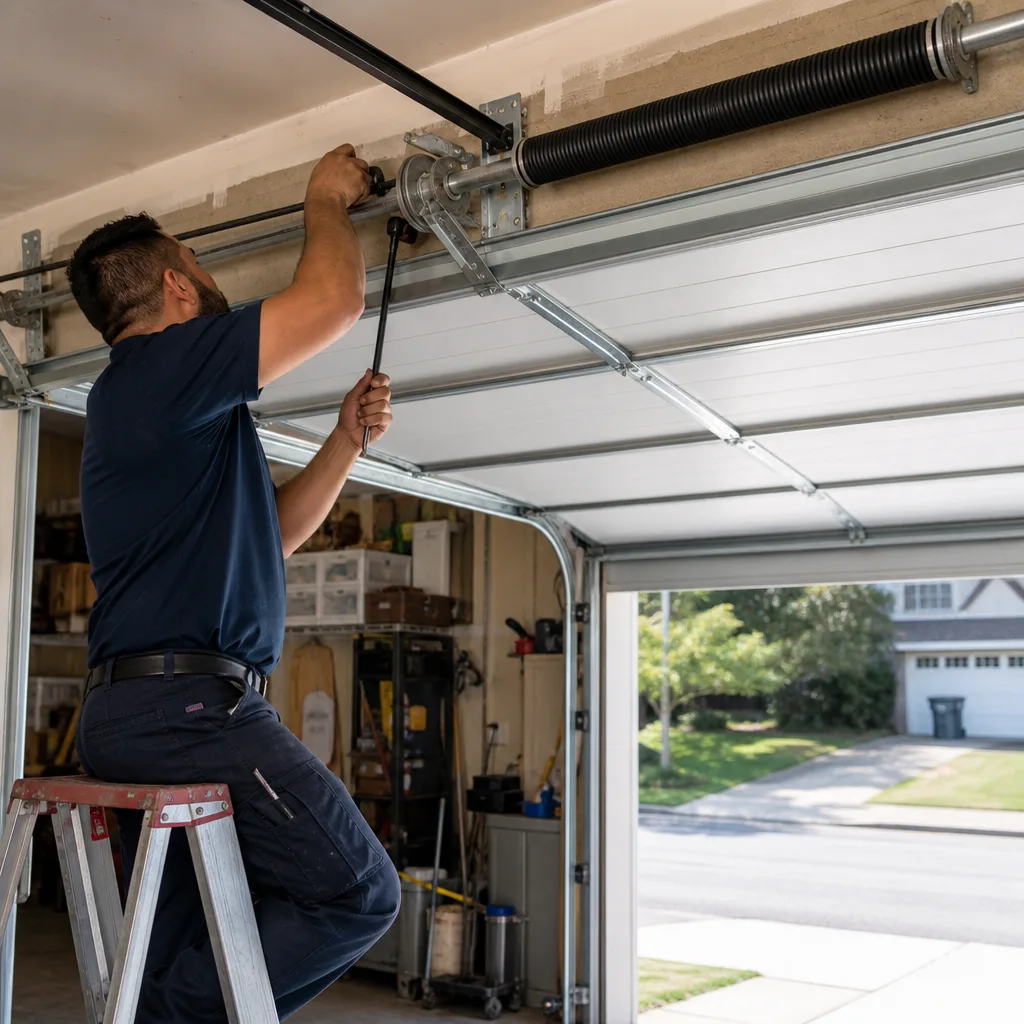
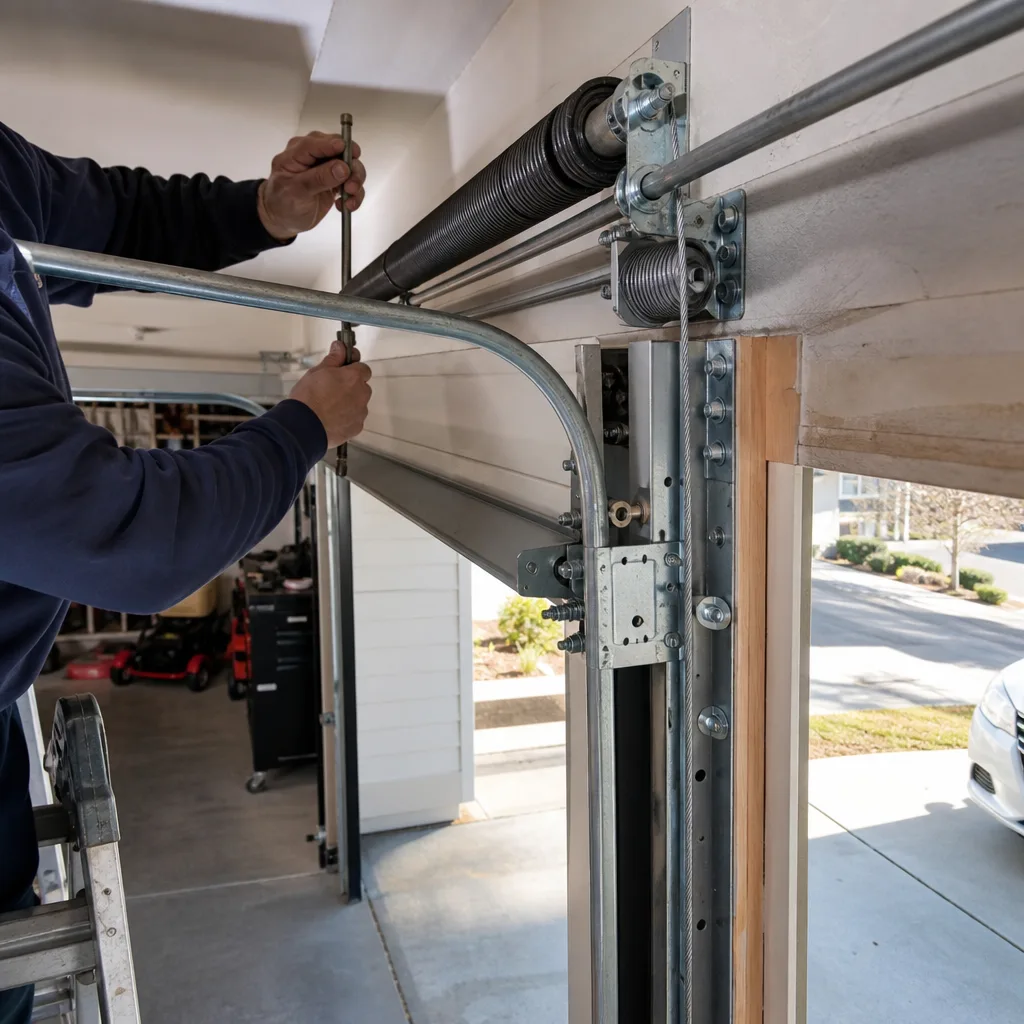
A torsion spring is the steel coil mounted on a shaft above the door opening. When the door is closed, that spring is wound tight, storing the mechanical energy needed to lift a 150-to-250 pound door. Winding a new spring means inserting two steel bars into the winding cone and rotating it under load, typically 28 to 32 quarter-turns depending on door height. The spring wants to unwind. If a bar slips, it becomes a projectile moving at high angular velocity. The documented injuries from this are not minor: fractured wrists, orbital bone breaks, and lacerations requiring surgery. This is not a disclaimer added for drama; it is the reason garage door companies exist as a trade. A spring under tension does not negotiate with your grip strength.
At Servo Garage Doors Lawrenceville, this is the task where our documentation system matters most. Technicians photograph the failed spring before touching it, measure the wire diameter and coil length, and quote a flat price in writing before any winding begins. That photo record is included at the end of the job so you can see exactly what failed and what was installed.
2. Cable Drum Replacement
The cable drum is the grooved spool on each end of the torsion shaft that the lifting cables wrap around. When a cable snaps or a drum wears, the broken end is under lateral tension, pulling toward the shaft. Removing a cable from a loaded drum without unwinding the spring first is the fastest way to create the same injury condition as a spring failure. The cable, not the spring, becomes the projectile on a good day, or tangles around the shaft on a bad day, binding the door mid-travel with unpredictable stored energy.
The safe procedure with springs under tension is to unwind them first, replace the drum, re-route the cable, and rewind the springs to the correct turn count. That is the entire job. If you are not doing it in that order, you are doing it unsafely. If you are doing it in that order, you have already accepted the spring winding and unwinding risk from the item above.
3. Track Realignment After a Vehicle Strike
A door that has been hit by a vehicle, even at walking speed, has transmitted impact force through the panel into the track brackets, the hinges, and the spring system. The visible problem might be a bent section of track; the invisible problem is the load path. When you straighten a track with the door still under spring tension, you are working against a structural load that can release laterally if a bracket tears or a hinge pin shears. The door itself can shift suddenly.
Vehicle strikes in Lawrenceville are common enough that we see several each year, and they are consistently worse than the homeowner’s description. What looked like a small bend on the bottom track usually traces back to a hinge and bracket cluster pulling away from the jamb. This is not a repair; it is a replacement with a re-tensioned spring system and a door that is square to the opening again.
If you need immediate help with any of these three, Emergency Garage Door in Lawrenceville service is live-answered 24/7, including holidays, by a real person who dispatches a named technician.
The Legitimate DIY List: Five Tasks You Can Do Correctly
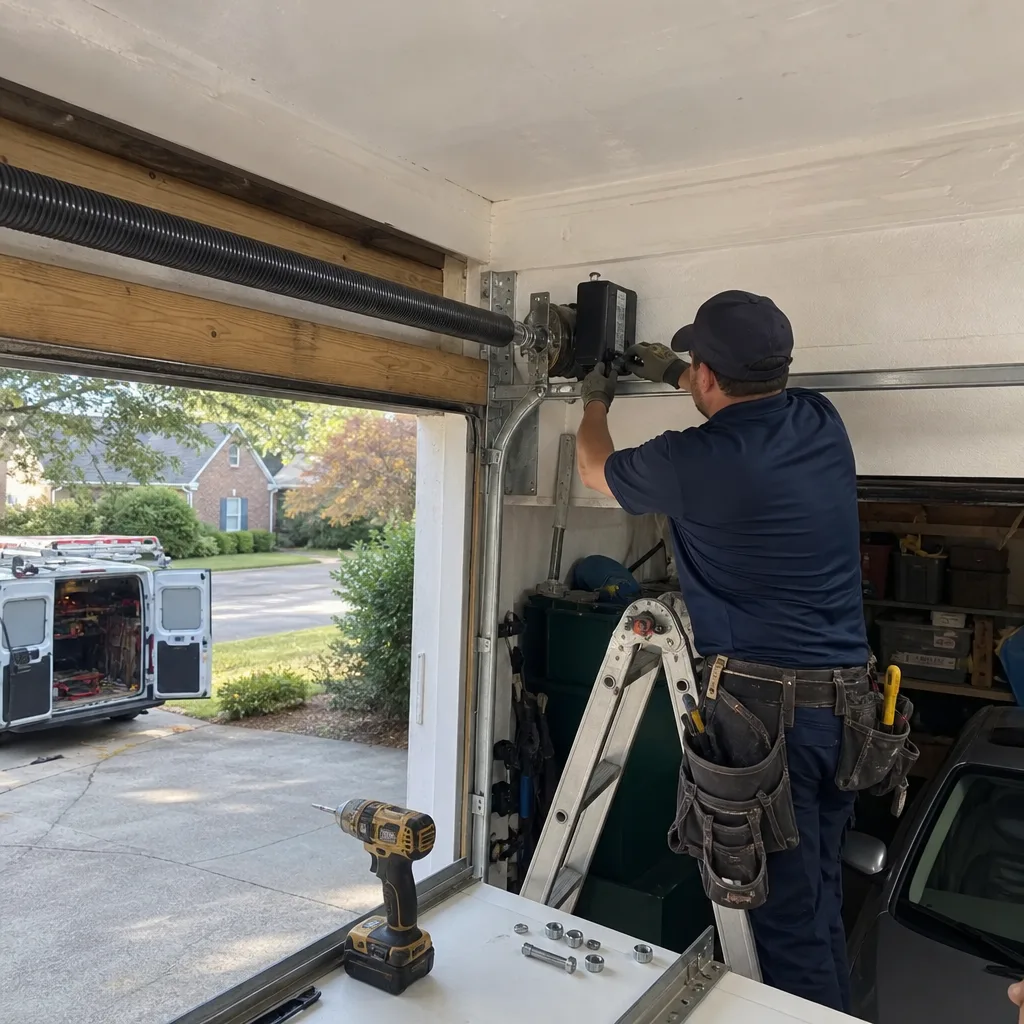
The flip side of the no-DIY list is that some garage door tasks are genuinely appropriate for a competent homeowner. The shared characteristic of everything on this list: the failure mode is cosmetic or operational, not injurious. You can do these wrong and the worst outcome is a door that doesn’t work properly or a gasket that leaks. That is the whole category definition.
1. Weatherstripping Replacement
The rubber gasket along the bottom of the door, the vinyl strips along the sides and top, the U-shaped astragal: all of these wear out faster in Georgia’s climate than anywhere in the northern states, because UV exposure and summer heat accelerate rubber hardening. Replacing them is straightforward. For the bottom seal, the old strip slides out of the aluminum retainer channel, the new one slides in. For side and top seals, they are nailed or screwed to the jamb. No spring tension is involved. This is the single best DIY task on a garage door for recovering energy efficiency, and it is the one we recommend to Lawrenceville homeowners who want to do something themselves. Expect to spend $18 to $40 on the seal itself, and about 45 minutes on the job. The safety note here is mild: if your door is closed, the bottom seal replacement requires removing the old gasket without the door being in motion, which means you do it with the opener disconnected and the door resting on the floor.
2. Roller Swap on Extension-Spring Doors
Extension springs run along the horizontal track on each side, attached to pulleys and cables. They are recognizable because they stretch. On these doors, the rollers snap into the hinge brackets, and swapping a worn steel or nylon roller for a new one is a one-roller-at-a-time job that does not require touching the spring. The door remains in place, the opener disconnected, and you work from a ladder with a flat-head screwdriver to pop the old roller axle out of the hinge and slide the new one in. The caveat: this applies to extension-spring doors only. Torsion-spring doors have the spring shaft above the opening, and the roller swap on those doors still involves the cable tension and load, which is why we do not include them here. If you are not sure which spring type you have: torsion springs are mounted horizontally on a shaft above the closed door; extension springs are two long springs running parallel along the track above your head.
3. Safety Sensor Alignment
The photo eyes are the two small sensors mounted six inches off the floor on each side of the door opening. When they are misaligned, the door refuses to close, or reverses immediately after hitting the floor. This is the most common non-spring service call we get in Lawrenceville, and it is often a ten-minute fix. Loosen the mounting wing nut on one sensor, adjust the angle until the small indicator light turns solid rather than blinking, tighten the wing nut back down. The alignment beam is infrared, invisible, and requires only patience. If the lights stay blinking after aligning, check the wiring at the back of each sensor and the staples along the wire run up the jamb. Rodent damage to sensor wire is common in Lawrenceville’s older neighborhoods where garages share wall space with attics.
4. Opener Remote Programming
Programming a remote or keypad to an existing opener is a button-press procedure on every major brand. On a LiftMaster or Chamberlain unit, the learn button on the back of the motor head is pressed once, then the remote button within 30 seconds. On Genie, the process is similar. Where homeowners get stuck is the same place every time: the remote is not compatible with the opener’s frequency, or the opener’s logic board has failed and no amount of programming will fix it. If the remote programs successfully but the door still won’t move, the problem is likely the Garage Door Opener Repair & Installation in Lawrenceville territory: a failed logic board, a stripped gear, or a bad limit switch, not the remote.
5. Panel Touch-Up Paint
Steel and aluminum garage door panels will rust if the paint film is compromised. Lawrenceville’s summer afternoon thunderstorms plus winter road salt in some subdivisions mean a scratch that shows bare metal in April will show orange staining by September. Touch-up paint from the door manufacturer or a matched enamel from a local paint supplier is a legitimate DIY job. Clean the area, apply a rust converter if metal is exposed, then art-brush the paint in thin coats. This is purely cosmetic and requires a ladder, a brush, and patience. The door’s operation is unaffected. Amarr and Raynor both sell factory-touch-up kits for their current lines.
The One Test That Determines Everything: Manual Disconnect and Balance
Before you attempt any DIY task on a garage door, there is a single diagnostic that determines whether the door is safe to service at all. It takes two minutes and requires no tools beyond the red emergency release handle.
- Close the door. Pull the red emergency release handle on the opener rail. This disconnects the door from the opener carriage.
- Using both hands on the door handle or bottom rail, lift the door manually to waist height, approximately three and a half feet from the floor.
- Let go of the door. Do not step away; stand beside the door, not under it.
- Observe. The door should stay at waist height, neither rising nor falling more than an inch.
If the door stays in place, the spring system is balanced, and the door is safe to move manually. If the door drops, the springs are weak or broken, and the door is not safe to work on until a professional has corrected the spring tension. If the door rises, the springs are overwound. Both conditions mean the same thing: no DIY task is safe until the spring system is right. The manual disconnect and balance test is the gate, not a suggestion. In Lawrenceville, we have seen doors that were balanced when checked in March and dangerously unbalanced by October because the spring lost tension gradually. Check it seasonally. It costs nothing to know.
The Warranty Question: What Actually Voids Coverage in Lawrenceville
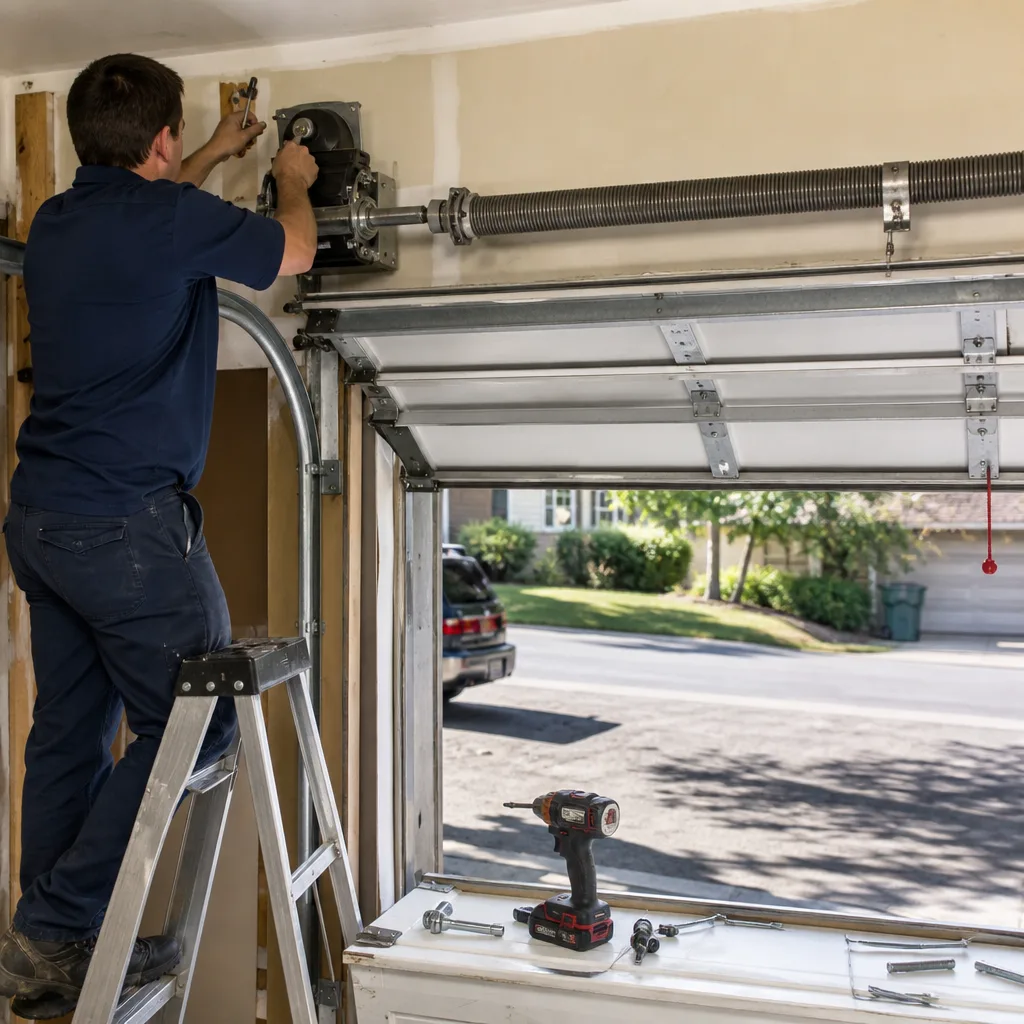
The warranty conversation is simpler than most homeowners expect, and the misinformation online is worse than the reality. Here is what actually matters.
Manufacturer Warranty vs. Installer Warranty
A garage door and its hardware carry two separate warranty types. The manufacturer’s warranty covers defects in the materials and components: the panel, the spring, the hinges. The installer’s warranty (also called a labor warranty) covers the workmanship of the installation itself. What voids each is different.
Manufacturer warranties generally do not void from homeowner installation. If you buy a Chamberlain opener at a Lawrenceville big-box store and install it yourself, you still have the manufacturer’s parts warranty on the logic board and motor. What you do not have is a labor warranty at all, because there is no installer standing behind the work. The tradeoff is not voiding a warranty; it is not having one in the first place. Installer warranties void when you work on the installed system yourself. If a pro installs a door and you later replace a spring or adjust the track and something fails, the installer’s labor coverage is gone. The manufacturer parts warranty usually survives, but any future labor claim is on you.
What Actually Voids Manufacturer Coverage
- Modification: cutting down a door panel, welding brackets, or altering the door structure voids the manufacturer parts warranty on that component.
- Improper spring replacement: installing a spring with the wrong wire diameter or length, or failing to balance the door after, and then a subsequent component failure occurs that traces to that spring. This is the most common warranty-denial scenario we see.
- Removing the safety sensors permanently or wiring around them voids the opener warranty and violates the UL 325 standard that every major brand complies with.
Before you open a box, call the manufacturer’s warranty line and ask two questions: Does homeowner installation void the parts warranty on this specific model? Does a professional installation extend the parts coverage period? Some brands, including LiftMaster, run extended parts warranties only through authorized dealer installation. The answer should inform your decision, not your guess.
Cost Comparison: DIY vs Professional With Real Lawrenceville Numbers
We are going to put dollar ranges on the page because ‘call for a quote’ contradicts how this business operates. These are Lawrenceville market prices as of this guide’s writing, and they reflect what we see on invoices from the big-box retailers and what we quote for the same work.
The DIY Cost Reality
| Task | DIY Parts/Tool Cost | Professional Cost in Lawrenceville | Difference |
|---|---|---|---|
| Bottom weatherstripping | $18-$40 | $85-$130 installed | $45-$110 saved |
| Safety sensor alignment | $0 (DIY) | $85-$120 service call | $85-$120 saved |
| Remote programming | $0-$30 (remote) | $65-$95 if remote supplied | $35-$95 saved |
| Roller replacement (all rollers) | $30-$60 parts + 1-2 hrs | $140-$200 installed | $80-$170 saved |
| Torsion spring replacement (pair) | $80-$160 parts + $40-$70 tool rental (winding bars, socket set) + safety risk | $280-$450 installed, balanced, tested | Not a savings when risk-adjusted |
| Cable drum replacement (both sides) | $40-$80 parts + spring unwinding required | $180-$280 installed | Risk-heavy to attempt DIY |
| Track realignment post-strike | Not realistically DIY | $250-$500 depending on damage | Pro required |
The Hidden Costs of DIY on the Spring-Category Jobs
The headline parts savings on torsion springs disappears when you account for three specific costs. First, tool rental or purchase: winding bars are $15 to $40, a proper socket set another $20 to $60 if you don’t own one, and the torque measurement if you chase precision adds more. Second, parts markup at retail: a spring pair that costs a dealer buying in volume $40 to $70 costs the homeowner $80 to $160 at the big-box store. The garage door company buys the same spring at trade pricing and passes along the installed price that includes the part at dealer cost. The markup is the retailer’s cut, not the professional’s.
Third, the callback. If a DIY spring replacement is done incorrectly and the door binds, the homeowner pays the full professional service fee to undo the work and redo it correctly. That cost is not a maybe. In our experience, one in three DIY spring attempts we see comes to us as a halfway-done job: the spring is on but the door doesn’t balance, or the cables are crossed on the drums. The customer pays the original retail parts cost, the time spent, and then the full professional repair price on top. That is the false economy. The Servo Garage Doors Lawrenceville home service area covers all of Lawrenceville and surrounding Gwinnett County, and every quote is written and flat before any work starts.
Tooling and Parts: What Retail Markup Does to Your DIY Budget
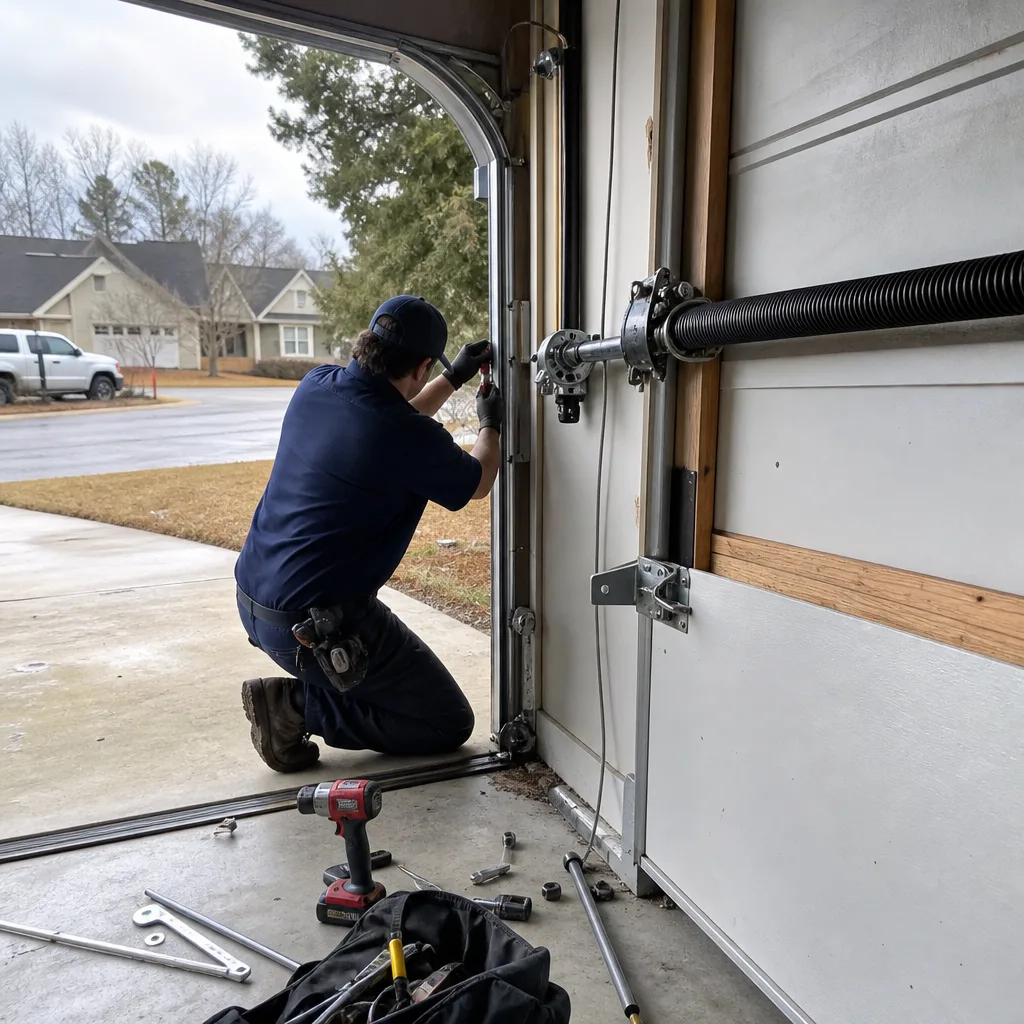
The parts counter at any Lawrenceville home-improvement retailer sells torsion springs, cables, rollers, and hinges at retail markup. That markup is usually 100 to 200 percent over trade pricing. A 0.225-inch wire diameter torsion spring that a garage door company buys in volume for $45 sells to the public for $95. The homeowner is paying the retailer to be the middleman, and then still doing the dangerous work themselves. This is the least-discussed part of the DIY equation, and it is the part that most often reverses the decision when a homeowner sees the math on the page.
The same is true for opener replacement. A Chamberlain or LiftMaster opener at retail carries a retail box price plus a rail package that may not include the heavy-duty rail or the safety-beam extension kit for taller doors. The professional installer buys from distribution at trade price and installs what the door actually needs. If you are DIYing an opener replacement in Lawrenceville, make sure the box contains the rail, the belt or chain, the safety sensors, the wall control, and the manual release assembly. Missing components are another trip to the store.
For Garage Door Parts in Lawrenceville, the specific components that matter are the spring’s wire diameter (measured with a caliper), the inside diameter (most residential is 2 inches), and the length (measured from coil tip to coil tip). Guessing at these numbers, or buying by door weight instead of spring specifications, is the single most common parts error we correct.
Lawrenceville-Specific Factors: Climate, Code, and Housing Stock
Garage door failure in Lawrenceville follows a seasonal pattern that is distinct from the national average. The humidity is the primary driver. From May through September, relative humidity regularly sits above 70 percent, and garage spaces without conditioned air see condensation forming on the spring coils and hardware. That moisture accelerates oxidation on uncoated steel springs, which is the mechanical precursor to a fatigue crack. In our records, spring failures in Lawrenceville cluster in three periods: the first sustained heat wave of June, the late-August stretch when overnight temps stay in the mid-70s, and the first hard freeze of January when cold snaps an aging spring already weakened by summer corrosion.
Housing stock matters too. Lawrenceville’s subdivisions built between 1995 and 2010 dominate the inventory, and many of those doors were installed during construction with builder-grade springs. A builder-grade torsion spring carries a 10,000-cycle rating, which works out to roughly seven years of two-open-close cycles per day. If your home is a 2003 build with the original springs, you are years past the component’s rated lifespan. The door still opens, so the spring hasn’t failed visibly, but the fatigue accumulation is real and invisible until it isn’t.
Code is the third factor. Lawrenceville sits in Gwinnett County, which enforces the 2018 International Residential Code with Georgia amendments. The relevant sections for garage doors are R309.1 (garage opening protection) and R310 (emergency escape). The code requirements that affect repairs are minimal compared to new construction, but there is one live item: any electrical work on opener circuits, including replacing hard-wired openers, must meet current NEC requirements for GFCI protection on garage receptacle circuits. If your opener swap requires outlet replacement, that is an electrical permit and an electrician, not a screwdriver job. We flag this on opener replacements in Lawrenceville when the existing outlet predates the GFCI requirement.
Common Mistakes to Avoid
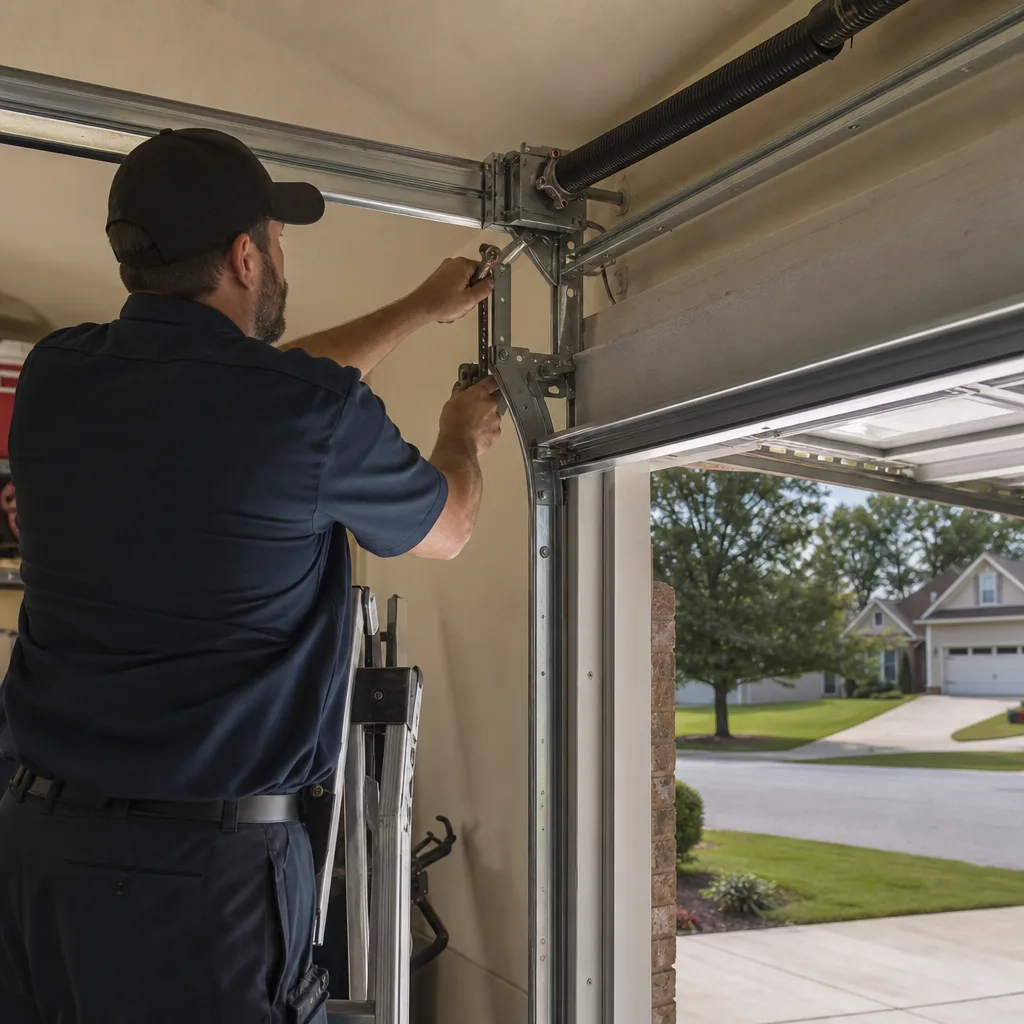
- Using the wrong spring specifications. A torsion spring is defined by wire diameter, inside diameter, length, and wind direction. Wrong on any one of these and the door won’t balance. Guessing is not a strategy. Measure with a caliper or don’t do the job.
- Removing the old spring without unwinding it first. This is the single most dangerous action possible on a garage door. The spring is under full tension. Every safe procedure begins with unwinding, and every injury we know of from this trade traces to someone skipping that step.
- Disconnecting the opener without locking the door. Once the emergency release is pulled with the door open, a broken or unbalanced spring means the door will drop. A dropping 150-pound door is not something you want to be in front of.
- Attempting track work with the door under load. Any bending, straightening, or bracket repair while the springs are tensioned puts lateral load on the track. The failure mode of getting that wrong is the door swinging off its track, not just staying misaligned.
- Using impact drivers on hinge screws without supporting the door. The hinge screws on a Lawrenceville door from the early 2000s are often corroded into the jambs. Impacting them out without securing the door can loosen the jamb anchor and leave the door hinged on fewer brackets than designed.
- Ignoring the balance test because the door “still works.” The door opens on the opener’s horsepower even as the spring weakens, and the opener motor is compensating for the lost spring tension. That is the road to burned-out opener gears, which is an opener replacement bill that didn’t need to happen.
- Buying weatherstripping by brand instead of by channel shape. Clopay, Amarr, Wayne Dalton, and Raynor all use slightly different retainer profiles. The gasket has to match the channel, not the door brand, or it will not seat properly and will leak within a season.
When to Call a Professional
Call a professional when the spring system is involved, when a cable is frayed or snapped, when the door has been struck by a vehicle, or when the manual balance test fails. Also call when the opener motor runs but the door does not move, when the door reverses for no visible reason, or when you hear a grinding noise that wasn’t there last week. These are not diagnostics to troubleshoot by ear; they are signs that a load-bearing component or the opener drive train has already failed. In Lawrenceville, the professional call starts with a flat, written price and a written scope before any work begins, not a vague estimate over the phone. Servo Garage Doors Lawrenceville offers free estimates in Lawrenceville. Call (470) 202-3917 and you’ll speak with a real person, 24/7, including holidays.
Frequently Asked Questions
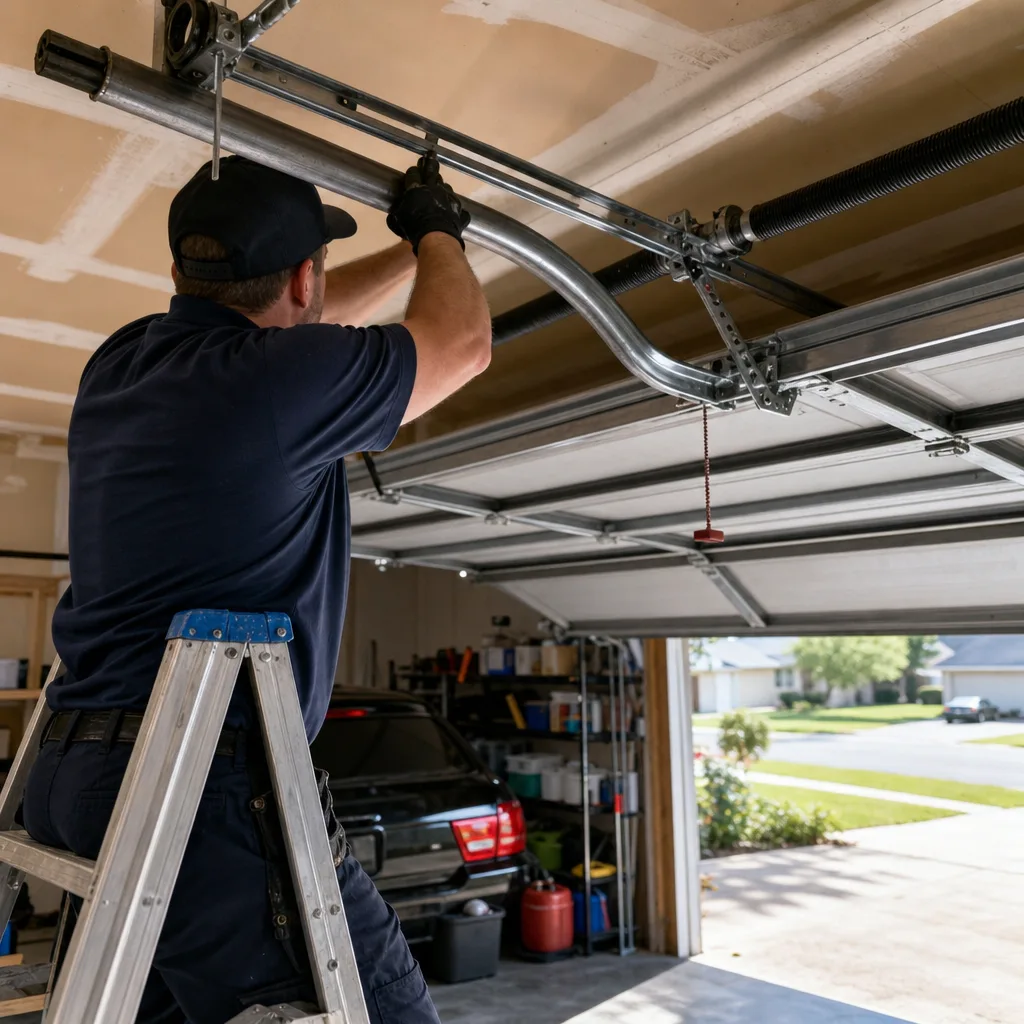
Torsion spring replacement in Lawrenceville typically runs $280 to $450 for a pair, installed and balanced, depending on the door weight and spring size. Extension spring replacement runs $180 to $280. The exact number depends on the spring’s wire diameter and length, which a technician measures on site. Call (470) 202-3917 for a free estimate with a flat, written price before any work begins.
Yes, you can install an opener yourself and keep the manufacturer’s parts warranty, but you’ll carry the full labor risk and the responsibility for programming, force settings, and safety sensor compliance. If you want the job documented and warranted in writing, professional installation includes all of that plus the photo record of the work. The same applies whether it’s a Chamberlain, LiftMaster, or Craftsman unit.
The torsion spring. It stores enough energy under load to break bones if it releases while winding, and the failure mode is instant. This is not a matter of skill level. The safe procedure requires specific tools, specific turn counts by door height, and the correct spring specifications for the door weight.
Run the manual balance test: disconnect the opener, raise the door to waist height, and let go. If the door drops, the springs are worn or broken and the system is not safe to work on. If the door holds, the springs are doing their job.
It depends on the cause. A vehicle strike into your own garage door is typically covered under the comprehensive or collision coverage of the vehicle policy, not the homeowners policy. Storm damage to the door is usually a homeowners claim. Spring failure from age is not covered; it is a maintenance item. Check your specific policy language before filing.
Yes. Emergency garage door service is live-answered 24/7, including holidays. You’ll speak with a real person who dispatches a named technician, and you’ll get an on-the-way text, not a callback window. Call (470) 202-3917.
The Bottom Line
The DIY versus professional question on garage doors is not a measure of your competence. It is a question of failure modes. Weatherstripping, sensor alignment, remote programming, extension-spring roller swaps, and touch-up paint are safe and reasonable for a homeowner. Torsion spring replacement, cable drum work, and any structural track repair after a vehicle strike carry injury-level risk regardless of skill, and most of them fail expensively when amateur work goes wrong. Run the balance test. Check the warranty questions before opening any box. And when the job is beyond the safe line, get a written flat price before any work begins. For more guides & resources, visit our blog. In Lawrenceville, that is Servo Garage Doors Lawrenceville. Call (470) 202-3917 for a free estimate.
Written by Marcus Deller, Owner at Servo Garage Doors Lawrenceville, serving Lawrenceville since 2015.