
Full 25-point door and opener safety check with every visit - springs, cables, rollers, tracks, and your LiftMaster or Chamberlain opener included
You get a price before we start. It does not change when the truck arrives.
Full-view glass
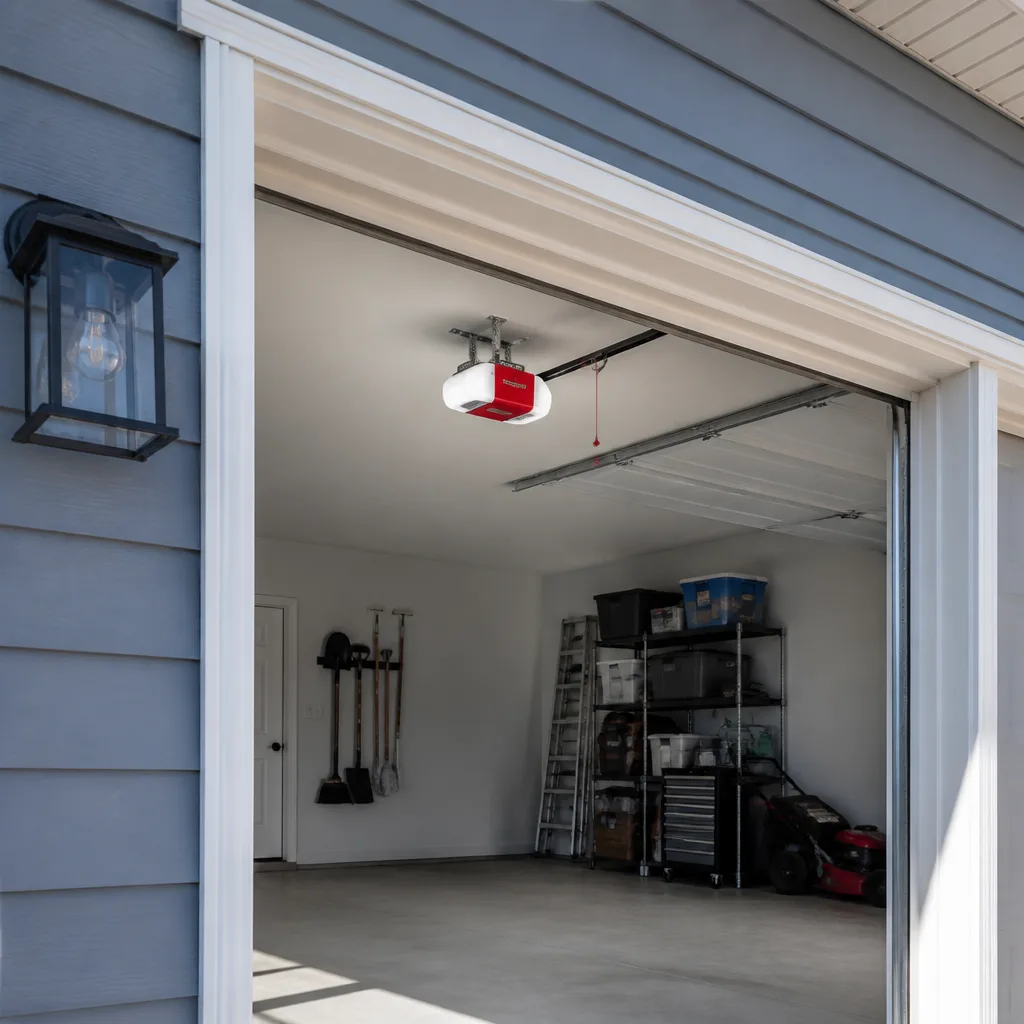
Chamberlain openers
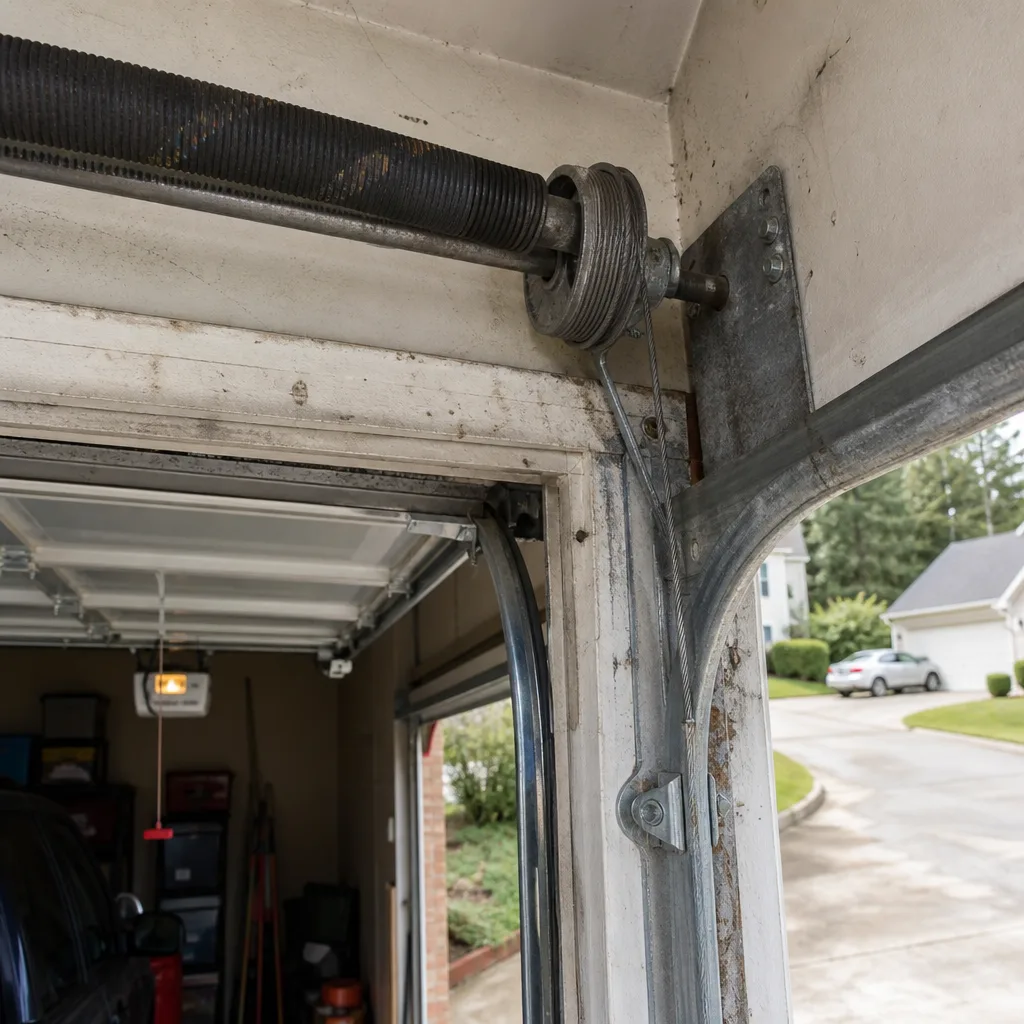 Before
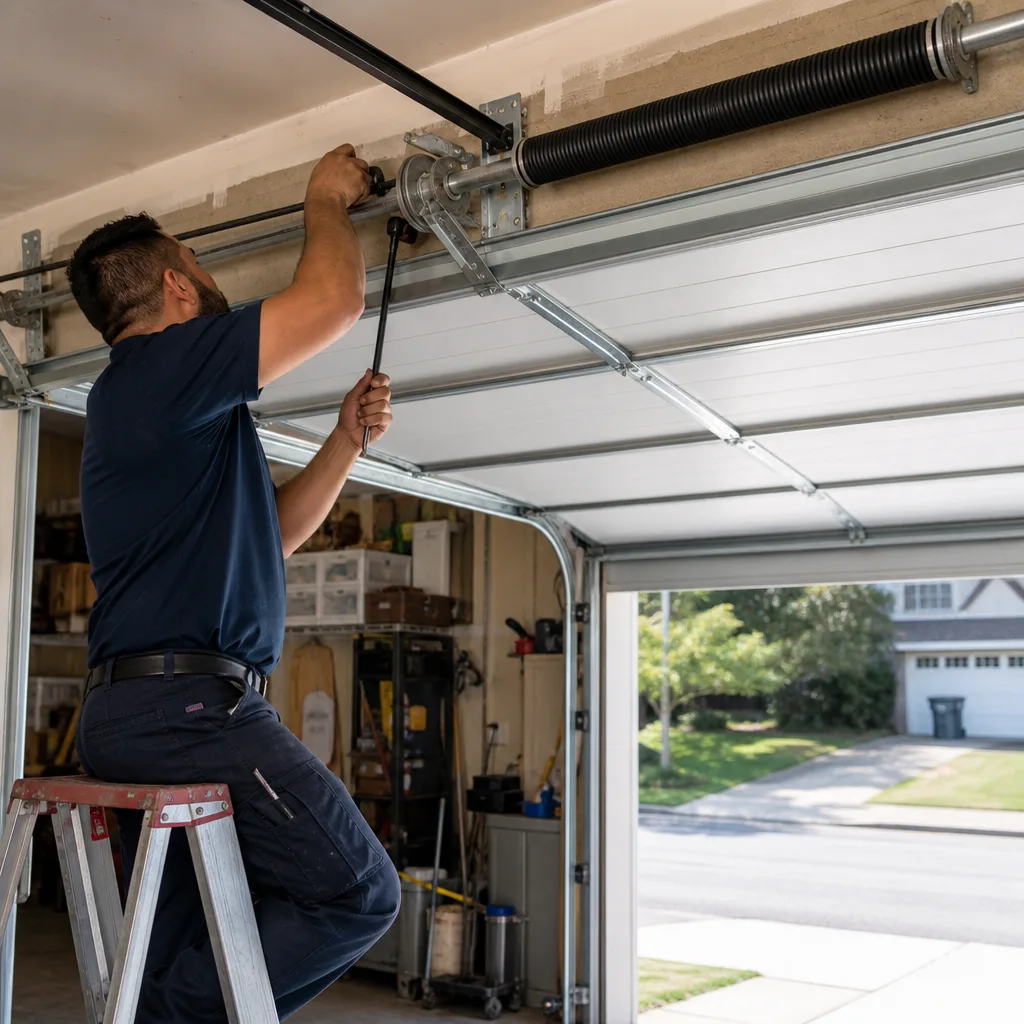 After
After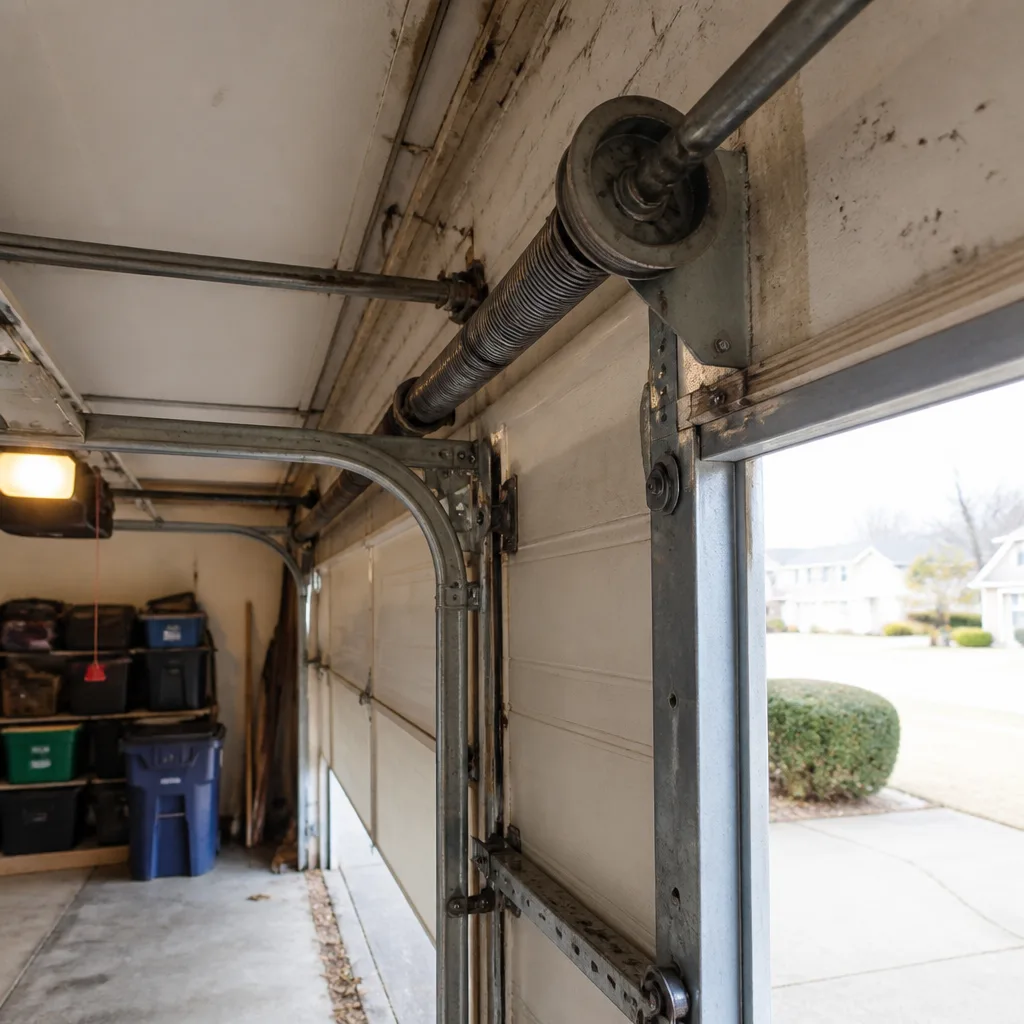 Before
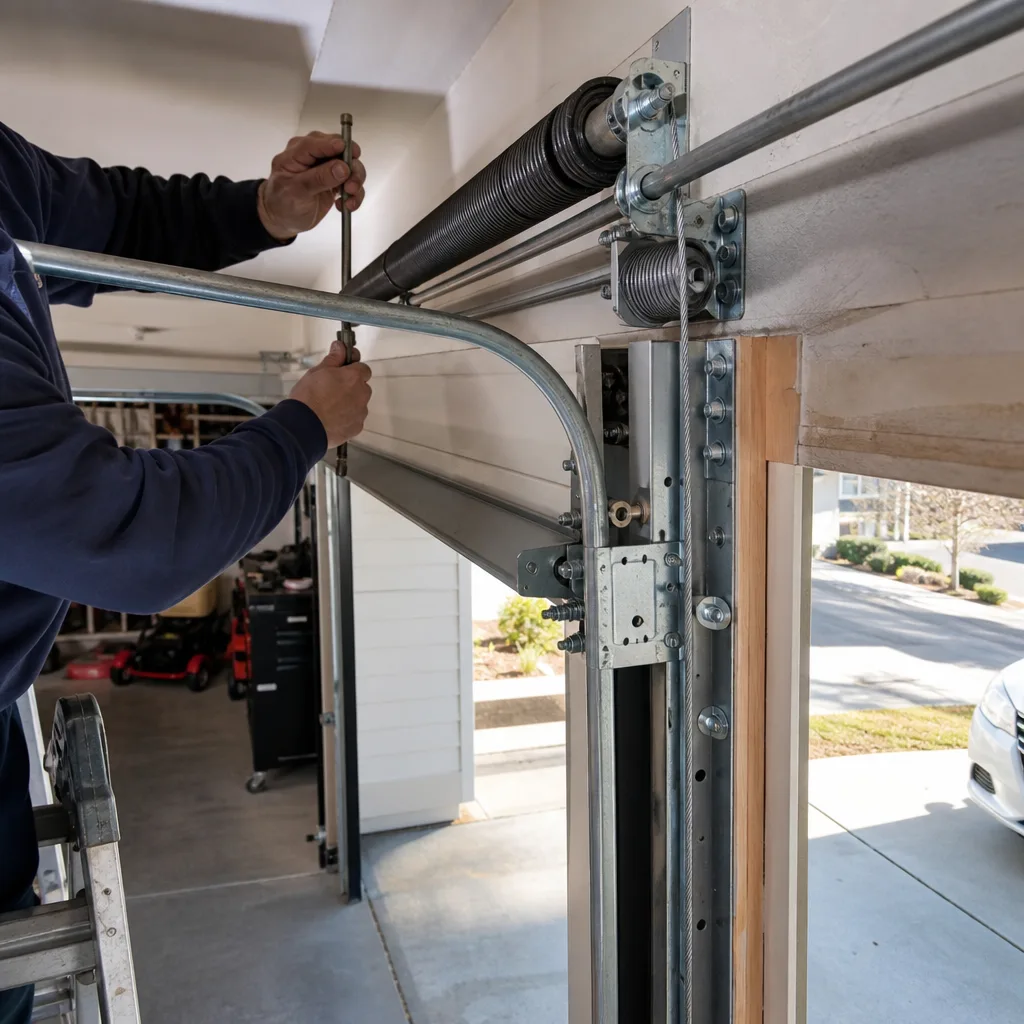 After
After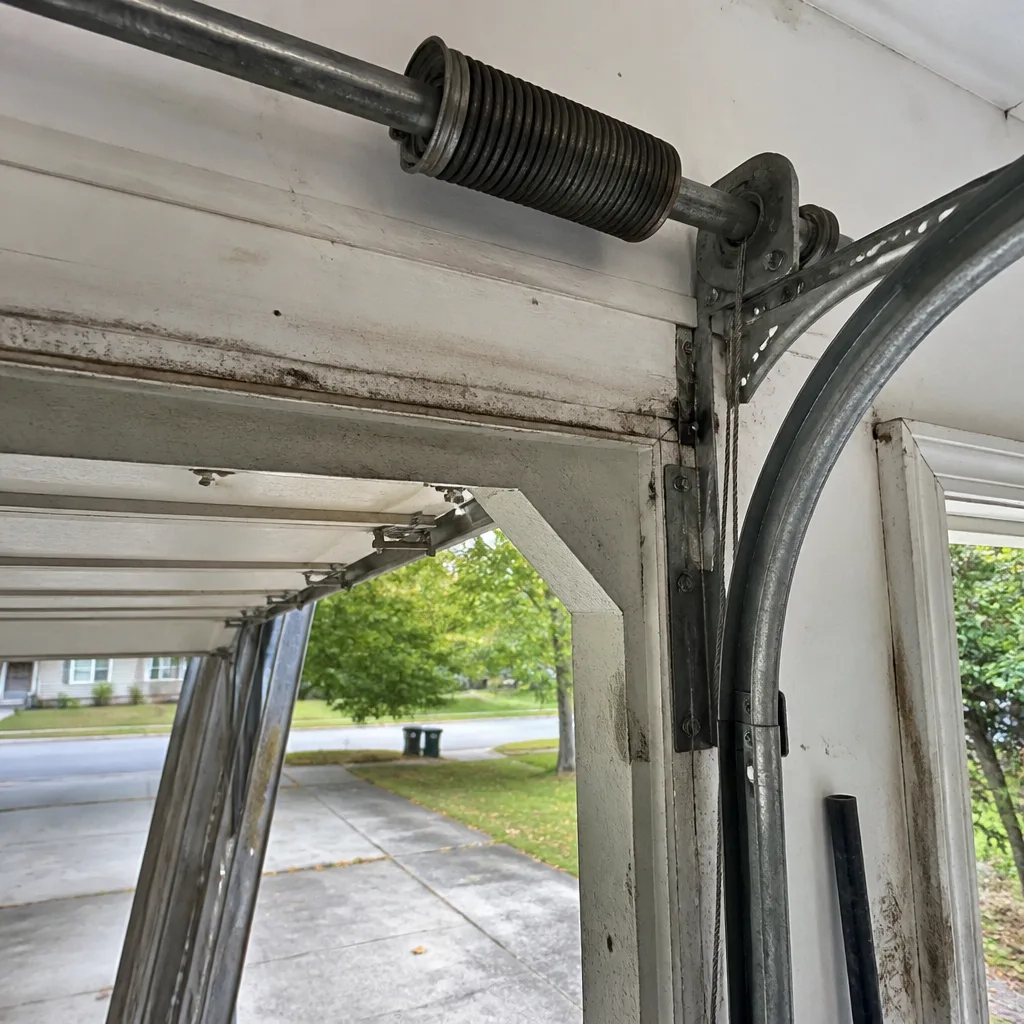 Before
 After
AfterRaynor Cable & Drum Replacement: The Lawrenceville Owner’s Guide
We stock and install Raynor-compatible cable and drum replacement parts on service trucks throughout Lawrenceville, with most jobs priced between $130 and $250 for cable work and $180 to $340 when the drum assembly is included. Same-day replacement is standard for a single-door cable and drum swap, since these are wear parts we carry in the common Raynor sizes. Most owners discover the problem when the door hangs crooked at the halfway point, or when a frayed cable strand catches their eye near the bottom roller bracket, or when the door simply refuses to lift because one side has gone slack.
Raynor built its reputation on heavier-than-average doors, so its cable and drum components are not always interchangeable with the generic parts hanging on a big-box pegboard hook. We see Raynor doors in Lawrenceville dating from the late 1990s through current production, and the cable-and-drum pairing differs enough across those decades that guessing is how a $150 repair becomes a $400 door realignment.
Which Raynor Models This Applies To
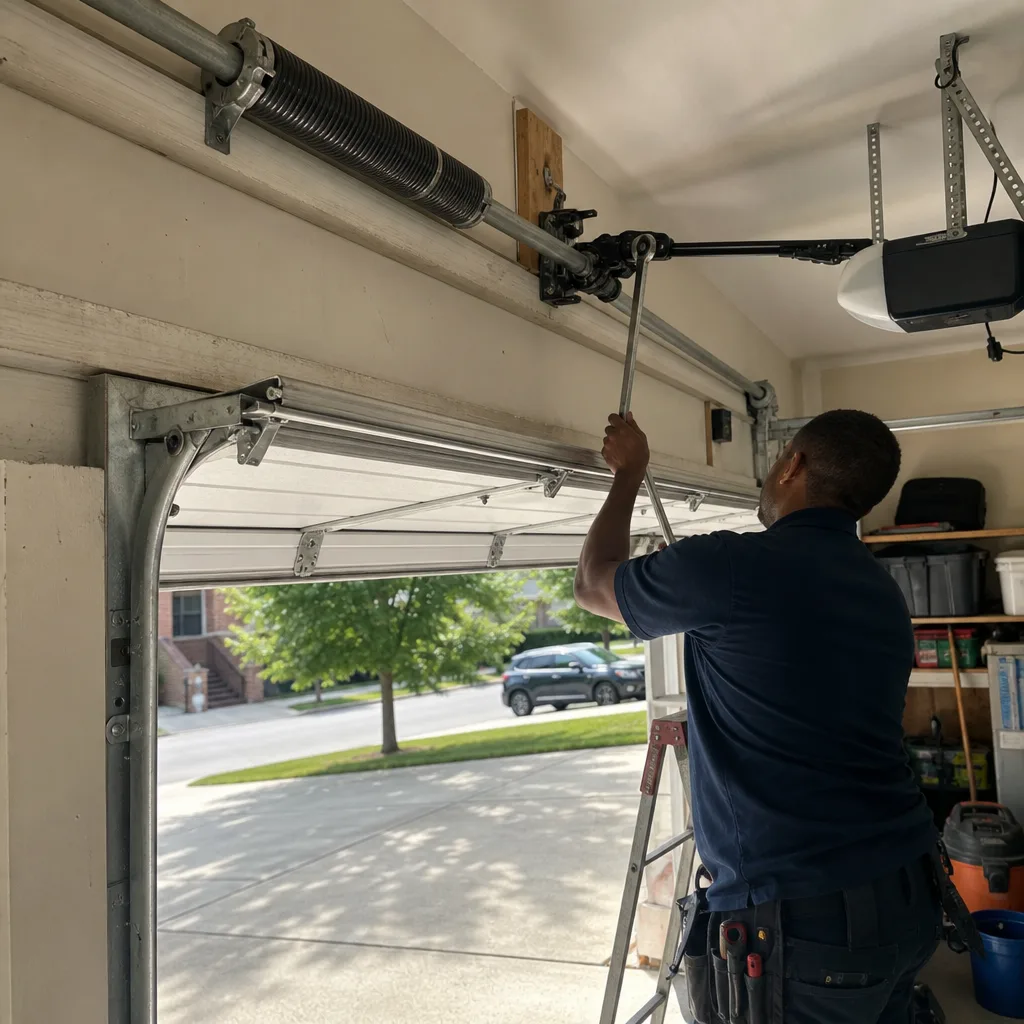
We work on the full Raynor residential range you’ll find across Gwinnett County: the Builder series, the Classic series, the Centura line, and the older Relante and Designer models that predate the current naming scheme. The critical identifier is the spring system, not the decorative panel style. Raynor uses both torsion springs (mounted horizontally above the closed door) and extension springs (mounted vertically on either side of the track), and the cable and drum configuration differs completely between those two systems.
Torsion-system Raynor doors use a tapered or stepped drum with a specific barrel length and cable groove width. Extension-system doors use a flat pulley-style drum or, on older models, a simple S-hook cable plate. The quickest way to identify what you have without touching anything under tension: look at the sticker on the vertical track or on the panel edge near the hinge line, and note the model prefix and production date. If the sticker is gone, we match the cable length off the broken sample and the drum off the old barrel measurement. Aftermarket cables and drums in the common Raynor sizes work well when spec-matched properly; for low-headroom or high-lift track configurations, we install OEM Raynor parts, because those drums are machined to a specific taper that generic equivalents simply do not replicate.
Signs Your Raynor Cable & Drum Replacement Is Failing
- The door opens crooked or binds on one side. A stretched cable or a worn drum groove lets one side travel faster than the other, and the door panel starts to twist against the track. The longer this runs, the more likely you are to ovalize a roller stem or crack a panel at the hinge point.
- You hear a grinding or squealing from the drum area. If the drum’s cable groove has worn shallow or developed a burr, the cable no longer seats cleanly. Lawrenceville’s humidity accelerates this by holding grit against the groove, which turns a smooth spool into a cutting surface.
- Visible fraying at the cable loop. The loop end at the bottom bracket takes the most abuse. A few broken strands there is a replace-it-now moment, not a watch-it-for-a-while situation. When that loop fails under load, there is no warning slack.
- A slack cable on one side while the door is down. On a torsion system, one slack cable usually means the drum has slipped on the shaft or the spring has failed. On an extension system, it means one side is bearing all the load while the other side does nothing.
- The door jerks when closing, then drops the last few inches. A seized or chipped drum can grab the cable mid-travel and then release it. That release is the jerk you just felt. It’s also the failure pattern we see on older Raynor doors along the Buford Drive corridor, where age has embrittled the original drum casting.
BeforeAfterReplacement Cost & What’s Included
In Lawrenceville, a Raynor cable-only replacement runs $130 to $250 installed. Adding a drum replacement and rebalancing the assembly with the existing springs lands in the $180 to $340 range. The spread depends on whether you have a standard 7-foot or 8-foot door, torsion versus extension geometry, and whether we’re matching an off-the-shelf drum or fitting a low-headroom OEM drum.
Every quote is a written, flat price delivered before any work begins, per Clause 1 of The Haven Standard. The written scope names the exact parts, the labor to install and rebalance, and the condition of the springs and rollers we found during inspection. Nothing starts until you approve that number. When the job is done, you receive a documented photo record of the failed cable and drum we removed, the new parts installed, and the final door balance check. This has been the practice since 2015, when Marcus Deller set the founding rule that the customer sees the failed part before anyone quotes a replacement: name the part, quote the number, then do the work.
DIY or Call Us?
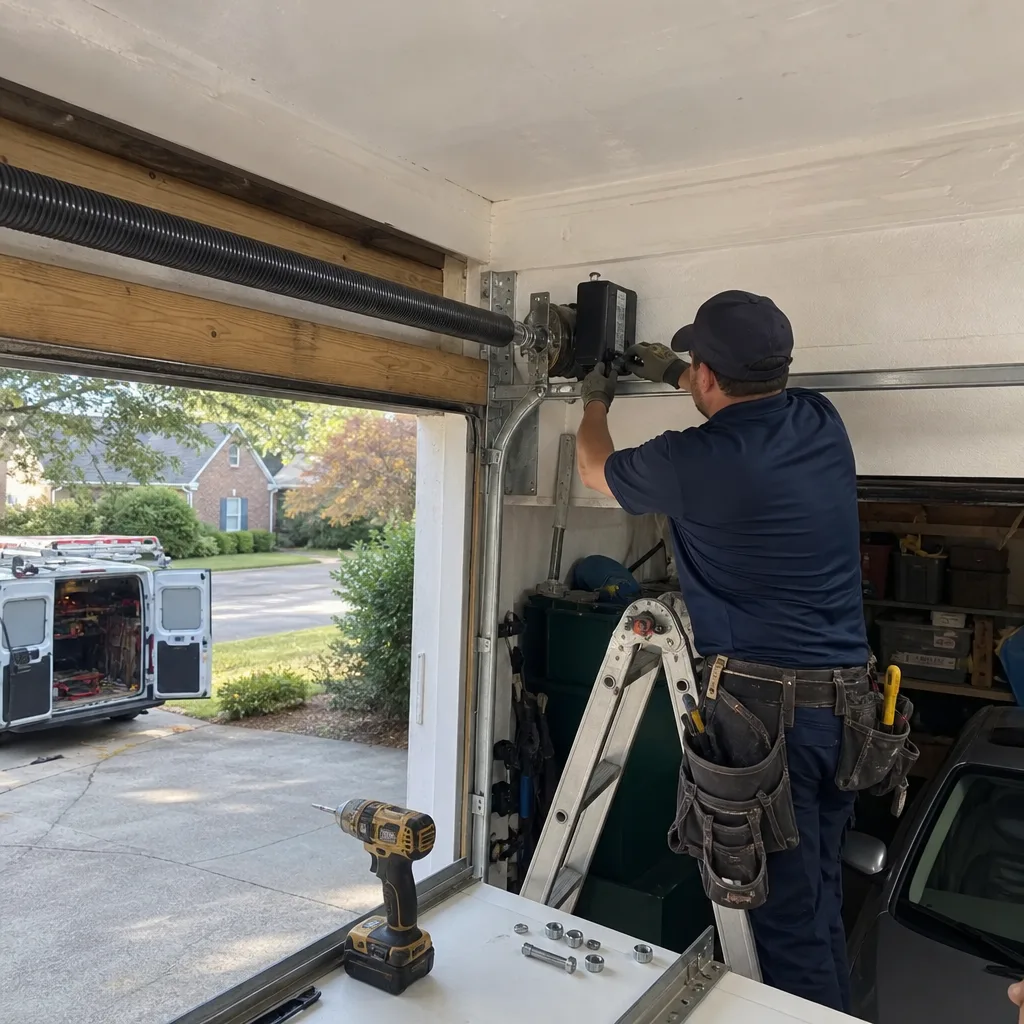
The safe-to-check items, you can do yourself: inspect the cable runs for visible fraying, look at the drum grooves for chips or burrs, and note whether the door travels evenly through one full cycle. What you should not do is remove or loosen any cable on a torsion system. Those cables are under the same tension as the spring, and a cable that slips off a drum during disassembly releases that stored energy in an instant. That is a trained-professional job, full stop.
On extension-system Raynor doors the tension is lower but still real, and a cable under load will take the skin off your hand if it lets go mid-removal. What we see DIYers get wrong most often is not the cable swap itself, it’s skipping the rebalance afterward. A door with new cables but uneven spring tension will chew through that new cable in six months. If you want the parts matched, the tension set correctly, and the photo record to prove what was done, call (470) 202-3917 and we’ll handle it.
FAQs
In Lawrenceville’s climate, Raynor cables typically last 8 to 12 years and cast drums 15 to 20, though the drum grooves often wear shallow before the casting fails. Humidity and the grit it traps against the groove surface are the main accelerants here, along with springs that were never the right wire gauge for the door’s weight. A door that was never balanced properly will shorten the life of both parts by roughly half, because one side does all the work.
No. A cable with broken strands cannot be spliced or heat-shrunk back to full tensile strength; any repair attempt leaves a stress riser at the repair point that will fail under load, usually at the worst possible moment. The cable is the cheapest part of the repair, so this is the wrong place to save money. If you’re seeing fraying, plan on replacement, and we’ll quote the number before any work begins.
A single-door cable replacement takes about an hour in Lawrenceville. Adding a drum replacement and a full rebalance stretches it to about 90 minutes for a torsion door. Extension-system doors usually run faster. We carry the common Raynor cables, drums, and related hardware on the service trucks, so the job is not usually spread over two visits.
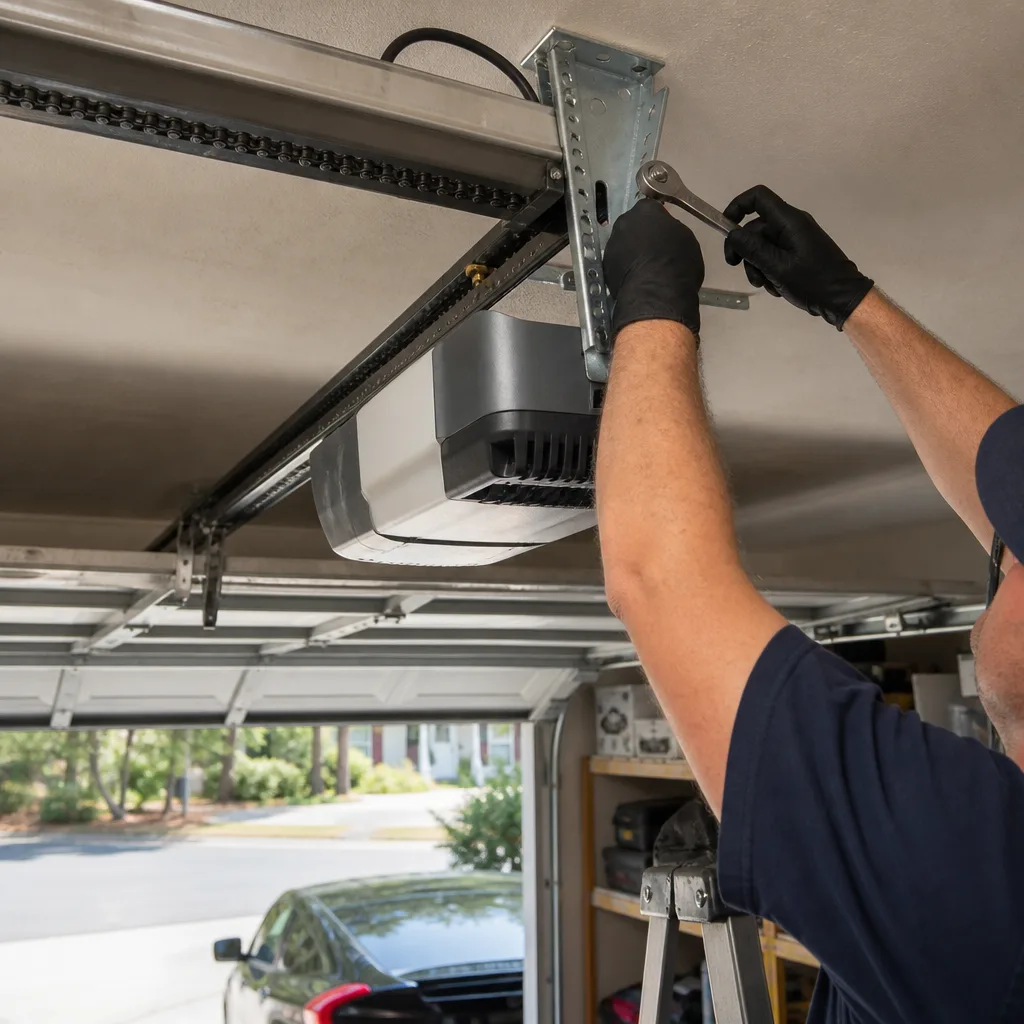
We stock Raynor-compatible cables and drums in the standard residential sizes, along with the common bottom brackets and hardware they attach to. For low-headroom or high-lift Raynor configurations, we order OEM and usually have the parts in hand within two business days. We also stock parts for LiftMaster, Chamberlain, and Genie openers, so the visit does not end with a second trip for the opener side of the system.
Written by Marcus Deller, Owner, Servo Garage Doors Lawrenceville at Servo Garage Doors Lawrenceville, serving Lawrenceville and nearby areas.