
Last updated September 20, 2026
Full 25-point door and opener safety check with every visit - springs, cables, rollers, tracks, and your LiftMaster or Chamberlain opener included
You get a price before we start. It does not change when the truck arrives.
Full-view glass
Chamberlain openers
 Before
 After
After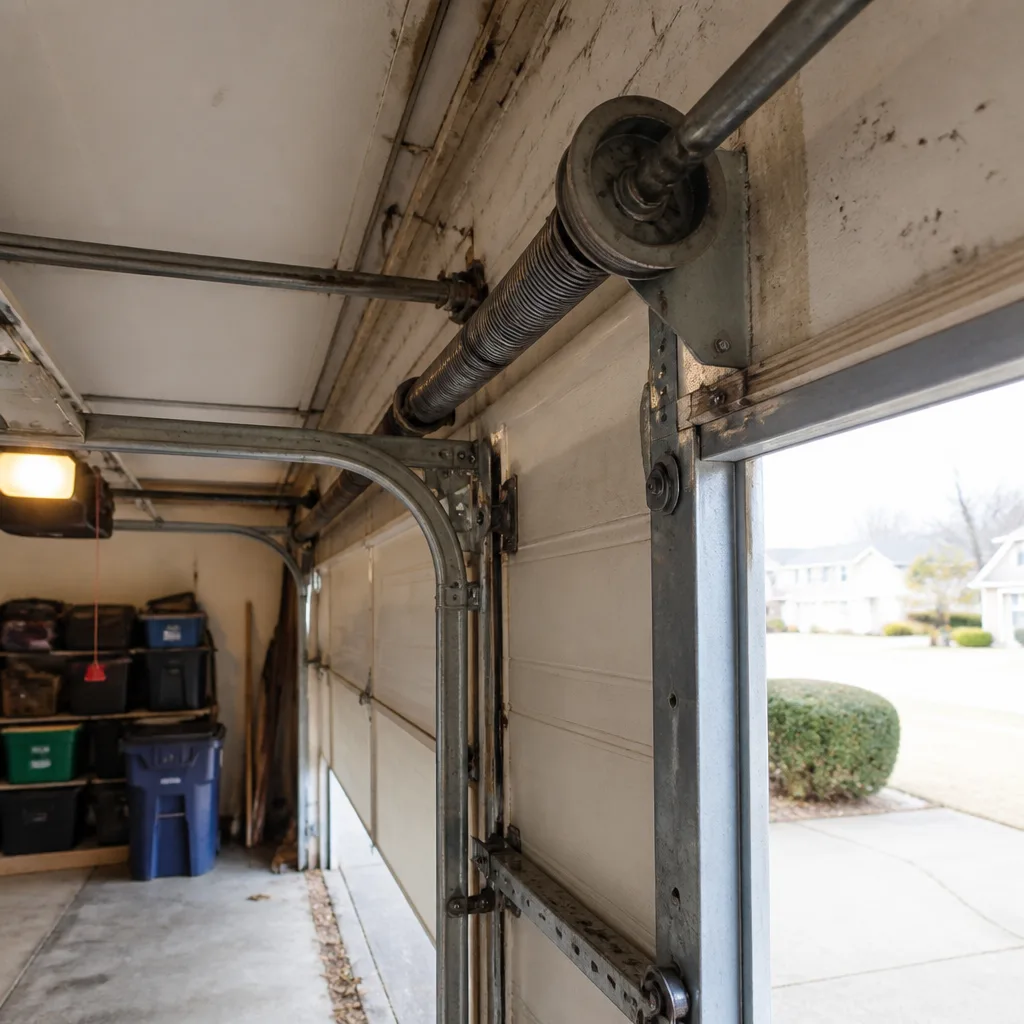 Before
 After
After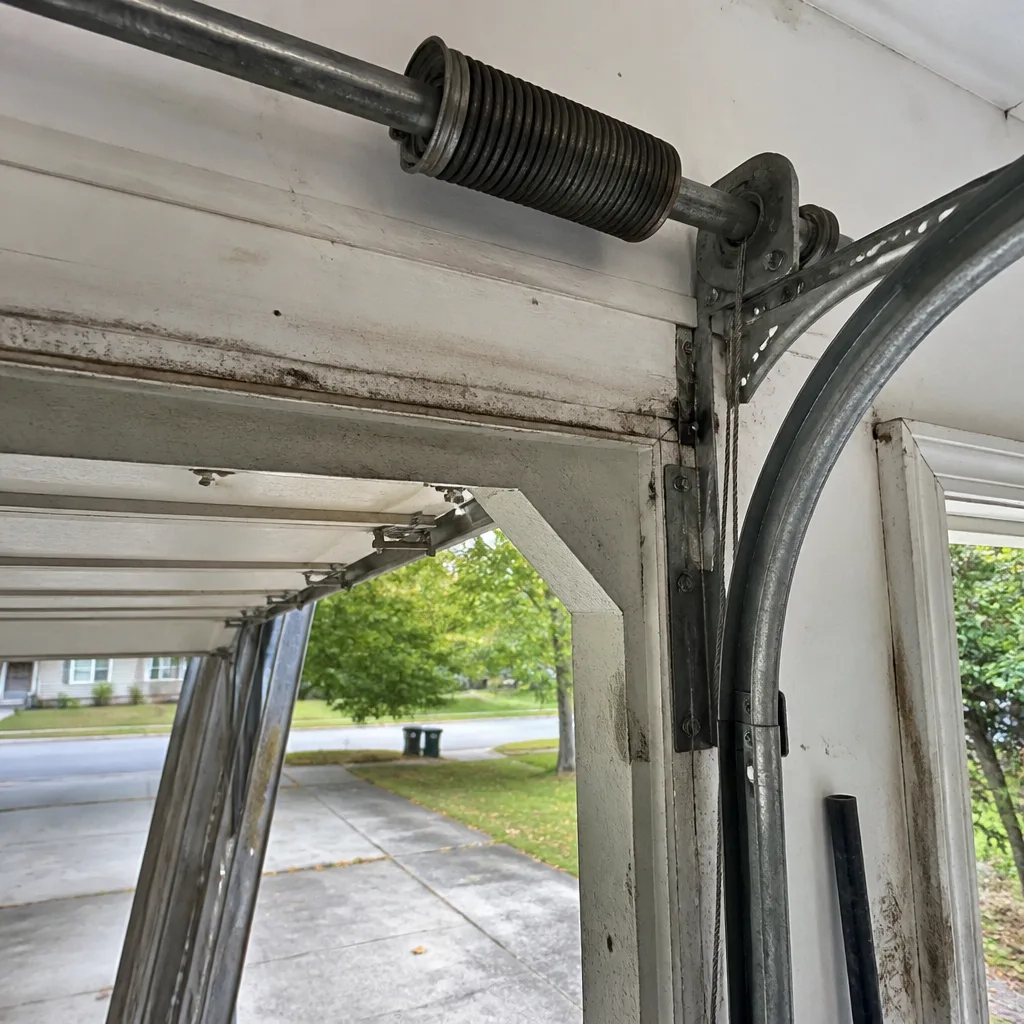 Before
 After
AfterGarage Door Warning Signs: A Lawrenceville Homeowner’s Reference Guide
Every garage door article says “unusual noise is a warning sign.” That is the least useful sentence in home maintenance writing, because every garage door makes noise, and none of those articles tell you which noise costs $40 to fix and which costs $400. This guide does. We’ve assigned every common warning sign a triage tier (today, this month, or cosmetic only) and a realistic dollar range for the Lawrenceville market, so you can decide with information instead of anxiety. If you live in Lawrenceville, GA, you’ll also learn how our climate specifically accelerates certain failures and how to photograph a suspected problem so any technician can give you a firm pre-visit price range.
Quick Answer
The seasonal garage door care for Lawrenceville warning signs that matter most are a broken torsion spring (door won’t lift or feels abnormally heavy), a snapped or slack lift cable, a door that drifts when held at waist height, grinding or popping sounds from the opener rail, and visible panel bowing or bottom seal compression failure. Spring and cable failures require same-day service and typically run $180 to $340 in this market. Rail noise, minor seal wear, and cosmetic panel blemishes can wait days or weeks, and some signs are purely aesthetic.
Table of Contents
- The Noise Taxonomy: Grinding, Squealing, Popping, and Rattling
- Visual Signs You Can See Without Opening the Door
- The Balance Test: A 30-Second Diagnostic You Can Do Today
- Triage: Today, This Month, or Never
- How to Photograph a Warning Sign for a Pre-Visit Price
- Why Lawrenceville’s Climate Wears Garage Doors Faster
- Brand-Specific Notes: Chamberlain, Genie, and Clopay
- Common Mistakes to Avoid
- When to Call a Professional
- Frequently Asked Questions
BeforeAfterThe Noise Taxonomy: Grinding, Squealing, Popping, and Rattling
“Unusual noise” is not a diagnosis. It is a shrug. The useful version of this advice is a taxonomy: each sound maps to a specific component, a specific failure mode, and a specific repair cost. Here is what we hear in Lawrenceville garages, in order of how often we hear it.
Grinding (metallic, consistent, sounds expensive)
Grinding almost always involves metal dragging against metal with no lubrication or with a bearing that has failed. On a door with a chain-drive opener, the chain itself is usually the culprit: it has stretched, the tension is wrong, or the sprocket on top of the motor has worn teeth. Grinding also comes from rollers whose ball bearings have seized, which turns a rolling wheel into a scraping metal puck. Fixes range from $40 to $120 for roller replacement on a single panel to $150 to $260 for chain tensioning, sprocket replacement, or a new drive assembly. You can usually schedule this within a week.
Squealing (high-pitched, intermittent, or constant)
Squealing is typically a dry hinge, dry rollers, or a dry torsion spring. In Lawrenceville’s humidity, garage door hardware actually fares better than in dry climates because ambient moisture slows corrosion, but springs and hinges still lose their factory grease over time. A proper silicone-based lubricant applied to hinges, rollers, and the torsion spring coil usually silences this for under $60. If the squeal persists after lubrication, the roller bearing or hinge pin is wallowed out and needs replacement, which is a scheduled $90 to $150 job for a typical two-car door.
Popping (sharp, rhythmic, happens as the door moves)
Popping is the sound of a torsion spring binding and releasing, or a cable jumping on a drum. This is the sound to take seriously. A torsion spring under 100 to 150 pounds of tension that binds and releases is working its way toward a coil break, and a cable that pops on its drum is moments from slipping off entirely. In our experience across Lawrenceville service calls, a popping sound precedes roughly one in four spring failures. If you hear popping, stop cycling the door and call for same-day service. Spring replacement runs $180 to $340 depending on the spring’s wire diameter and cycle rating.
Rattling (loose, tinny, not tied to a single component)
Rattling means something is loose: a hinge bolt, a roller bracket, a track bolt, or a lag screw backing out of the door header. This is the cheapest noise to fix and the easiest to ignore, but ignoring it lets the door operate out of square, which accelerates wear on every other component. Tightening hardware and re-aligning the door typically costs $75 to $130. If the rattle is from a loose opener mount, the fix is similar.
Here is the takeaway in table form.
- Grinding: $40-$260. Schedule within a week.
- Squealing: $60-$150. Schedule when convenient.
- Popping: $180-$340. Same-day service.
- Rattling: $75-$130. Schedule within two weeks.
Visual Signs You Can See Without Opening the Door
Some of the most useful warning signs require no tools and no mechanical aptitude. They require looking at your door while it is closed, and in some cases knowing what a healthy component looks like compared to the one on your door. Here are four visual signs, each with a pass/fail measurement where one exists.
Cable Slack: A Single Loose Strand
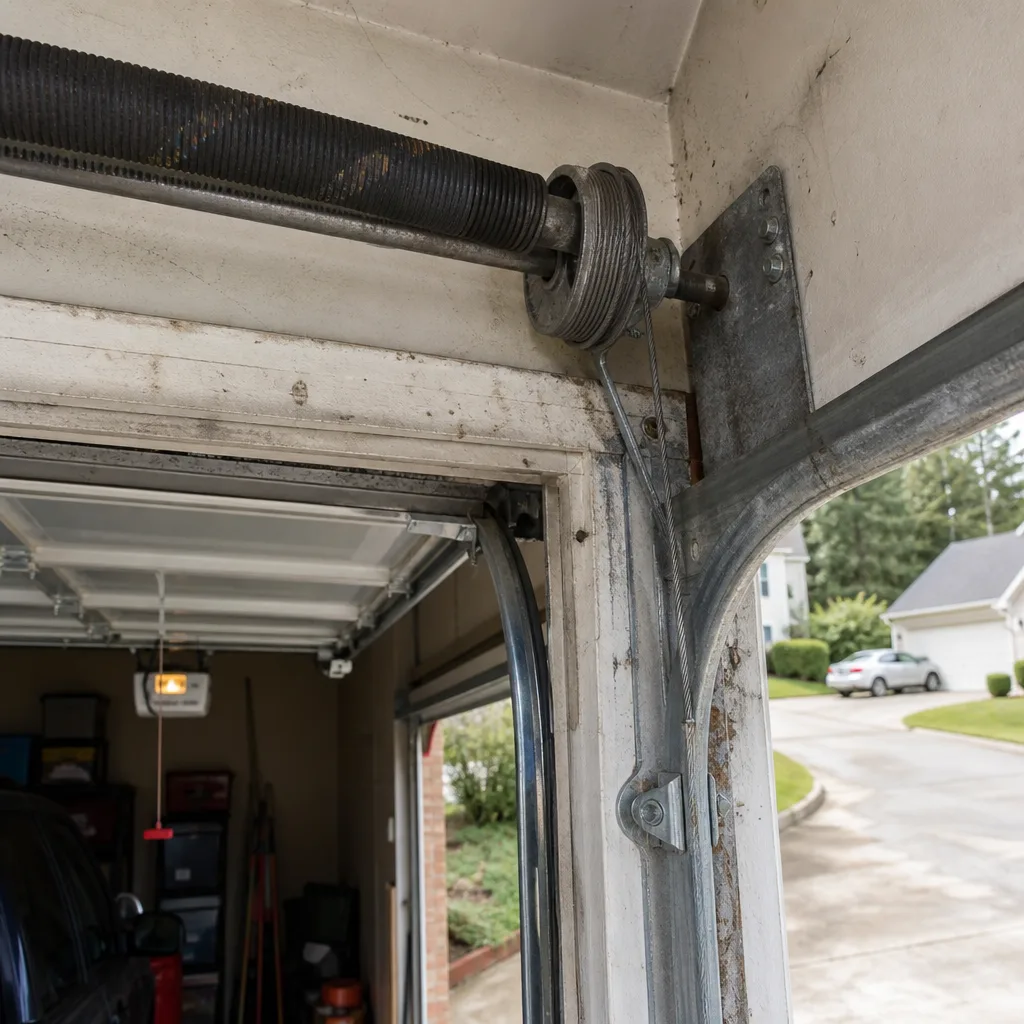
The lift cables are the two braided steel cables that run from the bottom corners of the door up to the drums above the opening. In a healthy door, both cables are taut at every position. If you see a gap between the cable and the drum, or a cable that sags, or individual wire strands fraying, that cable is failing. A frayed cable under tension behaves like a rope with one cut strand: the rest will follow. Cable replacement in Lawrenceville runs $120 to $200 per side, and we recommend replacing both cables even when only one shows damage, because the surviving cable has the same age and cycle count.
Spring Gap: The Two-Inch Rule
A torsion spring is the coiled steel tube mounted horizontally above the door opening. In most residential doors, a single spring has a visible gap on one side where the spring was split into two pieces for tensioning. A healthy gap is tight and uniform. If that gap has widened to two inches or more, the spring has lost tension and is either settling toward a break or already partially failed. A one-eighth-inch gap is normal. A two-inch gap is a service call. Spring replacement costs $180 to $340 in this market, and the parts are on the truck in Lawrenceville for same-day service.
Panel Bow: Hold a Straightedge to It
Steel garage door panels bow for two reasons: age-related fatigue and structural pressure from a spring that has lost tension on one side. If you can see daylight between the panel and a straightedge held vertically against it, the bow is more than cosmetic. A bowed panel transmits uneven load through the hinges and rollers, which wears them asymmetrically. Panel replacement for a single 16-foot section runs $350 to $600 including labor. If the bow is caused by a failing spring, the spring comes first. On Amarr and Clopay doors, which are common in Lawrenceville subdivisions, panel bowing is usually a sign that the door has outlived its original spring and needs both attention.
Bottom Seal Compression Failure: The Daylight Test
Squat at the bottom corner of a closed door on a sunny day. If you can see daylight or feel air moving between the bottom seal and the slab, the vinyl or rubber seal has compressed beyond its recovery point. This is a $40 to $80 part plus labor, and it matters in Lawrenceville because our summers push hot, humid air into unconditioned garages through exactly this gap. The seal compresses because the door is slightly out of balance and resting harder on one side, so when we replace the seal, we also check spring tension and door balance.
The Balance Test: A 30-Second Diagnostic You Can Do Today
The balance test is the single most informative diagnostic a homeowner can perform without tools. It tells you the state of your torsion springs, and it takes less time than reading this section. Here is how to do it correctly.
- Disconnect the opener by pulling the red emergency release cord, which hangs from the opener rail. Do this while the door is closed.
- Lift the door manually to waist height, roughly three feet off the ground.
- Release the door. Do not push it. Do not catch it. Let it do what it does.
Now read the result.
- Door stays at waist height: Springs are healthy. The door is balanced. No action needed.
- Door drifts slowly upward or downward: The springs are losing tension but have not failed. This is the earliest warning sign a spring will fail, and it is the cheapest time to fix it. Plan on spring replacement within 30 days, at $180 to $340.
- Door drops quickly or will not lift: The spring has failed. Do not attempt to lift the door or reconnect the opener. Call for same-day service. A broken torsion spring under tension is dangerous to work around, and the door is too heavy to lift safely by hand.
- Broken torsion spring: The door feels heavy in manual mode, or the balance test shows a fast drop. A broken spring means the door’s full weight is on the opener and cables, which will damage both if cycled.
- Snapped or slipping lift cable: If a cable snaps, the door can drop suddenly on one side and derail. If it is slipping, it is about to snap.
- Door off track: A door with one or both rollers out of the track can fall. Do not cycle the opener. Do not try to push the door back into the track yourself.
- Popping noise during operation: As covered above, this is the sound of a spring failing in slow motion.
- Balance test drift: The spring is wearing but has not broken. Replacing it now avoids a same-day emergency later, and you get to pick the appointment time.
- Grinding or squealing: Bearing and lubrication problems worsen slowly. Two weeks of grinding will not cause a catastrophic failure, but it will wear parts that are cheaper to fix than replace.
- Loose hardware rattling: Same logic. The longer the door runs out of square, the more hinge and roller damage accumulates.
- Surface rust on steel panels: Rust on the panel face is an aesthetic issue, not a structural one, unless it has perforated the steel. Perforation means panel replacement; surface rust means sand, prime, and paint when you get around to it.
- Dents without bowing: A dent with no panel deformation affecting the hinge line is cosmetic. The door will operate fine around it.
- Minor seal wear without daylight: If the bottom seal is cracked but still contacts the slab with no visible gap, it is still working. Plan replacement for next service visit.
- Turn on the garage lights and open the door fully, then disconnect the opener and leave the door in the open position. This gives you daylight on the springs, cables, and tracks.
- For springs, photograph from the side of the door, at the spring’s height, with the camera perpendicular to the spring coil. The goal is to show the spring gap clearly.
- For cables, photograph the cable where it meets the drum, from below and at a slight angle so the cable tension or slack is visible.
- For the bottom seal, photograph from outside the closed door at ground level, with the camera aimed at the gap between seal slab and door bottom, using daylight from behind you.
- The failed component in focus: Fill the frame with the spring gap, the frayed cable, or the panel bow. Do not photograph the whole garage. Close-up beats context.
- A reference object for scale: A quarter, a pen, or your thumb next to a spring gap or cable fray tells the technician the scale of the problem.
- The door brand label: Most doors have a manufacturer sticker on the inside of the top panel or on the side jambs. Photograph it. The brand tells us the door weight and spring specs, which sets the repair price range.
- Lubricating a grinding noise. Grinding is metal-on-metal contact. Lubricant makes it quieter for a day, but the bearing or gear is still failed, and now the lubricant has masked the symptom that would have told you to fix it. If it grinds, it gets replaced or repaired, not sprayed.
- Disconnecting the opener to keep using a door with a broken spring. A broken torsion spring means the door weighs 150 to 200 pounds and is now supported only by the cables. Manual operation puts enormous strain on those cables and the rollers. If the spring is broken, the door is out of service until the spring is replaced.
- Replacing one spring when two are broken. Most modern doors have two springs. When one breaks, the other is at the same cycle count and has the same fatigue. Replacing only the broken spring is cheaper today and costs a service call in six months when the other fails. We replace both springs as a matter of practice.
- Using WD-40 as a garage door lubricant. WD-40 is a penetrant and solvent, not a lubricant. It removes grease, which is the opposite of what a garage door needs. The correct product is a white lithium grease or a silicone-based garage door lubricant.
- Ignoring a balance test drift because the opener still works. The opener is lifting the door so the door “works” in your mind. But the opener was not designed to carry the door’s full weight. A drifting door means the springs are failing, and the opener is quietly working harder than its design load. The repair is cheaper before the opener burns out.
- Calling five companies and choosing the first one that answers. When a spring breaks in Lawrenceville, you want the first company that answers because the door is blocking your car. But the price should be quoted in writing before any work starts. A company that will not quote a flat price over the phone with your photo is a company that may change the price after they arrive. We quote a flat, written price and written scope before any work begins, on every job, including emergencies.
We’ve used this test on thousands of doors in Lawrenceville, and it rarely gives a false reading. It is the closest thing to an x-ray for your springs. If you perform it and the result is “drifts,” document it with a photo and send it to us before we arrive. It helps us bring the right spring cycle rating the first time.
Triage: Today, This Month, or Never
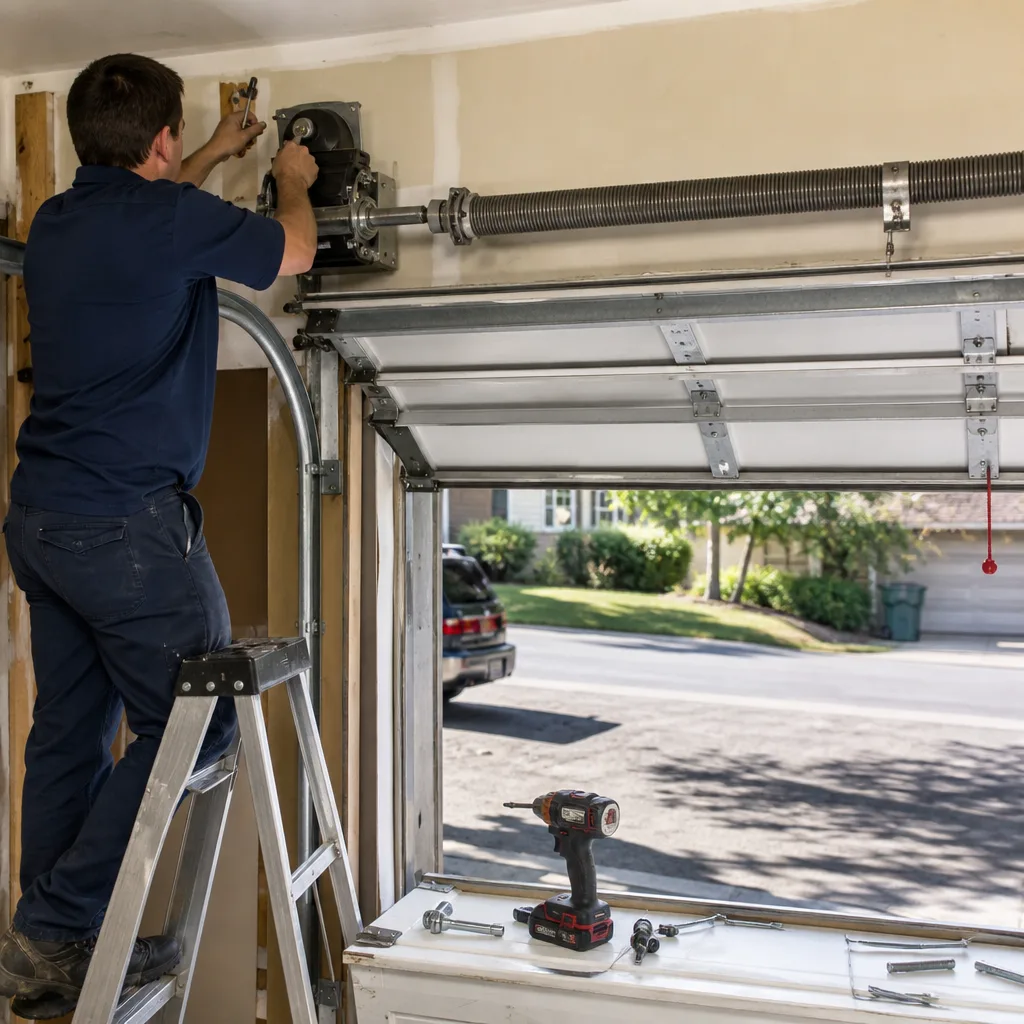
Warning signs are only useful when they tell you what to do and when to do it. Here is the triage system we use when answering calls in Lawrenceville.
Same-Day Service (do not wait)
For these, call a live person any hour at (470) 202-3917. We answer the phone 24/7 in Lawrenceville, and a failed spring is a legitimate emergency.
Schedule Within 30 Days
Cosmetic Only (ignore until you care)
How to Photograph a Warning Sign for a Pre-Visit Price
The whole point of photographing a suspected problem is to get a firm price range before a technician drives to your house. A blurry photo of a “weird thing” doesn’t do that. Here is the documentation method that does.
Angle and Lighting
What to Capture
Send these photos to a company that offers documented, written pricing before any work starts. At Servo Garage Doors Lawrenceville, we quote a flat price and a written scope before any work begins, per Clause 1 of The Haven Standard, and the photo record is part of how we do it. The photo you send us becomes part of the job file. You can see our Servo Garage Doors Lawrenceville home page to understand how that documentation system works.
Why Lawrenceville’s Climate Wears Garage Doors Faster
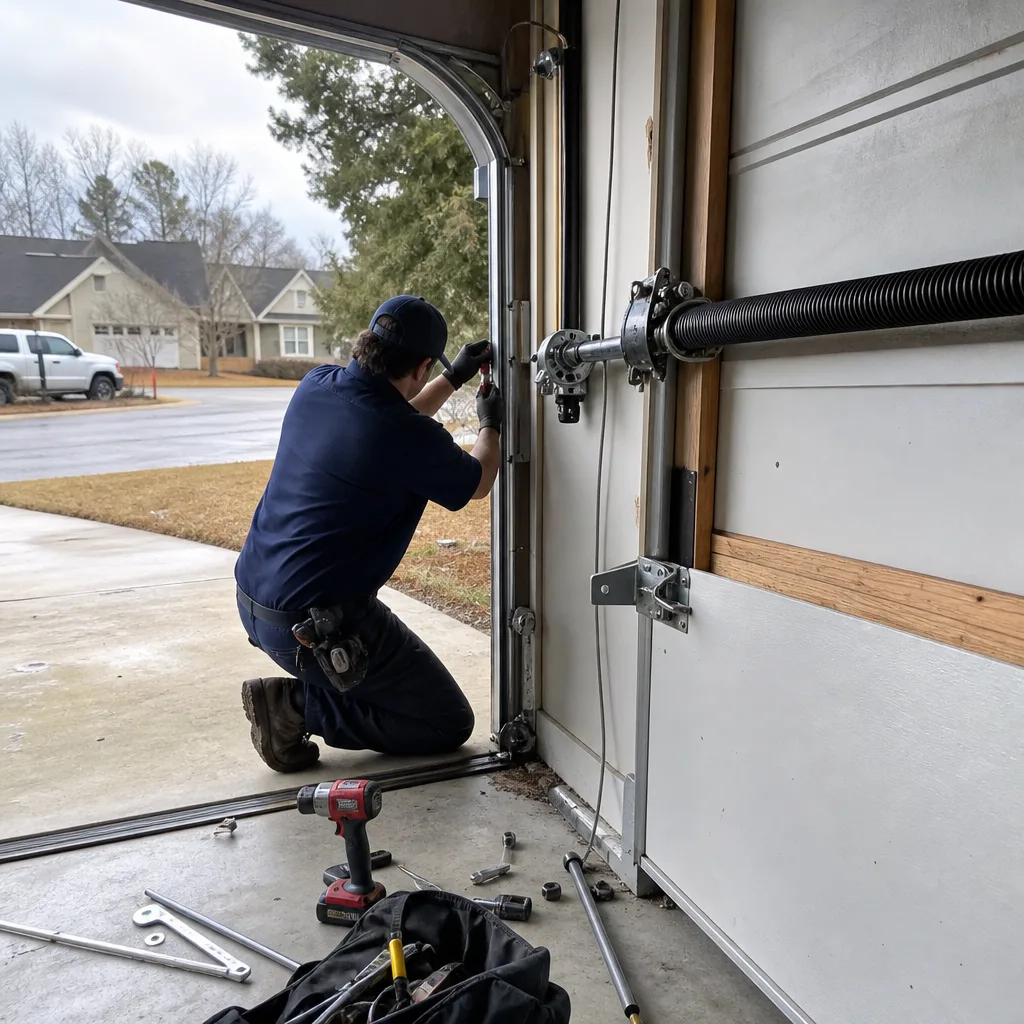
Garage doors in Lawrenceville, GA live in a humid subtropical climate, which means hot, wet summers and mild winters with occasional hard freezes. That climate pattern produces three specific wear effects that homeowners in other regions don’t see as often.
Humidity and spring corrosion. Torsion springs are made of oil-tempered steel, and they are not stainless. In a humid garage, condensation forms on the spring surface and accelerates oxidation. A spring that would last 10,000 cycles in a dry climate may fail in 7,000 to 8,000 cycles in Lawrenceville’s humidity. That difference can be two to three years of life, which is why we see spring failures on doors that are only six or seven years old.
Summer heat and opener logic boards. The circuit board in a garage door opener lives in a metal housing mounted to the ceiling, which in a Lawrenceville summer can reach 120 degrees. Heat kills capacitors and solder joints. If your opener begins acting erratically in July or August (reversing on its own, failing to respond, opening but not closing), suspect the logic board before you suspect the motor. Opener repair or replacement runs $150 to $450 depending on the unit, and the fix is described in detail on our Garage Door Opener Repair & Installation in Lawrenceville page.
Freeze cycles and bottom seals. When cold air arrives in winter, a compressed bottom seal hardens and cracks. When warm air returns, the cracked seal no longer seals, and humid air enters the garage. The cycle repeats each year, and each cycle shortens the seal’s life. In Lawrenceville, we expect a bottom seal replacement every two to four years, which is more often than in drier cities.
Climate context also affects parts availability. We stock for this market’s specific failure patterns, which is why the Garage Door Parts in Lawrenceville inventory includes higher-cycle springs and humidity-rated seals.
Brand-Specific Notes: Chamberlain, Genie, and Clopay
Different manufacturers design their hardware differently, and those design choices affect which warning signs appear first. Here is what we see on three of the most common brands in Lawrenceville garages.
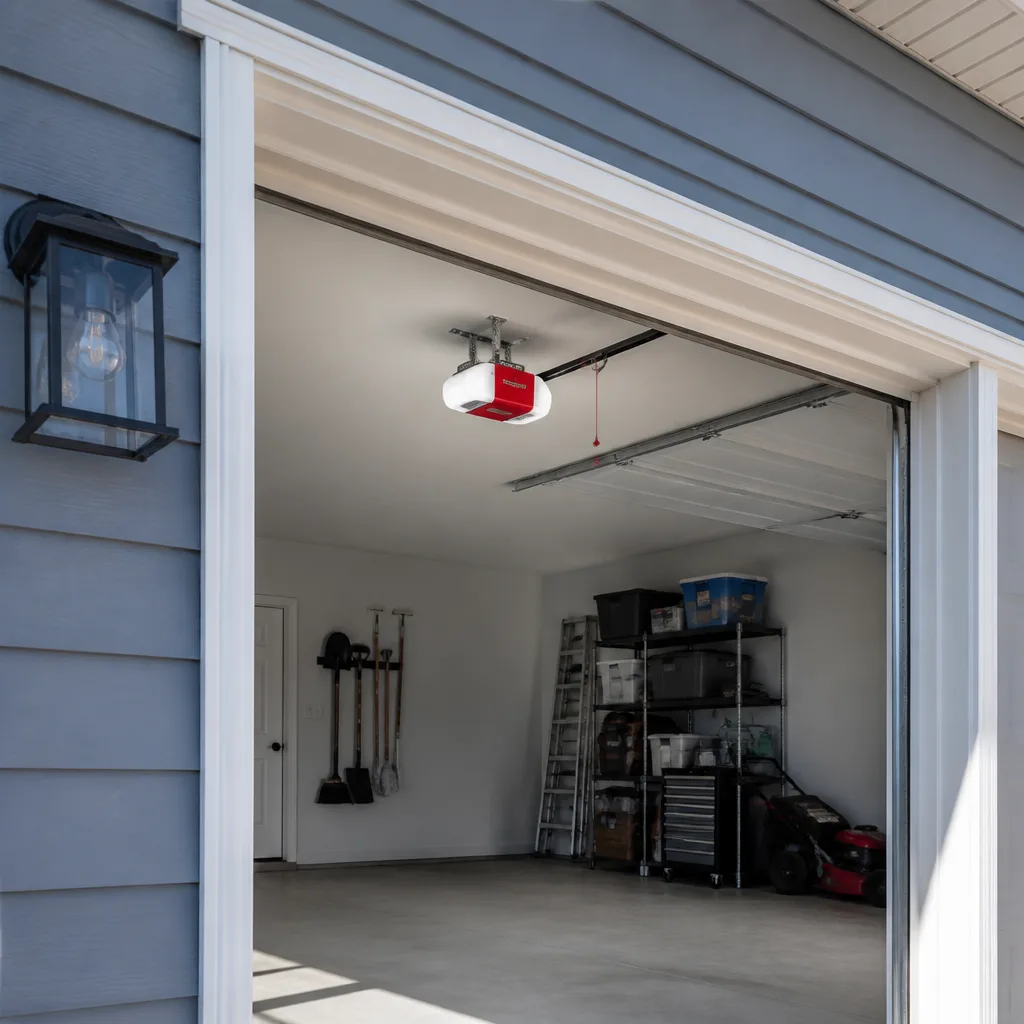
Chamberlain openers dominate the Lawrenceville market, and the most common failure we see is the drive gear, not the motor. The drive gear is a white plastic gear inside the opener housing that turns the chain or belt. It wears out after 8 to 12 years and produces a grinding noise that sounds like the motor is failing. The gear itself is a $25 part, and replacing it runs $120 to $180. The motor is almost never the problem. If your Chamberlain is grinding, the price to fix it is much lower than you think.
Genie openers are known for their direct-drive screw mechanism, and their characteristic warning sign is a rattling or chattering sound from the rail when the screw threads wear. The fix is usually a carriage replacement at $100 to $160. Genie openers are also sensitive to misaligned safety sensors, which present as a door that closes two inches and then reverses. That is a $75 to $100 sensor alignment or replacement, not a motor failure.
Clopay doors are common in Lawrenceville’s newer subdivisions, and they tend to be heavier than average because of their insulation. Heavier doors require stronger springs, which means the warning signs of spring wear appear earlier and progress faster. If you have a Clopay door and the balance test shows drift, do not wait 30 days. A heavy door with a failing spring puts more strain on the opener and cables than a lighter door in the same condition.
We service all major brands including LiftMaster, Chamberlain, Genie, Clopay, Amarr, Wayne Dalton, Craftsman, and Raynor, and we carry parts for all of them in the Lawrenceville truck.
Common Mistakes to Avoid
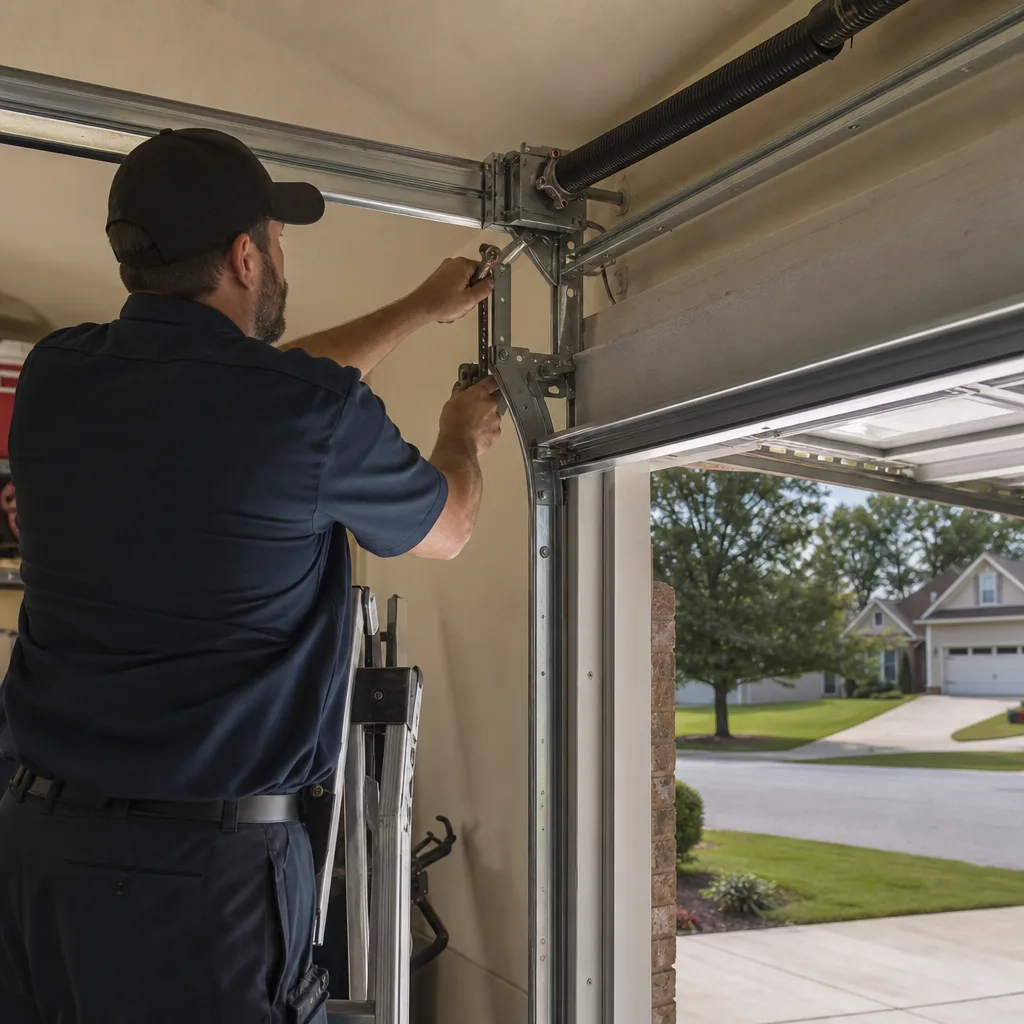
When to Call a Professional
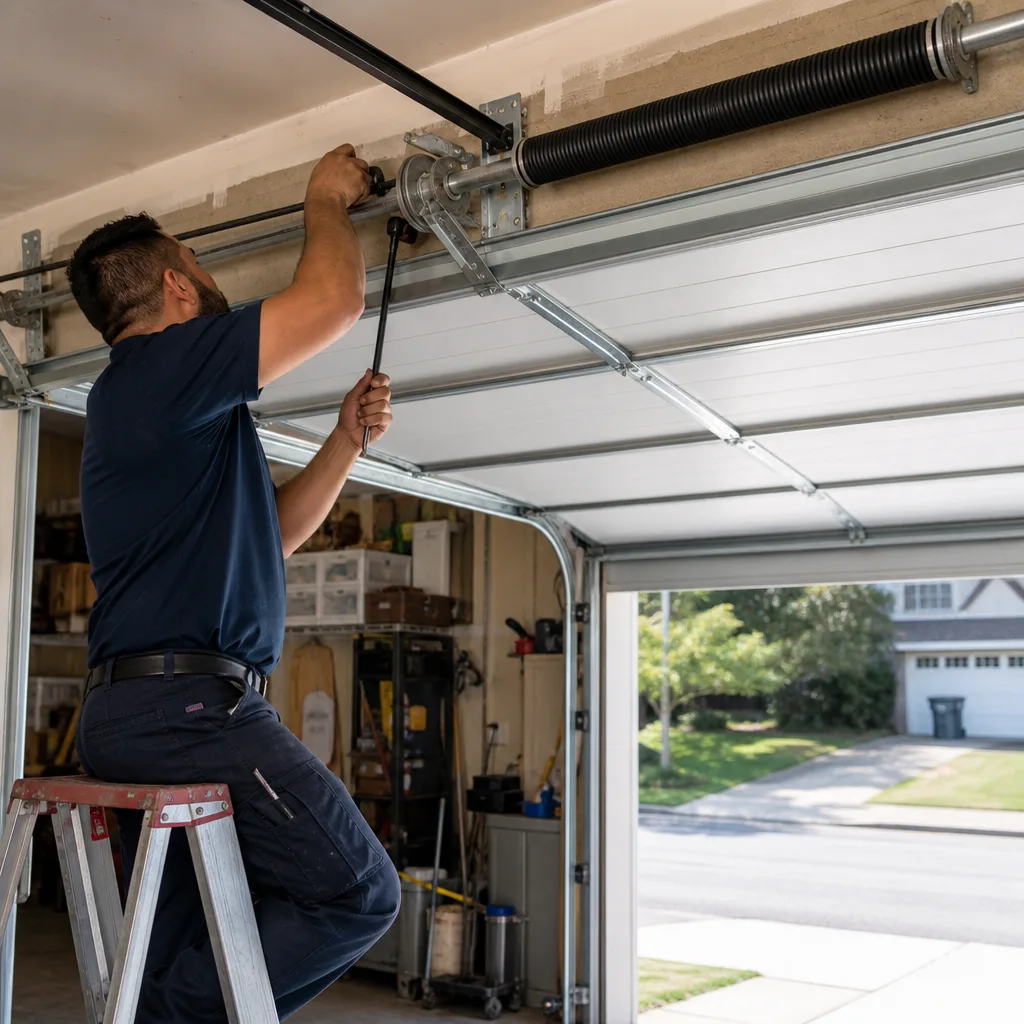
Call a professional if the balance test shows drift or drop, if you see a spring gap wider than two inches, if a cable is frayed or slack, if the door is off track, or if you hear popping. These are not DIY repairs: torsion springs are under enough tension to cause serious injury, and cables under load can snap with enough force to cut. A trained technician can also spot secondary damage that a homeowner’s photo cannot show. The Emergency Garage Door in Lawrenceville page covers what to expect when you need same-day service. Servo Garage Doors Lawrenceville offers free estimates in Lawrenceville. Call (470) 202-3917 and a live person answers, day or night.
Frequently Asked Questions
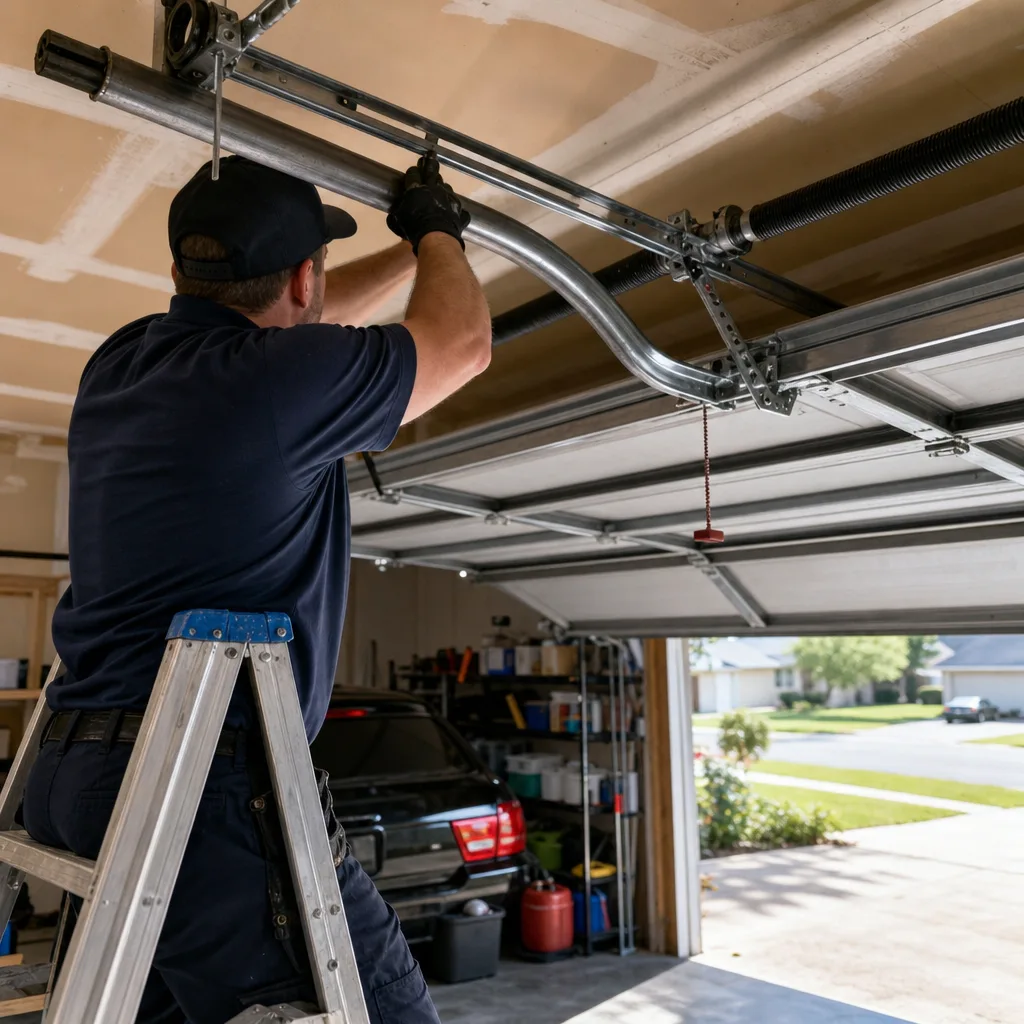
Garage door spring replacement in Lawrenceville typically costs $180 to $340 for both springs on a standard residential door, including parts and labor. The exact price depends on the spring’s wire diameter, length, and cycle rating, which is why we ask for a photo of the spring and the door brand before quoting. Call (470) 202-3917 for an exact quote, which is written and includes labor before any work starts.
A garage door with a broken torsion spring should not be opened manually. The door weighs 150 to 200 pounds, and lifting it by hand puts dangerous strain on the cables and rollers, which can fail suddenly. If your spring is broken, leave the door closed and call for same-day service.
Most residential torsion springs in Lawrenceville last 7 to 12 years, depending on cycle count and humidity exposure. Our humid subtropical climate accelerates spring corrosion, which is why we see failures at the lower end of that range more often than in drier regions.
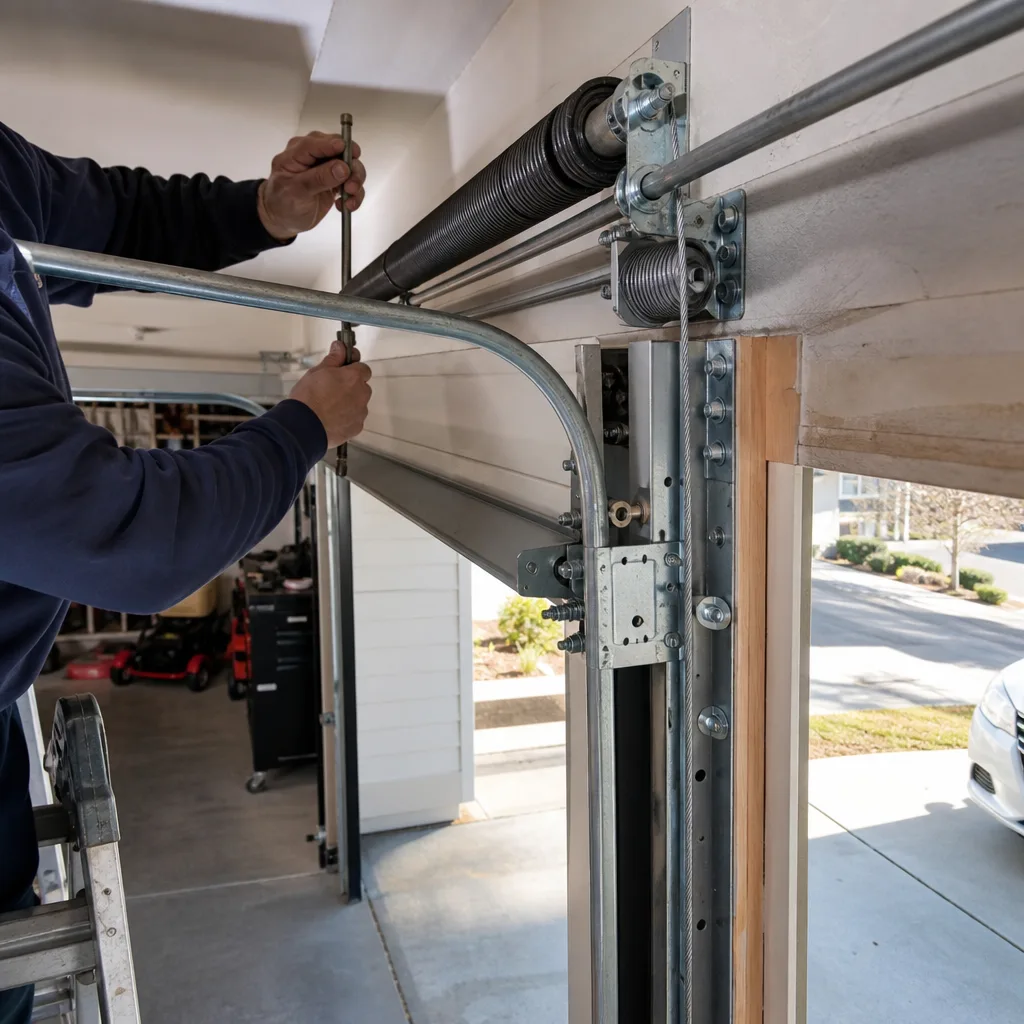
We do not recommend it. Torsion springs are under 100 to 150 pounds of tension, and the winding process requires specialized bars and experience. A mistake during winding can cause serious injury. The spring replacement cost of $180 to $340 is modest compared to the risk.
A garage door that opens by itself is usually a problem with the opener’s logic board or a stuck button on a wall console or remote. It can also be caused by a misaligned safety sensor sending an errant signal. The fix ranges from $75 for sensor realignment to $150 to $250 for a logic board replacement. Call (470) 202-3917 to describe what you’re seeing and get a price range before we dispatch.
No. We charge the same flat, written price for emergency calls as we charge for scheduled service, and we do not add an after-hours surcharge. The price is quoted before the technician leaves, per Clause 1 of The Haven Standard, and the only thing that changes on an emergency call is the response time, not the invoice.
The Bottom Line
Garage door warning signs are only useful when they are specific enough to act on. A popping noise is a spring failing in slow motion, and the price to fix it is $180 to $340. A grinding noise is a gear or bearing, and the price is $40 to $260. A door that drifts when held at waist height is a spring losing tension, and the fix is cheaper if you schedule it before it breaks. Photograph what you see, know your triage tier, and demand a written price before any work starts. For how to hire a garage door contractor in Lawrenceville or to handle a garage door in 2026: with information, not urgency.
Written by Marcus Deller, Owner at Servo Garage Doors Lawrenceville, serving Lawrenceville since 2015. See more guides & resources.