
Last updated September 20, 2026
Full 25-point door and opener safety check with every visit - springs, cables, rollers, tracks, and your LiftMaster or Chamberlain opener included
You get a price before we start. It does not change when the truck arrives.
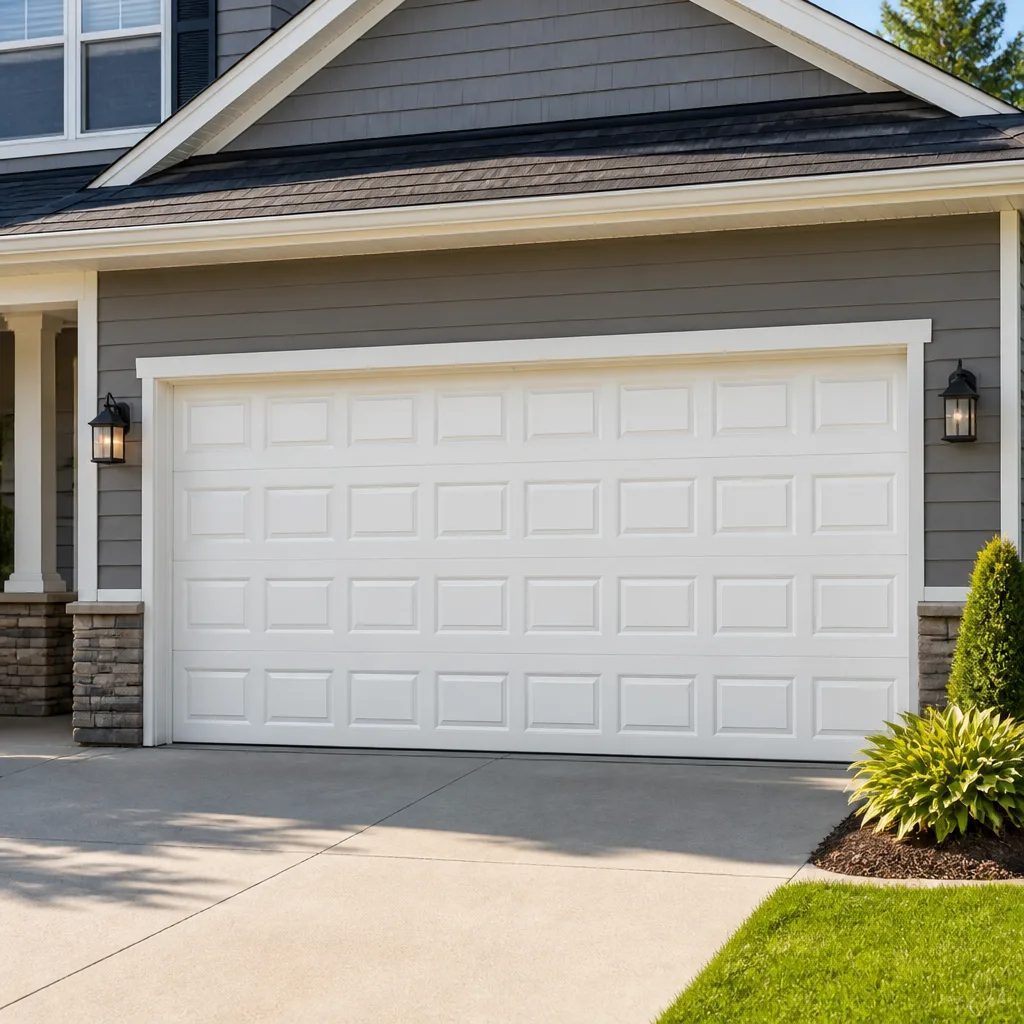
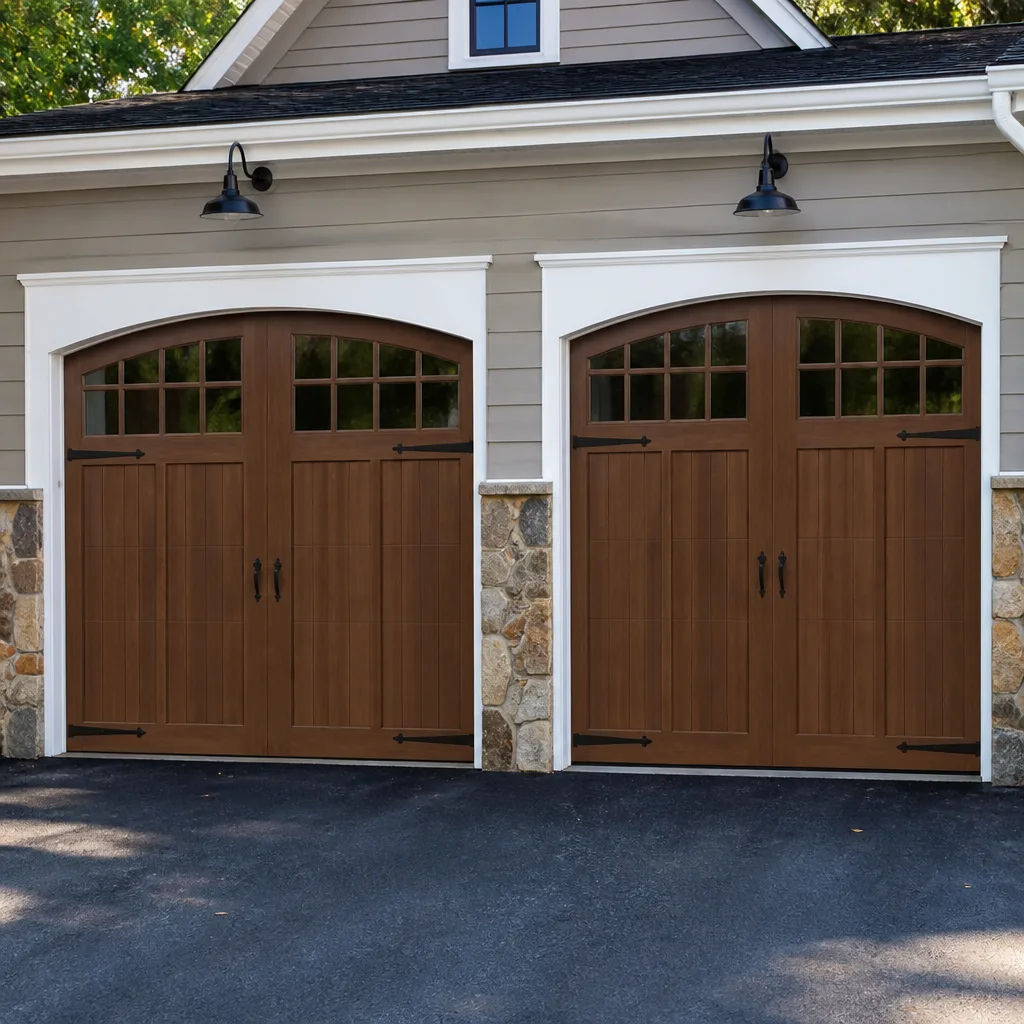
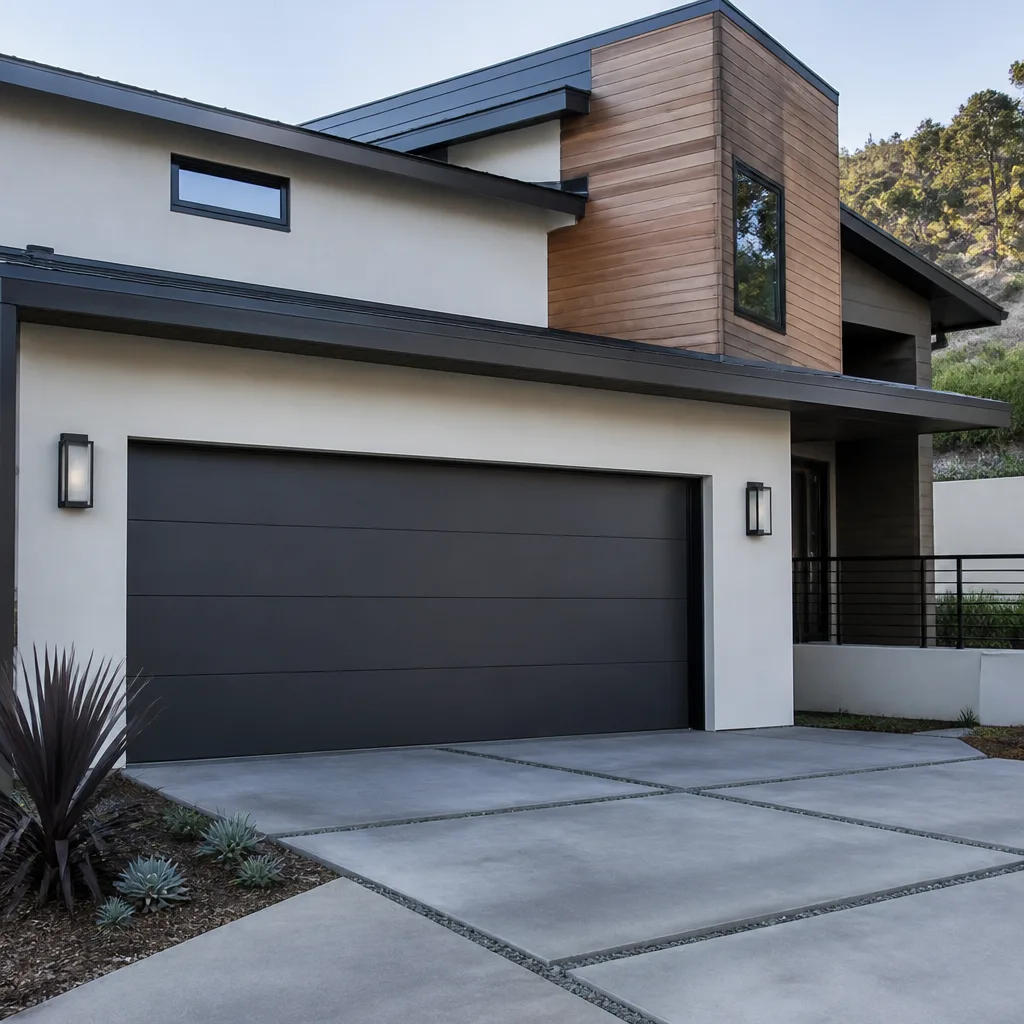
Full-view glass
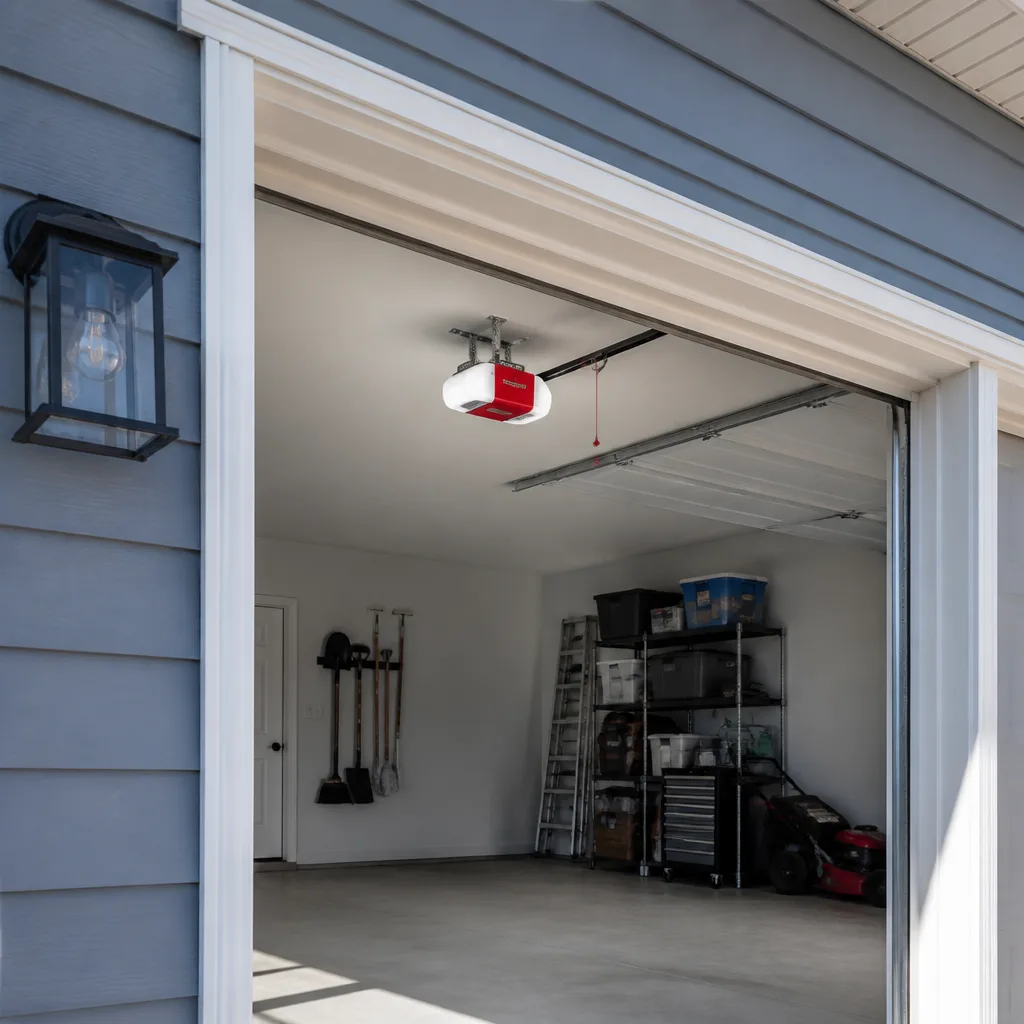
Chamberlain openers
 Before
 After
After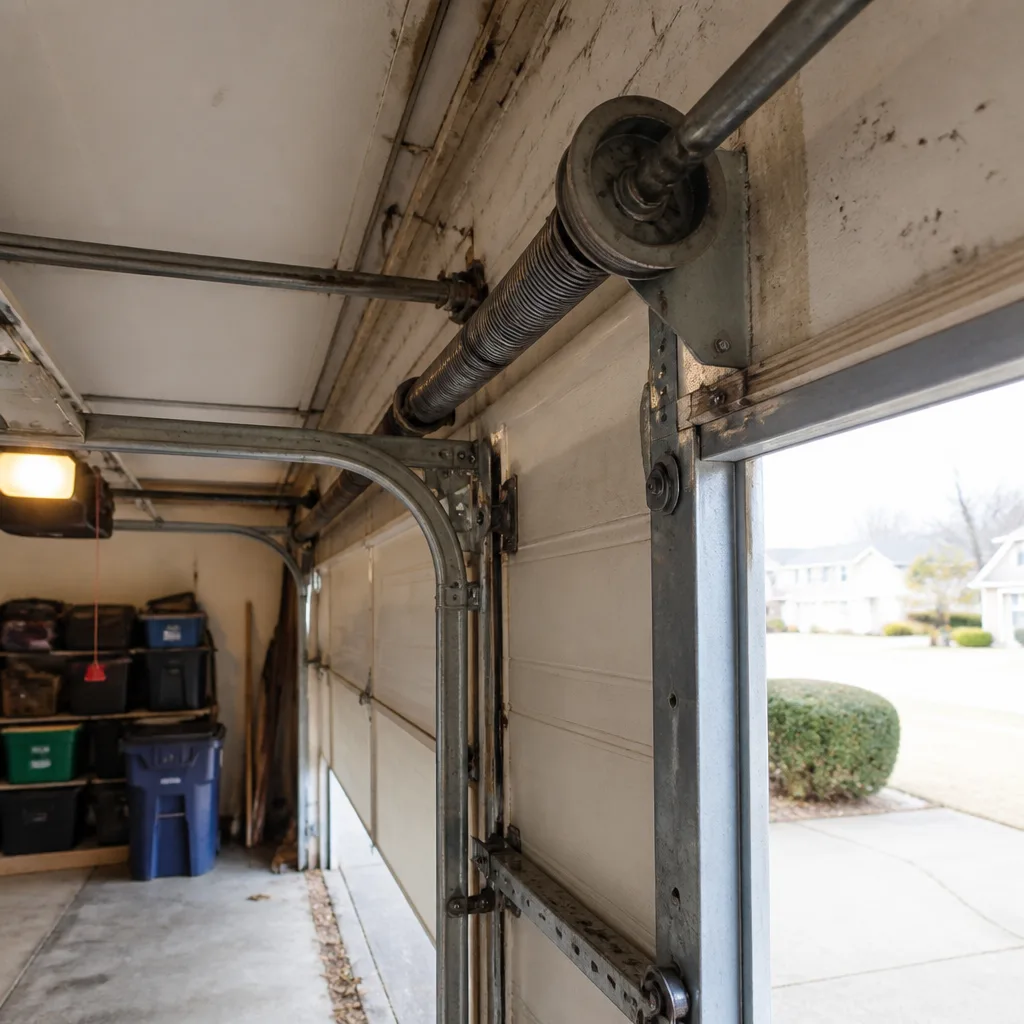 Before
 After
After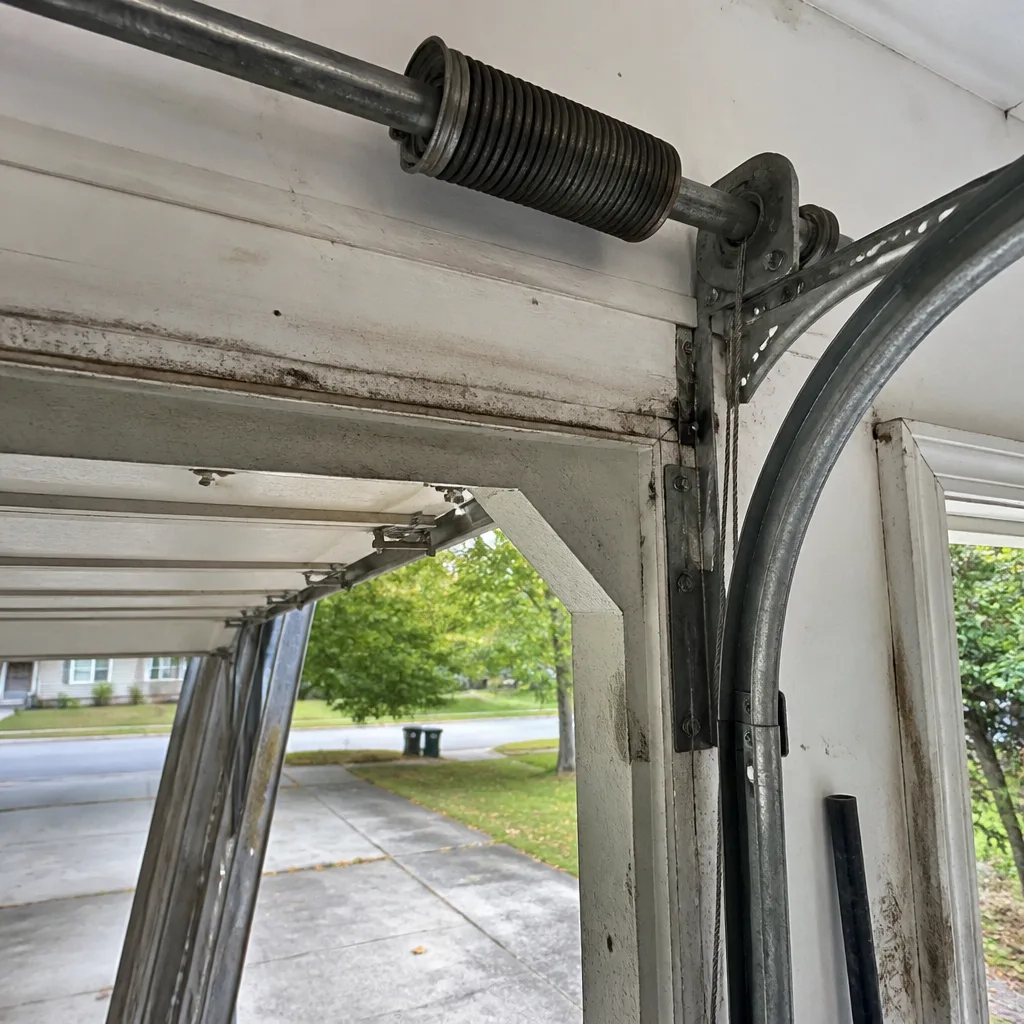 Before
 After
AfterThe Complete Guide to Garage Door in Lawrenceville
A garage door is the largest moving object in most homes, yet the average owner cannot name a single component until one fails at 7 a.m. on a workday. In Lawrenceville, where summer humidity hovers near 80 percent and subdivisions sit on red Georgia clay, these failures follow patterns that are predictable once you understand the machinery. This guide maps every major component, explains what actually wears out and why, and gives you the numbers you need before any technician arrives. You will finish it knowing more about your garage door than most people who sell them.
Quick Answer
A garage door in Lawrenceville is a counterbalanced mechanical system made of panels, springs, tracks, rollers, hinges, cables, and an opener assembly. Repairs in the Lawrenceville market typically run $125 to $395 depending on the failed component, with torsion spring replacement averaging $285 to $390 installed. The most important owner-level knowledge is that springs and cables are under lethal tension, panels and tracks shift annually with clay-soil settling, and every quote you accept should be written, photographed, and specific before work begins. For help weighing your options, see our DIY vs Professional Garage Door: The Lawrenceville Homeowner’s Decision Guide.
Table of Contents
- The Component Map: What You Are Actually Looking At
- Torsion Springs vs. Extension Springs: The Counterbalance System
- How Lawrenceville Climate and Soil Affect Your Door
- Component Lifespan Benchmarks: Budgeting Before Failure
- Repair or Replace: A Decision Tree Based on Facts
- What a Written, Photographed Quote Should Contain
- Common Mistakes to Avoid
- When to Call a Professional
BeforeAfterThe Component Map: What You Are Actually Looking At
Most Lawrenceville homeowners see a garage door as one object. It is not. It is a system of named parts, each with a defined service life and a specific failure signature. If you learn the names, you can describe the problem accurately on the phone, understand what a technician reports, and recognize when a quote is padded with work you do not need. Here is the map, using the trade vocabulary correctly and explaining each term in one plain clause.
- Panels: the horizontal sections that form the door face. In Lawrenceville, most residential doors have four to five panels made of steel, aluminum, or wood composite. Panel damage from a vehicle bump or a fallen ladder is the most common reason a door gets partially replaced rather than fully replaced.
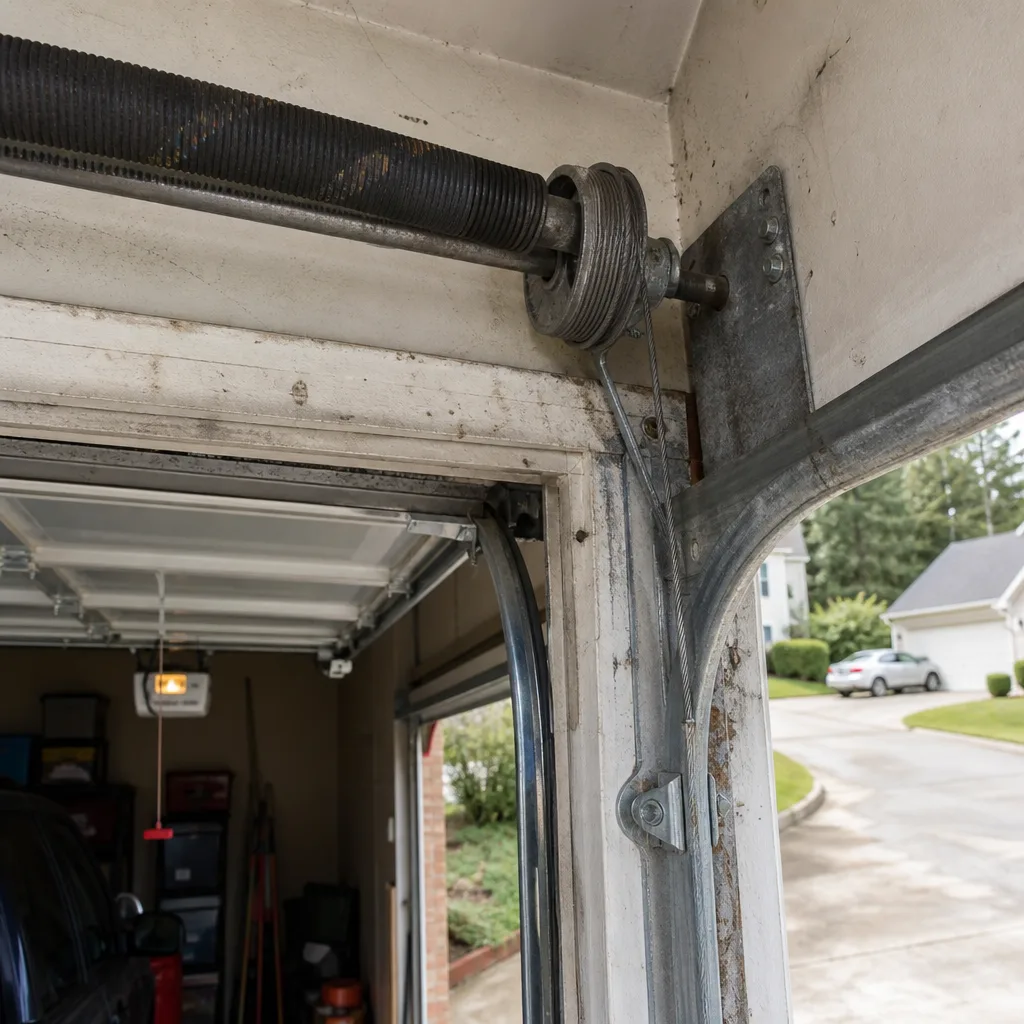
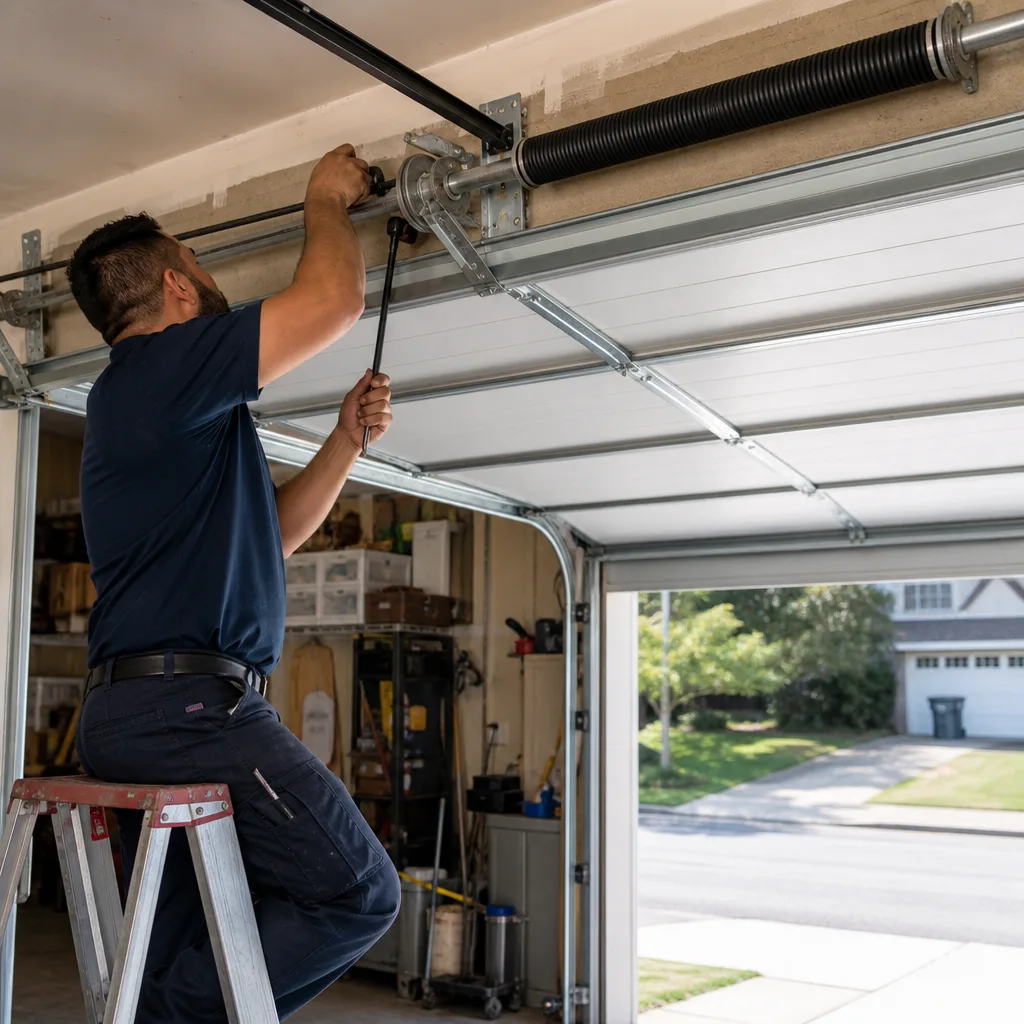
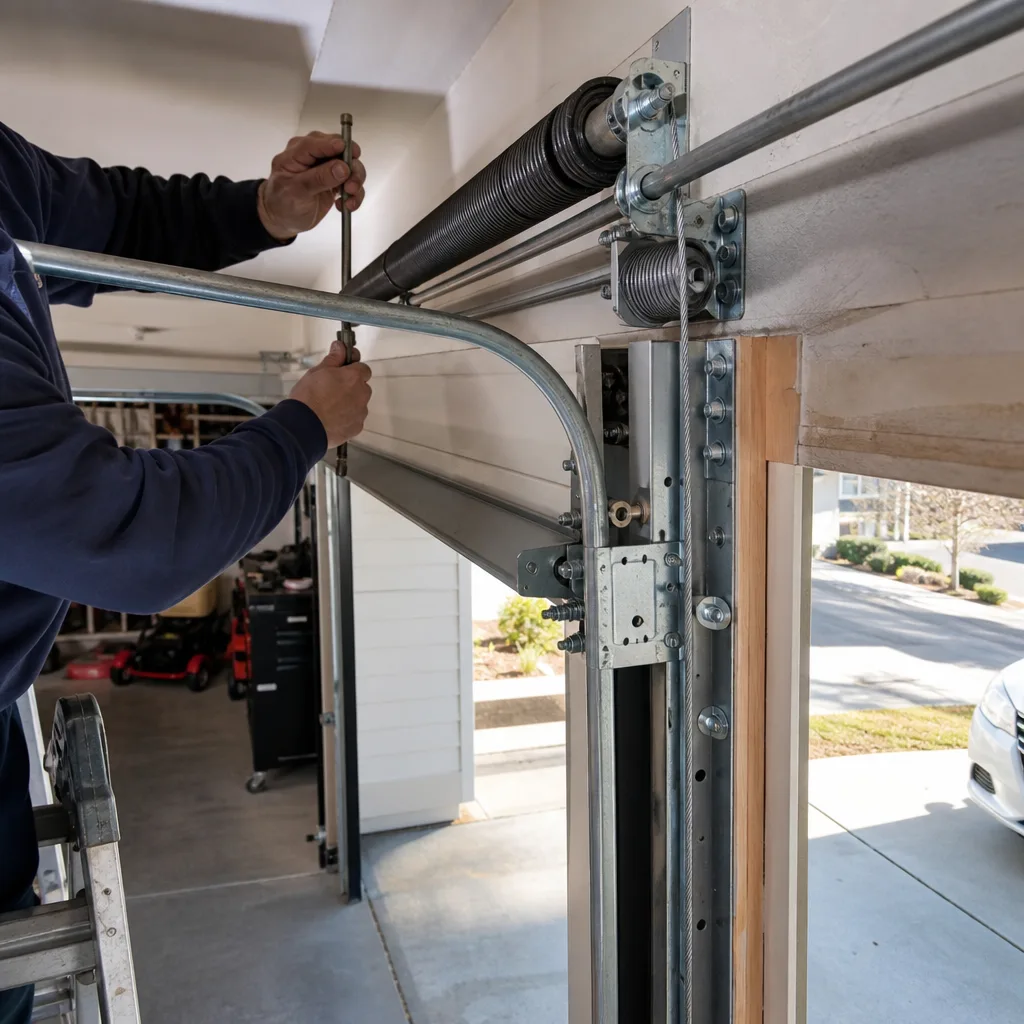
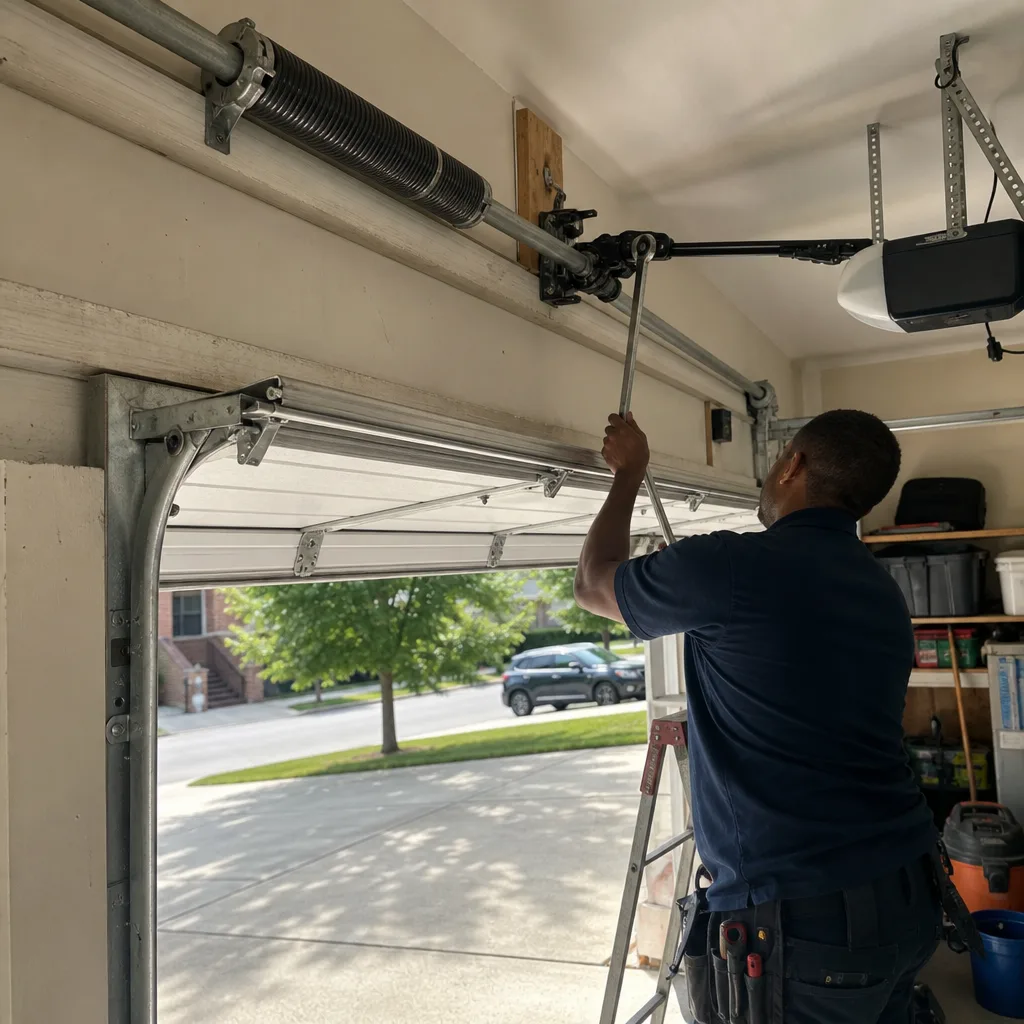
- Torsion spring: a coiled steel spring mounted horizontally on a metal shaft above the closed door. It stores the lifting energy that makes a 150-to-400-pound door feel like 8 to 10 pounds in your hand. Torsion springs are rated in cycles, not years.
- Extension spring: an older design using two springs mounted vertically along the upper track on each side of the door. These stretch and contract rather than wind and unwind. Lawrenceville homes built before roughly 1995 often still have these, and they are more dangerous than torsion systems because a snap sends shrapnel into the garage.
- Track: the vertical and horizontal steel channels that guide the rollers. There are two tracks, one per side, and they must stay parallel within about 1/8 inch or the door binds. In Lawrenceville, this measurement drifts annually due to foundation movement.
- Rollers: small wheels that ride inside the track. Nylon rollers are quieter and standard on newer doors. Steel rollers are louder and harder on the track. Rollers are the single most frequently replaced component after springs.
- Hinges: the metal brackets connecting adjacent panels at each joint. They flex as the door bends around the curved section of track. A seized hinge on one side causes the door to twist slightly, which accelerates roller wear.
- Cables: steel strands that run from the bottom of the door up to the drum at each end of the torsion shaft. They carry the door’s weight during extension. A frayed cable is a sign the door has been operating out of alignment, not the root cause of it.
- Drum: the grooved circular fitting at each end of the torsion shaft that winds and unwinds the cables as the door moves.
- Trolley carriage: the sliding mechanism on an opener rail that connects the opener motor to the door via a curved metal arm. In trade speech, the trolley is the part that moves along the rail; the carriage is the assembled unit including the release mechanism.
- Drawbar: the straight or curved arm connecting the trolley carriage to the top panel of the door. It is also called the opener arm or J-arm. When a door jerks on start-up, a loose drawbar is one of the first things to check.
- Logic board: the circuit board inside the opener housing that receives signal from the remote and sends power to the motor. It is the opener’s brain. A door that runs by wall button but not by remote typically points here, not to a motor problem.
In our experience, Lawrenceville homeowners who can name even five of these parts before calling a technician get better outcomes. They understand what they are being told, they recognize when a quote references the wrong component, and they keep the conversation focused on evidence.
Torsion Springs vs. Extension Springs: The Counterbalance System
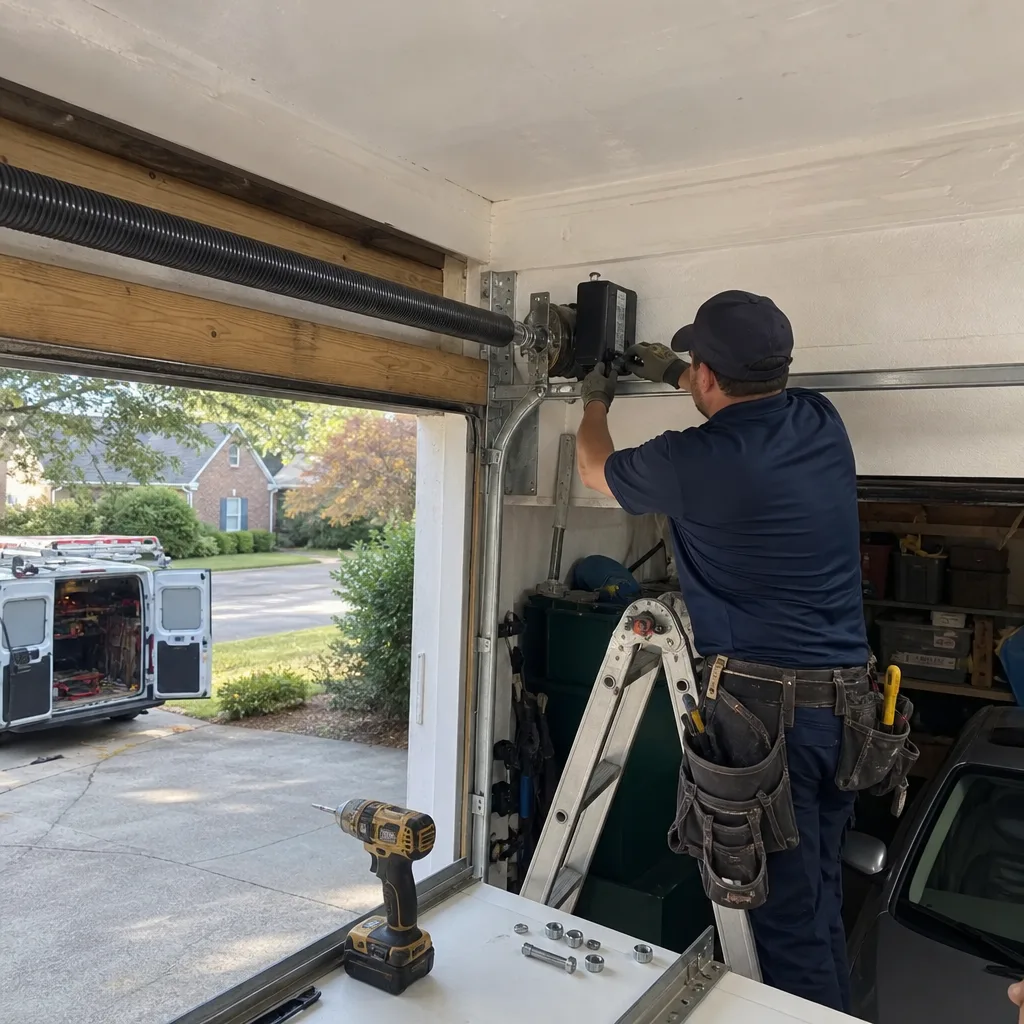
The springs are what make the door openable. A garage door that weighs 200 pounds cannot be lifted by a 1/2-horsepower opener alone, at least not for long. The spring does the lifting work; the opener is really a guide motor that moves the door along the track. This is why spring failure is the single most common repair call in Lawrenceville, and why it happens suddenly rather than gradually.
Torsion springs are the modern standard. They mount on a shaft above the door, wind up as the door closes, and release that stored energy to assist lifting. They are rated by cycle life, which means the number of full open-close operations they can perform before metal fatigue snaps the coil. A standard 10,000-cycle spring lasts about 7 to 9 years for a homeowner who opens the door twice a day. A 20,000-cycle spring roughly doubles that. In Lawrenceville, where many larger homes have double-wide doors weighing 300 to 400 pounds, we recommend high-cycle springs because the extra $40 to $80 in parts buys years of service.
Extension springs stretch along the horizontal track, one on each side. They are simpler and cheaper, but they fail more violently and they provide no containment when they snap. Current building codes require a safety cable through the center of each extension spring on new installations, but many Lawrenceville homes from the 1980s and early 1990s predate that requirement. If your door has extension springs without safety cables, the failure mode is a steel coil flying across the garage at high speed.
One fact most homeowners never hear: a spring that snaps at 7 a.m. did not “suddenly” fail. It had reached its cycle limit and the break was preordained by usage, not by the weather. This is why a written quote for spring replacement should specify the wire diameter, the spring length, the inside diameter, and the cycle rating. If the technician cannot name those four numbers before touching the door, you are not getting a quote. You are getting a guess.
Related: Garage Door Parts in Lawrenceville covers spring specifications and what to check if your door uses an uncommon spring size.
How Lawrenceville Climate and Soil Affect Your Door
Lawrenceville sits in Gwinnett County on a mix of red clay and residual soil that shifts with moisture. The ground under a concrete garage slab expands when wet and contracts during dry spells, and over a decade of seasonal movement, the slab tilts a fraction of a degree. That tilt translates into track misalignment at the top of the door. When the tracks are no longer parallel to within spec, the rollers bind slightly on every cycle. The door gets louder, the opener works harder, and the rollers, hinges, and cables all wear faster than their rated lifespans.
Humidity compounds the problem. Summer moisture in Lawrenceville routinely pushes garage interior humidity above 70 percent for weeks at a time. Steel components sweat. Roller bearings, which are not sealed on low-cost hardware, begin to surface-rust and grind. Hinge pins corrode. The torsion spring, which is normally coated with a light layer of oil, loses its protective film faster in this environment than in dryer climates. We regularly see spring fatiguing in Lawrenceville doors that are only 6 or 7 years old, where the same spring in a dry climate would go 9 or 10.
Wood composite doors take the worst of it. The bottom panel, which sits closest to a humid concrete floor, absorbs moisture and begins to delaminate at the edges. In neighborhoods like Chandler’s Grove or the established subdivisions off Sugarloaf Parkway, we see bottom-panel rot as a recurring repair item every 8 to 12 years, regardless of brand. This is a climate fact, not a build-quality issue.
The practical takeaway: a garage door in Lawrenceville needs two things that doors in other climates do not. First, an annual track alignment check, because slab movement is ongoing. Second, roller and hinge inspection with each seasonal change, because humidity accelerates the wear cycle. Both are quick, both are inexpensive, and both prevent the 7 a.m. failure.
Component Lifespan Benchmarks: Budgeting Before Failure
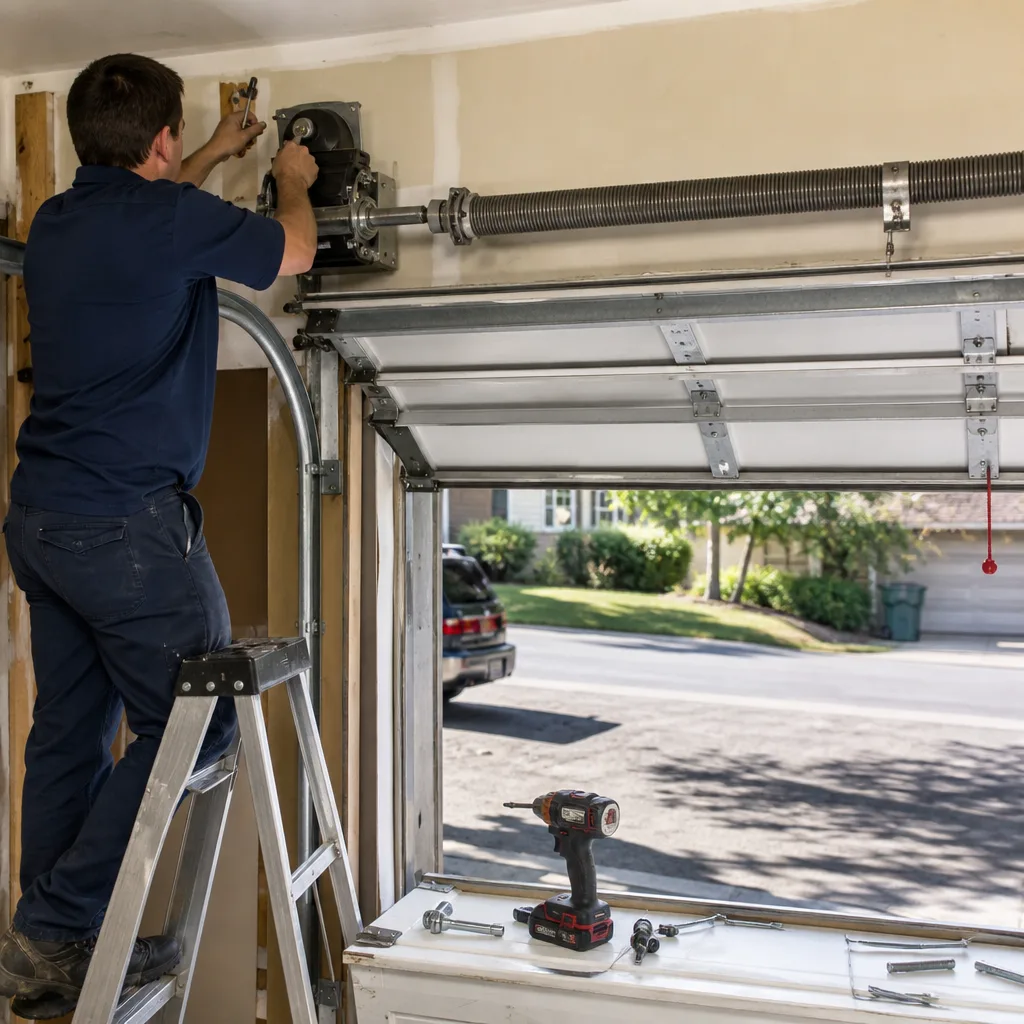
Every component on a garage door has a known service range. Knowing these numbers lets a Lawrenceville homeowner budget for replacement before a failure forces the conversation, which is the only time you should make a financial decision about a garage door. Our Garage Door Cost Breakdown: The Lawrenceville Homeowner’s Reference for 2026 breaks down what to expect. Here are the benchmarks we quote in Lawrenceville, based on standard-use residential doors.
- Torsion springs: 7 to 12 years depending on cycle rating and daily use. Budget $285 to $390 installed for a standard double-wide door in the Lawrenceville market, including replacement of both springs.
- Extension springs: 6 to 10 years. Replacement runs $180 to $275 in Lawrenceville, and should always include safety cables if the door lacks them.
- Rollers: 5 to 8 years for nylon, 3 to 5 for steel. A full roller replacement on a double door typically runs $120 to $190 including parts and labor.
- Cables: 8 to 12 years under normal conditions, shorter if the door runs misaligned. Cable replacement is $110 to $170 per set, but cables rarely fail alone; the cause of the fray is the more important find.
- Hinges: 7 to 10 years on the end hinges, longer on the center hinges. End hinges carry the lateral load and fail first. Cost is $15 to $35 per hinge installed, depending on gauge and position.
- Opener logic board: 8 to 12 years. Replacement runs $150 to $250 parts, plus $75 to $125 labor in Lawrenceville. A failed logic board is not a repair, it is a swap.
- Opener motor: 10 to 15 years. Most openers in Lawrenceville that are older than 12 years and failing are replaced rather than repaired, because the replacement cost is close to the repair cost on a worn motor.
- Panels: 15 to 25 years on steel, often indefinite on a garage-protected door. Damaged panels are replaced individually at $200 to $400 per panel depending on width, insulation, and color match.
- Full door: 15 to 30 years depending on material, exposure, and maintenance. A steel double door in Lawrenceville typically gets 18 to 22 years before replacement becomes more economical than repeated panel and hardware repair.
These are not manufacturer numbers. They are what we see in the field across Lawrenceville, and they are useful for budgeting. If your door is 15 years old and quotes a torsion spring, you should also be thinking about roller and hinge condition, because those are at the same point in their service lives.
Repair or Replace: A Decision Tree Based on Facts
The repair-versus-replace decision should be made from information, not urgency. When a door fails or a panel gets dented, many Lawrenceville homeowners default to whatever the first technician recommends, which is usually the more expensive option because it is more profitable. Here is the decision tree we use and that you can use before you call anyone.
- Determine the door’s age. The serial number on the door edge or the opener manual will date the installation. If the door is under 10 years old, repair is almost always the right call, even for significant component failures. If it is over 20, replacement starts to make financial sense when repairs exceed about half the cost of a new door.
- Assess the paned damage. A single damaged panel on a door under 10 years old is a panel replacement, not a door replacement. But if the damage spans two or more panels, the cost of two panels plus labor approaches a meaningful fraction of a new door, and color matching across a multi-panel replacement is never perfect. Two-panel damage on a door over 15 years old usually tips toward replacement.
- Know the spring cycle count. If your torsion springs are near their cycle limit and the door is 15 years old or older, you are looking at a spring replacement within the next 12 to 24 months, plus the current repair. The math changes. Some Lawrenceville homeowners choose to put the spring money toward a new door instead of replacing springs on a door they will scrap in two years.
- Check the bottom panel. In Lawrenceville, bottom-panel moisture damage is common on wood-composite doors over 12 years old. If the bottom panel is delaminating or the bottom seal retainer is rusting through, that is a known ongoing expense, not a one-time fix.
- Total the repair estimate. If the written quote for all indicated work is more than 50 to 60 percent of a comparable new door installed, replace. If it is under that, repair. This threshold is not a rule, but it is the break-even point we use in our own recommendations.
The goal is a decision you would make in a quiet moment, not one made with the door hanging half-open and a technician standing in your driveway. That quiet-moment decision is exactly what a written quote allows, which is why Servo Garage Doors Lawrenceville home puts the price on paper before any work is approved.
What a Written, Photographed Quote Should Contain
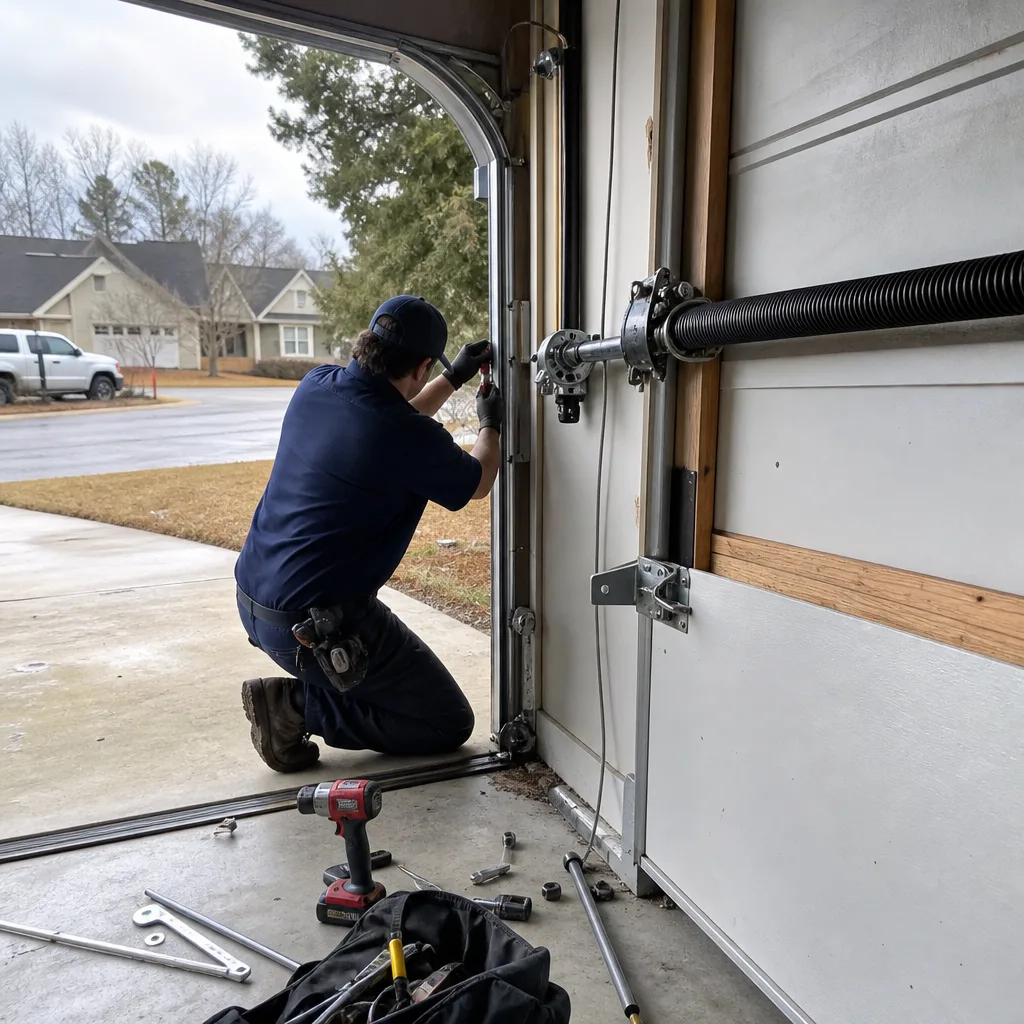
Before any technician touches your garage door, you should have a written document in hand that specifies what is wrong, what will be done, and what it will cost. Most Lawrenceville homeowners never see this document, because most companies quote verbally and bill whatever the technician decides at the truck. Verbal estimates are not estimates. They are opening positions in a negotiation you did not agree to enter.
A proper written quote contains six things:
- The specific component that failed. “Garage door makes noise” is a symptom. “Torsion spring, right side only, 0.234-inch wire diameter, 10,000-cycle rating, clean break at the coil” is a diagnosis. The quote should name the part.
- The photograph of the evidence. You should see the failed component before you approve its replacement. This is not a courtesy; it is what separates a quote from a sales pitch. The photo shows the break, the fray, the crack, or the wear.
- The quoted price in writing. A flat number, not a range, not “it depends,” not “we’ll know when we open it up.” In Lawrenceville, a torsion spring replacement quoted as “between $250 and $400” can mean anything, and when the technician chooses the top of the range, you have no basis to object. A flat price gives you that basis.
- The written scope. What parts will be replaced, what labor is included, what is excluded, and when the work is considered complete. If the scope says “spring replacement” and the technician also does cable work, the quote did not govern the job.
- The confirmation that nothing additional will be done without a second written quote. This is the clause that prevents scope creep. Without it, a technician can find “other issues” and bill for them without your meaningful approval.
- The warranty in writing. Who covers what, for how long, and what happens if the fix fails. A 365-day promise means something specific; “we’ll take care of you” does not.
If a company will not provide this before work begins, you should walk away. Not because they are dishonest, but because they are asking you to bear all the risk of the transaction while they hold all the information. We do not believe in that arrangement, which is why every quote we write in Lawrenceville includes a photographed record of the failed component before the price is agreed. It is the founding rule this company was built on.
Garage Door Openers Explained: Motor, Logic Board, and Rail
The opener is the most misunderstood part of the system. Homeowners blame the opener for every failure, when in fact the opener is usually the last component to fail. A door that “won’t open” is more often a spring issue or an obstruction sensor issue than a motor issue. But when the opener does fail, knowing the anatomy helps you decide between repair and replacement.
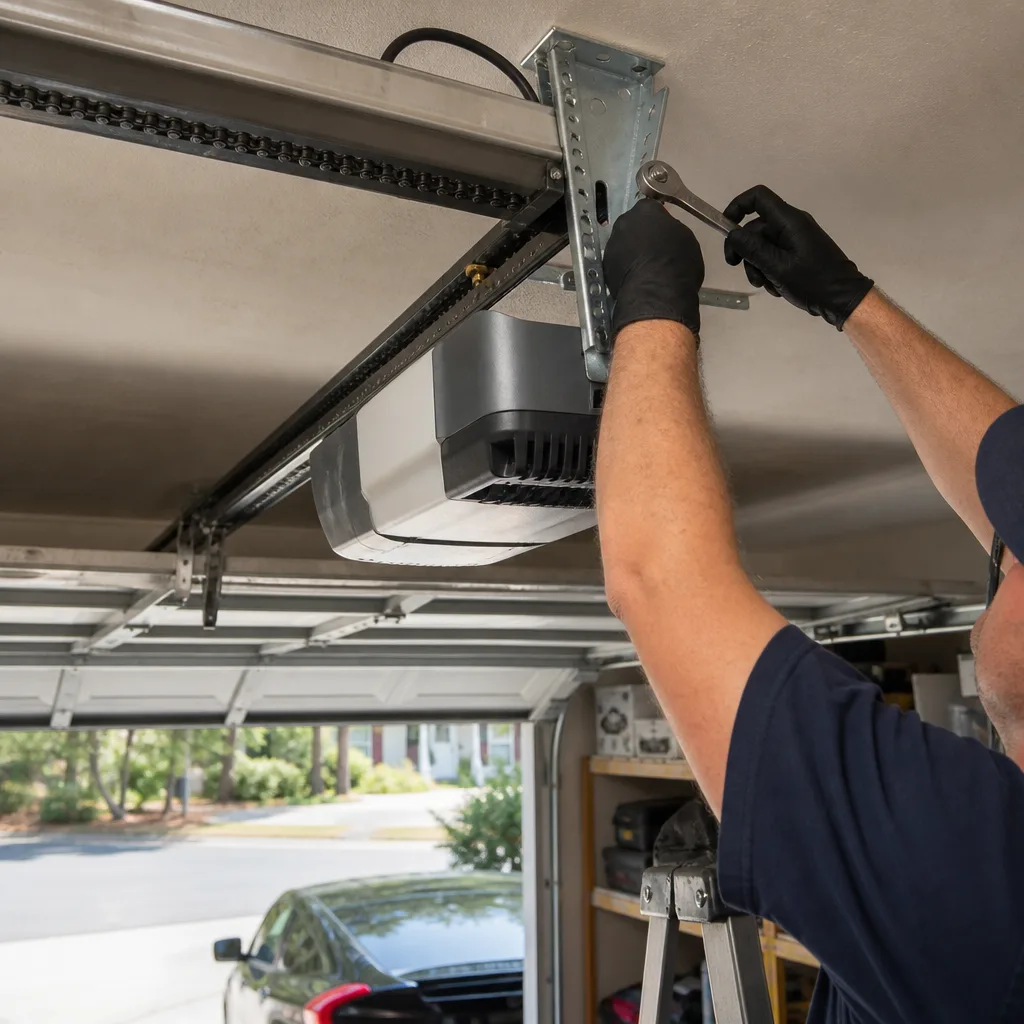
The opener has four functional parts: the motor, which drives the mechanism; the logic board, which interprets remote signals and controls the motor; the rail, which carries the trolley along the ceiling; and the trolley carriage, which rides the rail and pulls the door via the drawbar. Each fails differently.
A dead opener that responds to neither remote nor wall button points to the logic board or the power supply, not the motor. A door that reverses immediately when closing points to the limit switches or the safety sensors, located at the bottom of the track near the floor. A grinding sound points to the gear inside the motor housing, which is the one opener component that does wear mechanically. A jerky start with a clank is usually the drawbar connection at the trolley, not the motor at all.
Openers in Lawrenceville last 10 to 15 years under normal use. LiftMaster and Chamberlain openers are the most common we service, and their logic boards are widely available, which makes repair viable well beyond the 10-year mark. When an opener is over 12 years old and the logic board has failed, we typically recommend replacement rather than board swap, because the motor is nearing its service life and the rail and carriage have accumulated wear. The new unit includes a new warranty, which the board repair does not.
For opener replacement specifics, see Garage Door Opener Repair & Installation in Lawrenceville, which covers the brands we service and what installation includes.
Common Mistakes to Avoid
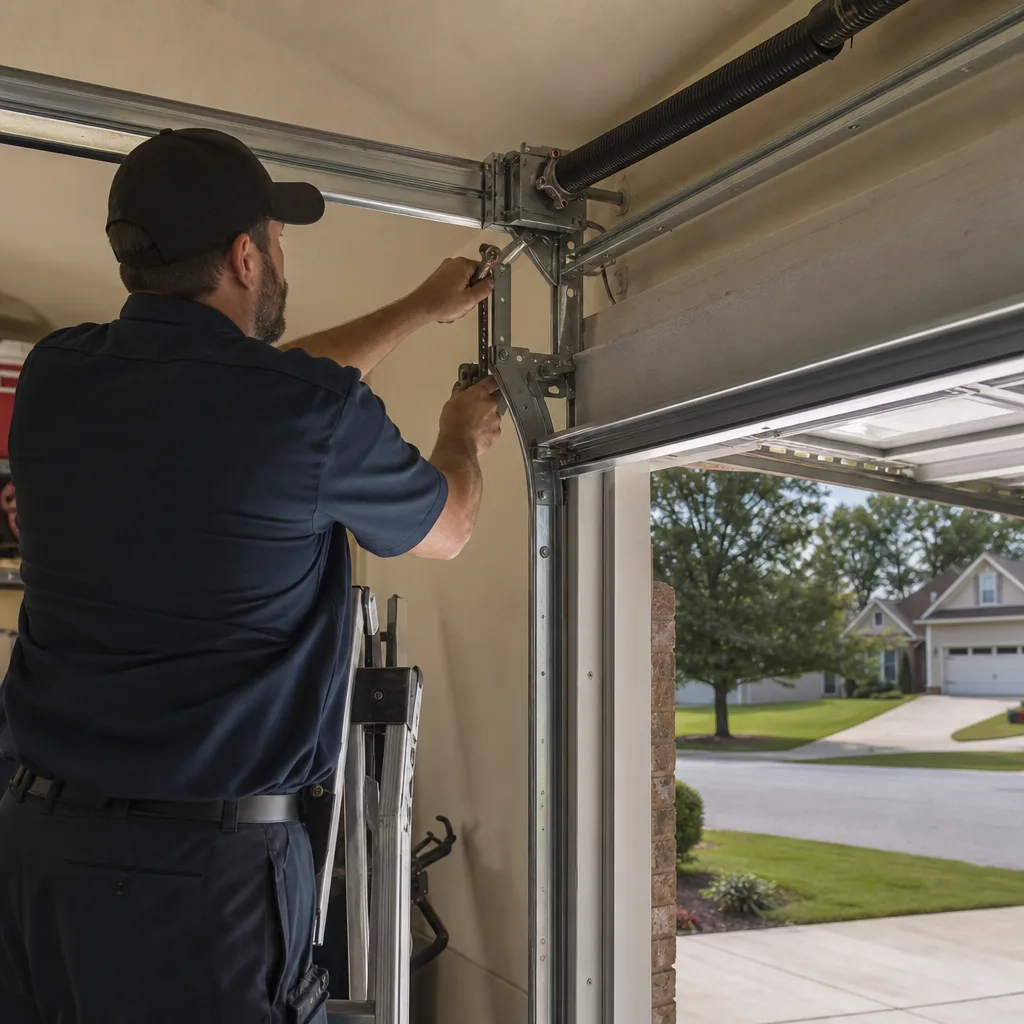
- Lubricating the spring yourself while it is under tension. This is the most common DIY garage door mistake in Lawrenceville, and it can be fatal. The torsion spring stores enormous energy, and applying spray lubricant while standing on a ladder puts your face directly in the failure path. Spring lubrication is safe only when done by a trained technician with the door locked in place.
- Replacing a garage door opener before checking the spring. A door that strains or reverses often has a weakened or broken spring, which the opener is fighting against. Replacing the opener does not fix the counterbalance, and the new opener will fail early because it is doing work it was not designed to do.
- Accepting a verbal estimate. In the Lawrenceville market, verbal estimates are the single biggest source of invoice disputes on garage door work. If the price is not written and the scope is not specific, you have agreed to pay whatever is asked when the work is finished.
- Ignoring a frayed cable. A cable that is visibly frayed but “still working” is warning you that the door is running out of alignment or the cable is about to snap. Both conditions are urgent. When a cable snaps under load, the door can come down hard and unpredictably, which is a serious safety risk.
- Replacing panels without checking the springs. A new bottom panel adds weight. If the springs were sized for the original panel weight and have worn toward their cycle limit, the added weight accelerates the remaining spring life. Panel replacement should always include a spring-cycle assessment.
- Using a door with broken safety sensors. The photo-eye sensors near the floor exist to reverse the door if a child or object crosses the threshold. Bypassing them is a code violation and a genuine safety risk. In Lawrenceville, where many homes have attached garages, this is particularly serious because the door is the largest hazard in the home.
When to Call a Professional
Garage door work divides cleanly: some things are safe to inspect, and two things are never safe to repair yourself. Cables and torsion springs are dangerous, full stop. A snapped torsion spring has already released its stored energy, but the intact spring on the other side has not, and winding or unwinding a torsion spring without the proper winding bars and technique is how people sustain severe injuries every year. Cables are under the same tension system, and a cable that lets go while you are underneath the door can drop the full weight of the door on you.
Beyond the safety line, professional help makes sense for track alignment, panel replacement on double-wide doors, opener diagnostics involving the logic board, and any repair you cannot explain back to yourself in plain terms after reading this guide. Servo Garage Doors Lawrenceville offers free estimates in Lawrenceville; call (470) 202-3917 to schedule a visit with a written, photographed quote before any work is approved.
For emergency situations where the door is stuck open or off-track, see Emergency Garage Door in Lawrenceville for what to do before the technician arrives.
Frequently Asked Questions
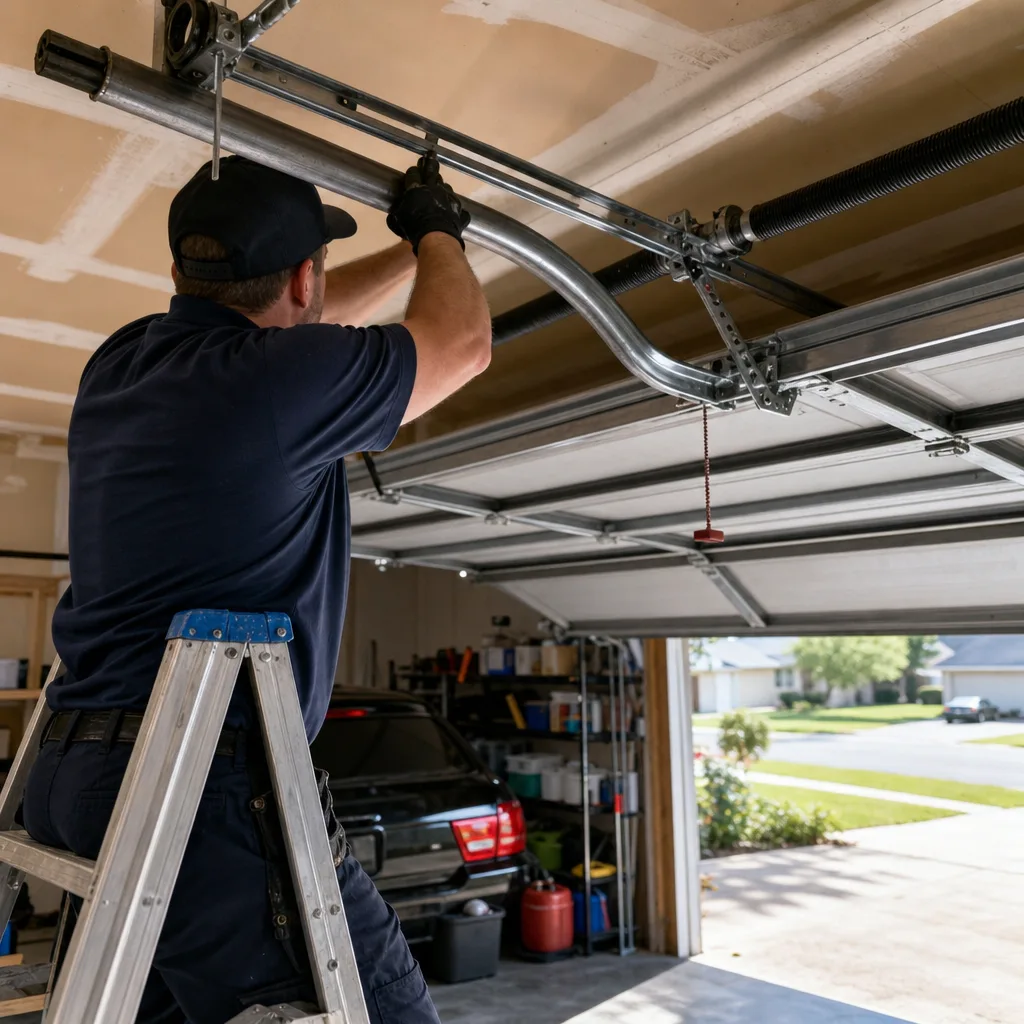
Most garage door repairs in Lawrenceville run $125 to $395 depending on the component, with the most common repair, torsion spring replacement, averaging $285 to $390 installed on a standard double-wide door. Simple roller or hinge replacements run lower, and opener logic board swaps typically land between $225 and $375. Every quote from Servo Garage Doors Lawrenceville is flat, written, and specific before any work begins, so the number you see is the number you pay. Call (470) 202-3917 for an exact quote on your door.
Torsion springs in Lawrenceville typically last 7 to 12 years depending on the cycle rating and daily usage, with 10,000-cycle springs landing on the shorter end and 20,000-cycle springs on the longer end. Lawrenceville’s humidity shortens spring life slightly by stripping protective oil coating faster. Extension springs run 6 to 10 years. When one spring breaks, both are usually replaced, because the unbroken one is near its cycle limit and the labor cost effectively covers both once the technician is on site.
No. Torsion springs and extension springs are under extreme tension, and the tools and techniques for safe winding are not the kind of thing a homeowner should improvise from a video. A miscalculated step can result in severe injury or death, and even a small error can drop the full weight of the door unpredictably. This is the one garage door repair where the cost of a professional in Lawrenceville, typically $285 to $390 including both springs and labor, is the entire safety plan. Call (470) 202-3917 and let a trained technician handle it.
Shaking and noise in a Lawrenceville garage door usually trace to track misalignment from clay-soil settling, worn rollers, or loose hardware at the hinge points. Humidity accelerates roller bearing corrosion, which produces a grinding or squealing sound. The fix depends on the finding: a track realignment runs around $75 to $125, a full roller replacement $120 to $190, and tightening or replacing hinges $15 to $35 each. A written quote should name the specific cause before any work is approved.
A 15-year-old steel garage door in Lawrenceville with a single failed component is usually a repair, not a replacement, if the repair cost stays under about half the price of a new door installed. But if the door has bottom-panel moisture damage, multiple damaged panels, and springs near their cycle limit, the math starts to shift. We recommend getting a written quote for the repair and a written comparison for replacement, then deciding with both numbers in front of you. That is the only way to avoid deciding from urgency. For emergency situations where the door is stuck open or off-track, see our emergency garage door service in Lawrenceville.
A garage door quote in Lawrenceville should include the specific failed component by name, a photograph of the failure, a flat written price, a written scope of work, a statement that no additional work will be done without a second written quote, and a written warranty. If any of those six items is missing, the quote is an estimate, and an estimate is a number someone can change when the job is done. Servo Garage Doors Lawrenceville has delivered written, photographed quotes since 2015, and it is not optional for us. Call (470) 202-3917 to see the difference.
The Bottom Line
A garage door in Lawrenceville is not a mystery and it is not a single object; it is a system of named parts with predictable failure patterns and known service lifespans. For more guides & resources, explore our blog. The door’s largest hazard is the counterbalance system, which should be treated with respect and left to trained professionals. The owner’s job is not to repair the door but to understand it well enough to demand a written, photographed quote before any work begins. When the quote names the part, shows the evidence, and fixes the price in writing, the transaction becomes what it should have been all along: a decision made from information, not urgency.
Written by Marcus Deller, Owner at Servo Garage Doors Lawrenceville, serving Lawrenceville since 2015.